


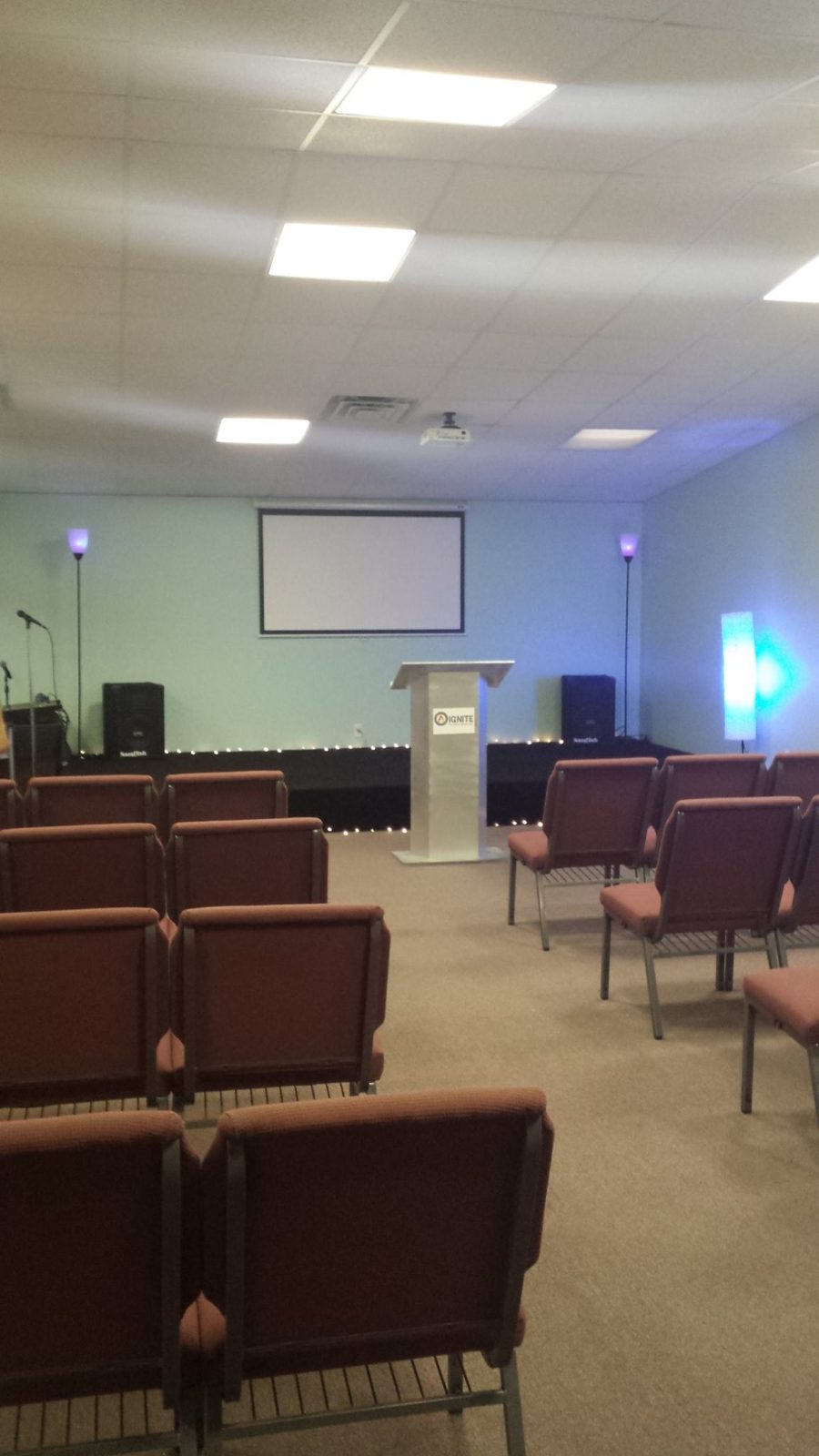
Hunter Brewer from El Bethel Church (Ignite Student Ministries) in Hazlehurst, GA brings us this modernized youth group look.
Hunter’s father got out his pencil and paper and began work. The problem was that there was a very small budget to work with, so careful planning was needed in order to stay within budget. After the project was completed, they had a little less than $600 invested.
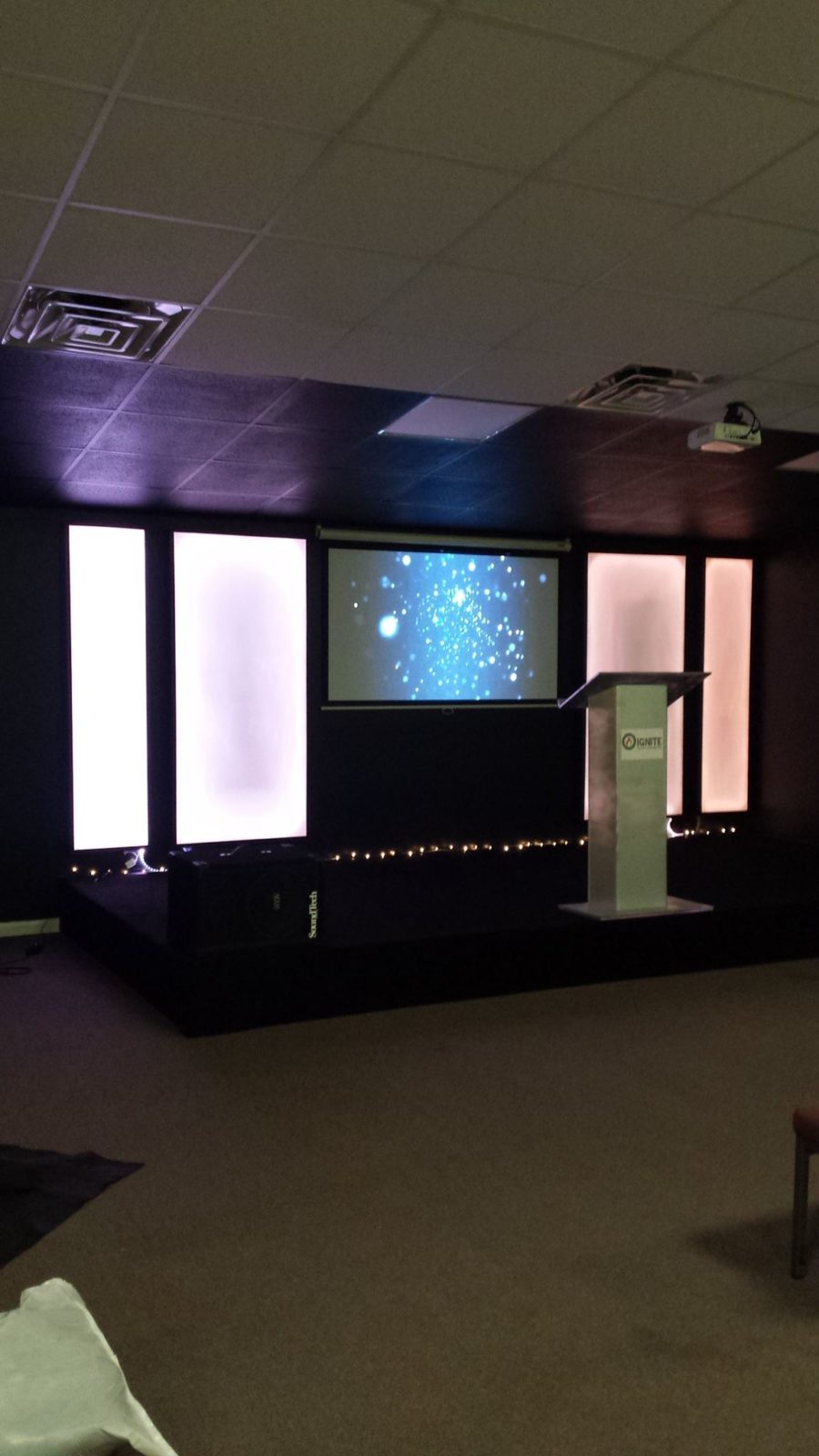
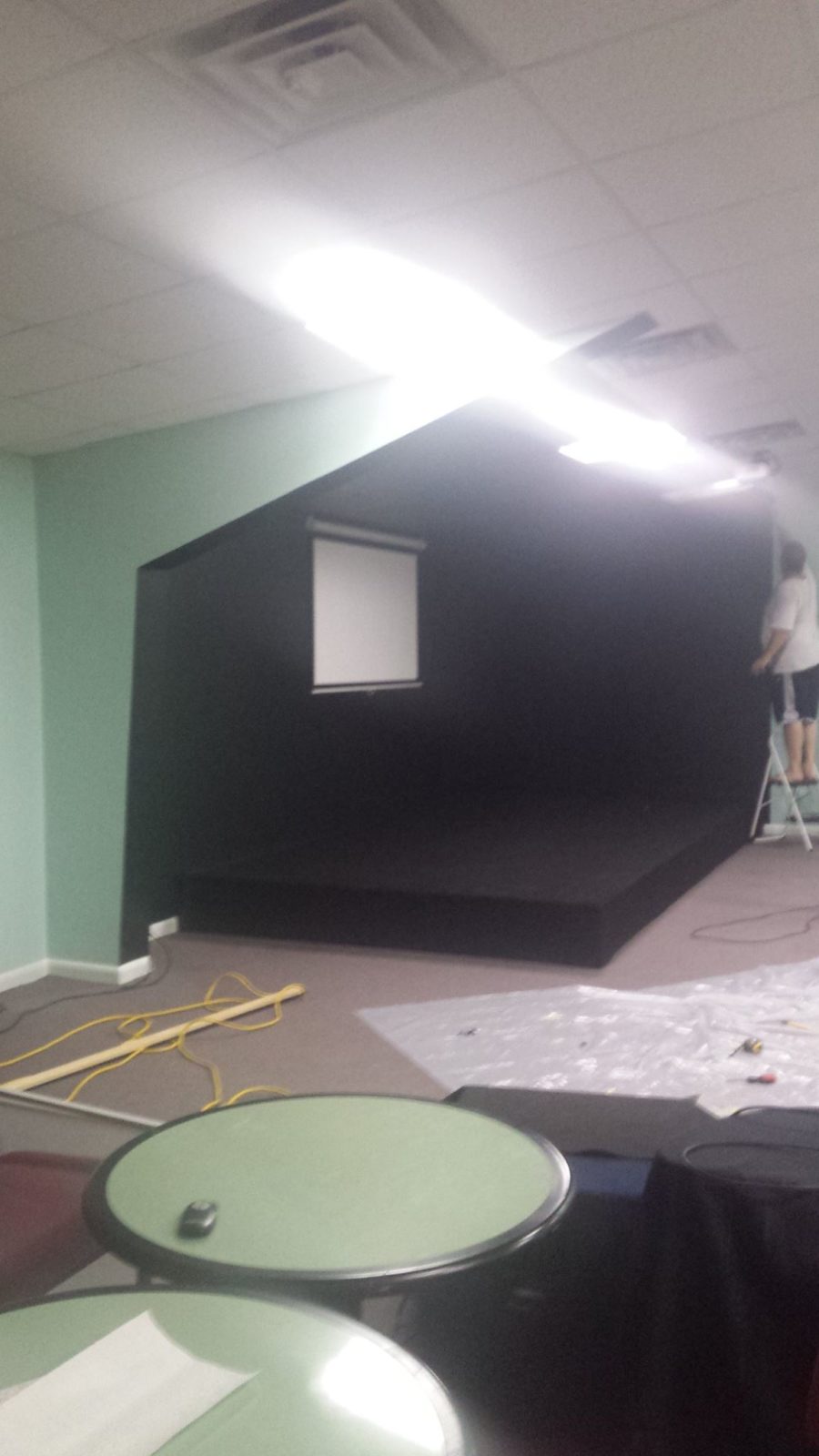
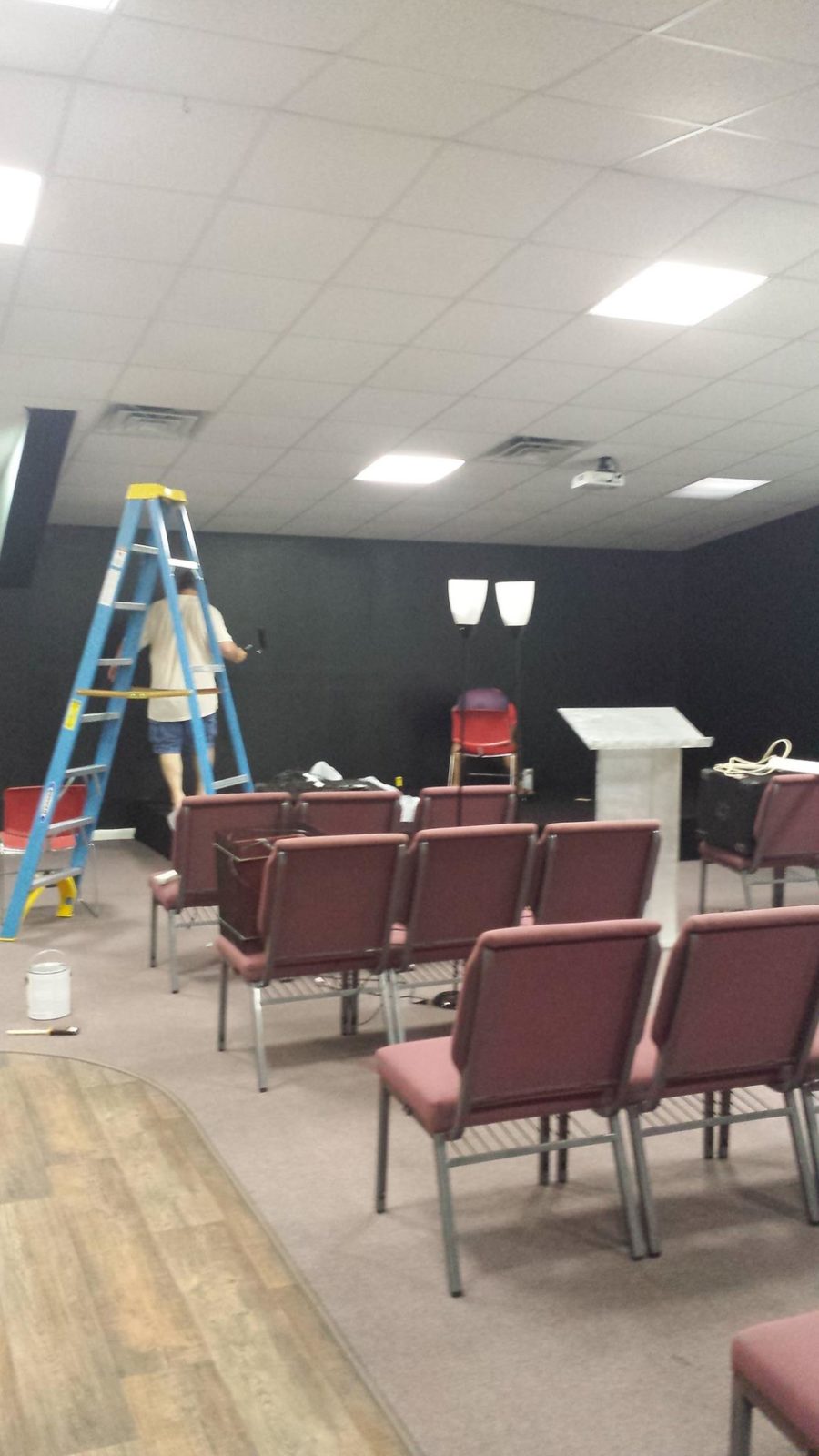
They started with “blacking out” the stage area, painting the back wall and the ceiling tiles. The walls were no problem, but they had to be careful with the ceiling tiles. Hunter’s dad felt that it was best to paint them with a sprayer so that the paint would not soak up and cause the tiles to break or sag under the weight of the paint.
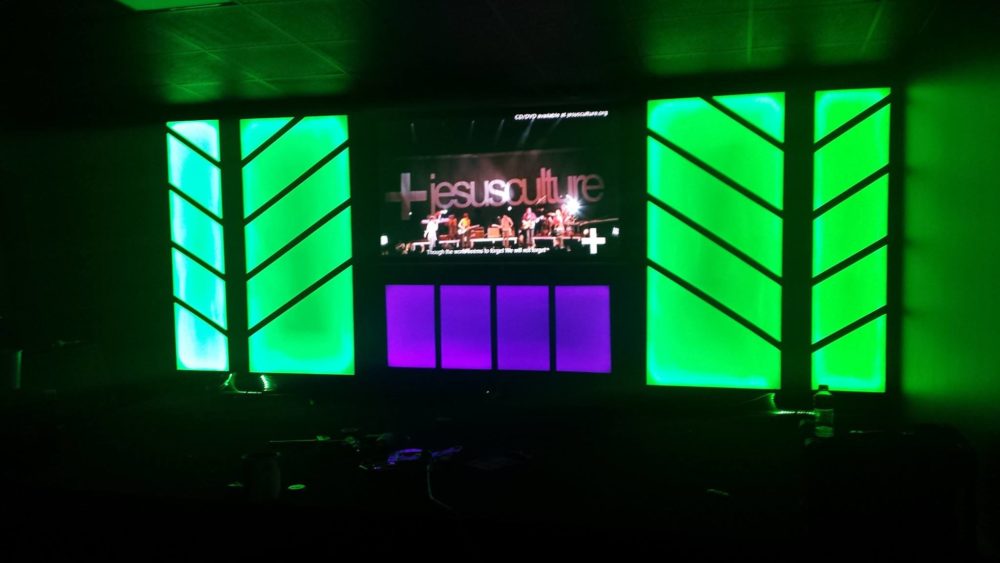
After paint, they built their five light boxes using 1×4 lumber for the frames. After building the frames, they stapled fabric to the back of the frames to keep light from escaping the boxes. Then they mounted the boxes to the back wall, leaving the fronts still open. After the boxes were mounted, they installed LED strip lights to the inside perimeter of each box. The LED strip lights have adhesive backing, but they also secured a few tacks to the lights to just make sure they didn’t come loose. After hanging the strip lights, they proceeded to install translucent white polystyrene panels to the front of the boxes using staples and then put corner molding around the outside edges to clean up the design. Lastly, they used black duct tape to make the striped patterns.
Creating Professional LED Light Box Panels for Church Stages
LED light box panels have become a staple in modern church stage design, offering versatility, energy efficiency, and stunning visual impact. This build from El Bethel Church demonstrates how a modest budget and careful planning can produce professional-grade results that transform a worship space. The key to success lies in understanding both the technical requirements and the aesthetic goals of your design.
The decision to use translucent white polystyrene panels as the diffusion material was particularly smart. Unlike expensive theatrical diffusion fabrics, polystyrene panels are readily available at home improvement stores, cost significantly less, and provide excellent light dispersion. The material’s rigidity also eliminates the sagging or wrinkling issues that can plague fabric-based diffusers over time. When combined with the black duct tape striping pattern, these simple panels create a sophisticated geometric aesthetic that reads beautifully from the audience.
The construction technique using 1×4 lumber frames represents an accessible approach for volunteer teams with basic carpentry skills. By stapling blackout fabric to the back of each frame before mounting, the team ensured that light would only escape through the front diffusion panel, maximizing efficiency and preventing unwanted spill. This attention to detail separates amateur-looking builds from professional installations, even when using inexpensive materials.
LED strip lighting technology has revolutionized what’s possible for church stage budgets. Modern RGB LED strips offer millions of color combinations, dimming capabilities, and programmable effects through simple controllers. The adhesive backing makes installation straightforward, though the team’s decision to add mechanical fasteners (tacks) shows wisdom gained from experience—adhesive alone can fail over time due to heat cycling and gravity. For churches planning similar builds, investing in quality LED strips with consistent color temperature across all reels is essential for achieving uniform lighting.
The blacked-out ceiling treatment deserves special mention as a transformative element that’s often overlooked. Standard acoustic ceiling tiles create visual clutter and reflect light unpredictably. By painting both walls and ceiling black, the team created a neutral canvas that makes the illuminated panels pop while hiding infrastructure like HVAC vents, sprinkler heads, and lighting rigs. The use of a sprayer rather than rollers was crucial here—ceiling tiles can absorb liquid paint and become waterlogged, leading to sagging or structural failure.
Related Designs
- Gym Project – Discover how to transform a gym into a stunning worship space using Coroplast, projection, and creative lighting techniques from New Braunfels Church.
- Taste the Rainbow – Learn how to build a wavy Coroplast backdrop with offset studs for dynamic stage lighting and visual depth.
- 5 Bars – See how to construct budget-friendly LED bars using cable trays and LED strips for under $150.
- Notes and Lines – Explore sheet music-inspired LED tube designs using fluorescent light protectors and diffused lighting.
- Falling on My Stage – Learn how to create a stunning layered foam card backdrop with custom light towers and dynamic LED lighting effects.
Pro Tips for LED Light Box Projects
Plan Your Power Distribution: LED strips draw significant power, and voltage drop can cause color inconsistency across long runs. Calculate your total wattage and plan power injection points every 16-20 feet to maintain consistent brightness and color. Use appropriate gauge wire for power runs, and consider installing a dedicated electrical circuit if your total draw exceeds 80% of an existing circuit’s capacity.
Test Your Diffusion Materials: Not all white plastics diffuse light equally. Before committing to a full build, purchase small samples of potential diffusion materials and test them with your actual LED strips. Look for materials that eliminate hot spots while maintaining brightness. Some materials may yellow over time with heat exposure, so consider this in your selection process.
Build for Maintenance: LEDs are reliable but not immortal. Design your light boxes with access panels or removable fronts so you can replace strips if sections fail. Document your wiring layout with photos during construction—you’ll thank yourself later when troubleshooting. Consider using connectors rather than hard-wiring everything to make future repairs easier.
Control Your Environment: LED strips generate heat, and enclosed light boxes can become surprisingly hot during extended use. Ensure adequate ventilation in your design, and consider adding thermal management if building large arrays. Avoid installing dimmers or controllers in locations where heat can accumulate, as this significantly reduces their lifespan.
Related: In the Darkness, Light – Discover how Church at the Cross created stunning hybrid LED and incandescent fixtures using buckets and Edison bulbs for their Christmas stage design.
Related: The Lost Stage – Discover how Quest Community Church created an epic Lost-themed stage design with a full airplane fuselage and jet engine for immersive special events.
Related: North Point Apps – Discover how North Point Church built a stunning gridded stage design with 342 App Icons using steel pipe structures and professional construction techniques.
Related: Rubber Glove Wall – See how Oasis Church created a stunning textured backdrop using 3,000 latex gloves and creative lighting techniques.


Cool Design! Where did you get the sheets for the front of the boxes? and what color of fabric did you use for the back?
this is the link to the front material we used:
http://www.ebay.com/itm/High-Impact-Polystyrene-Plastic-Sheet-015-x-48-x-96-Translucent-White-/360939072874?_trksid=p2141725.m3641.l6368
For the back material, we used some black non-woven material that we had from a previous project.
What type of LED strip lights did you use and how many on the tall green sections?
These are the lights we used:
https://www.amazon.com/gp/product/B01DW3PO4I/ref=oh_aui_detailpage_o07_s00?ie=UTF8&psc=1
We used 10meter strips on the left two and 10meter on the right sections.