



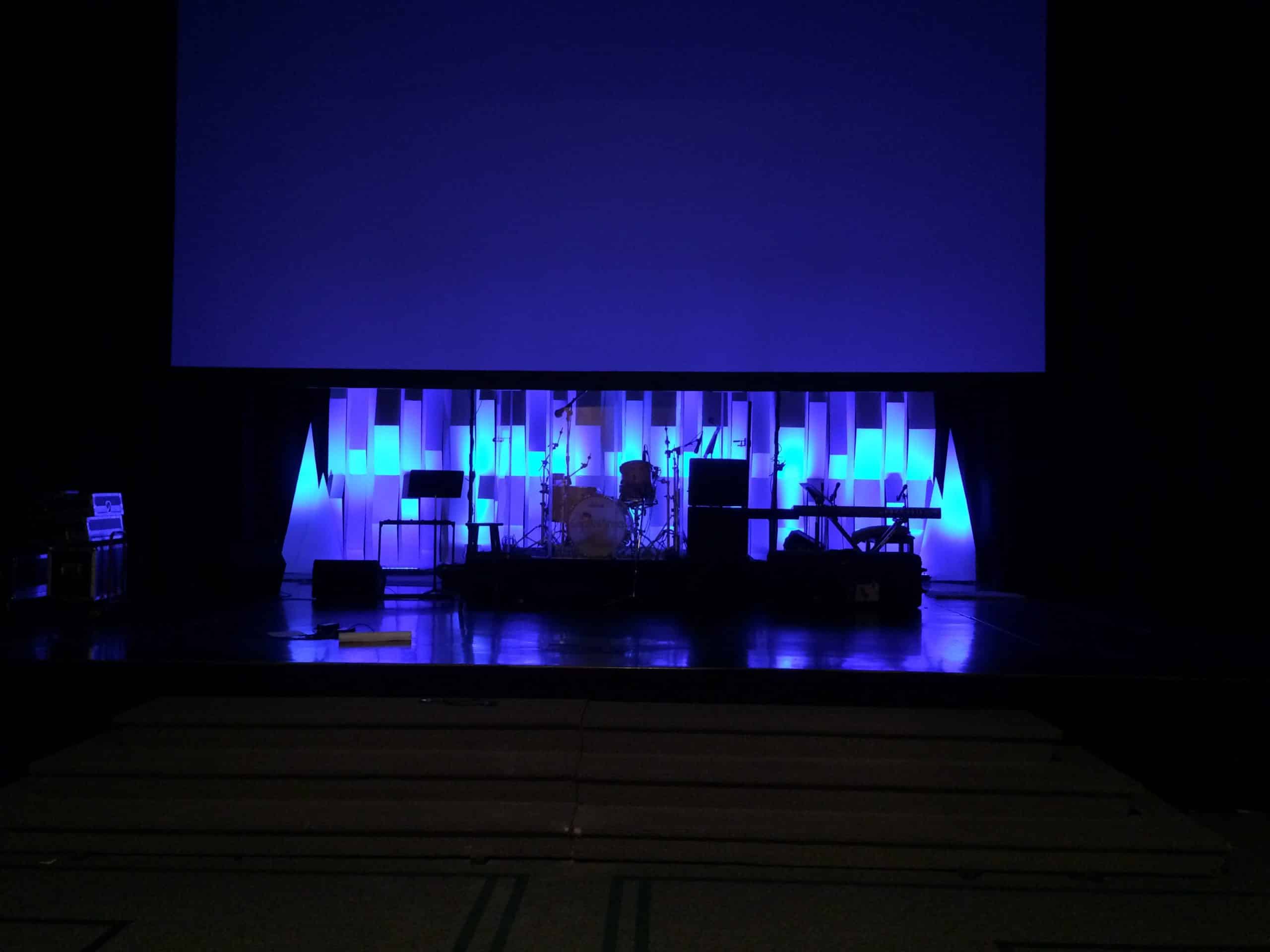
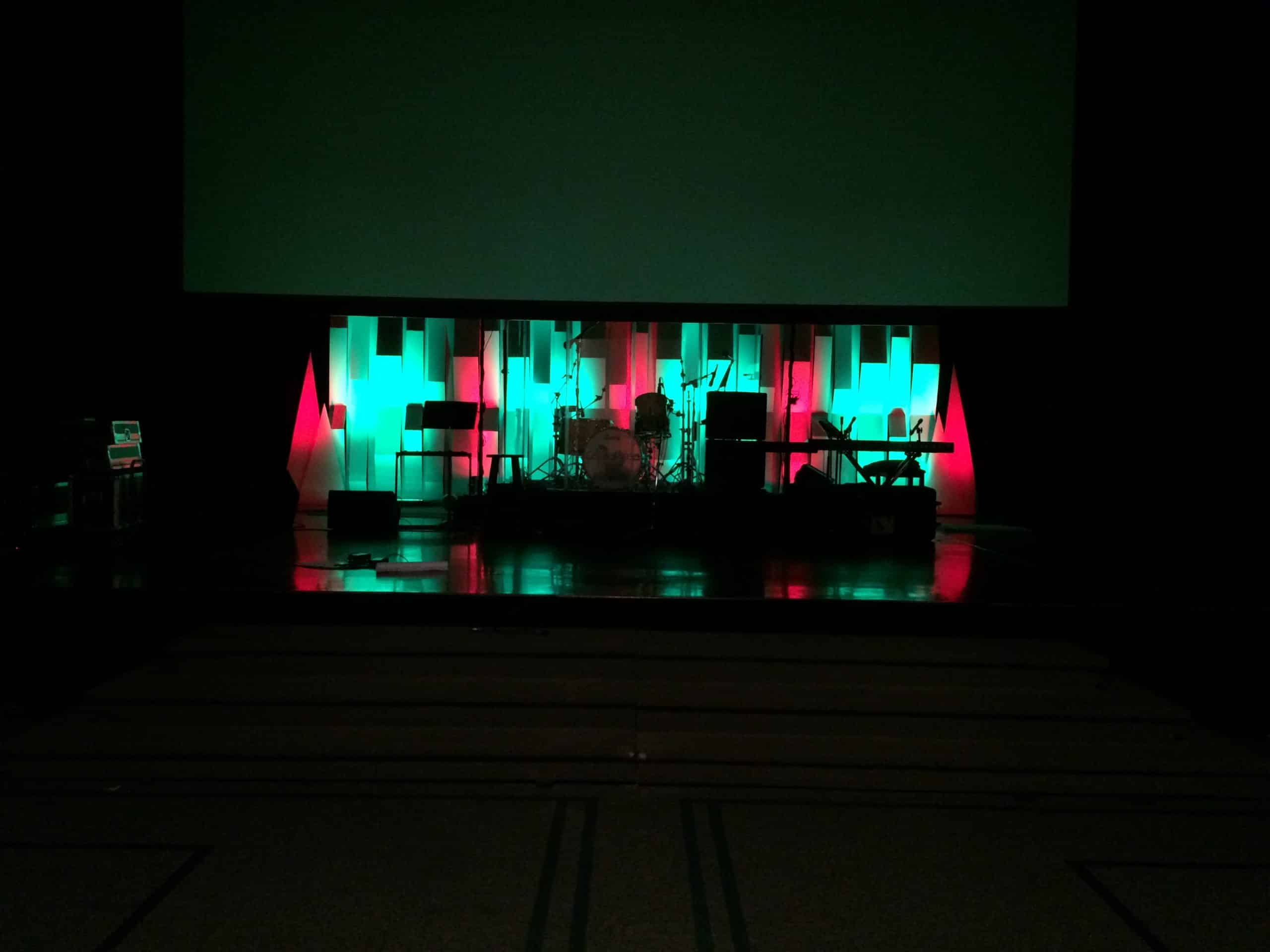
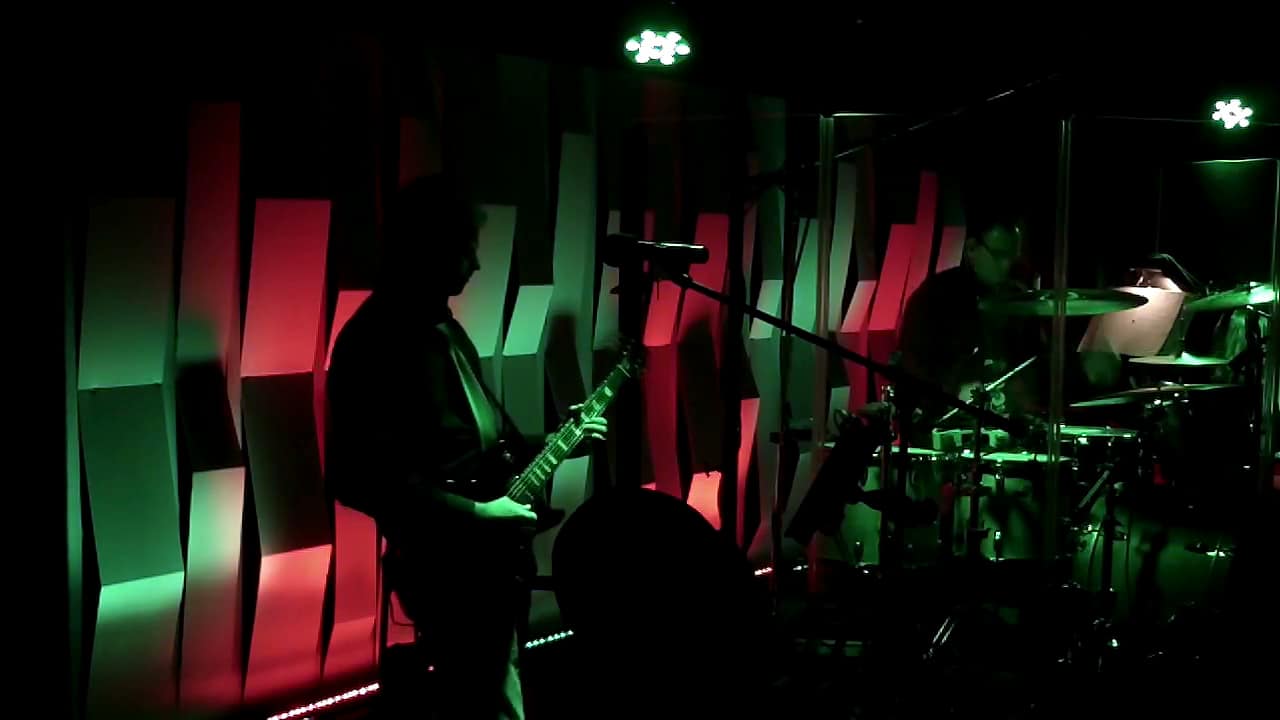
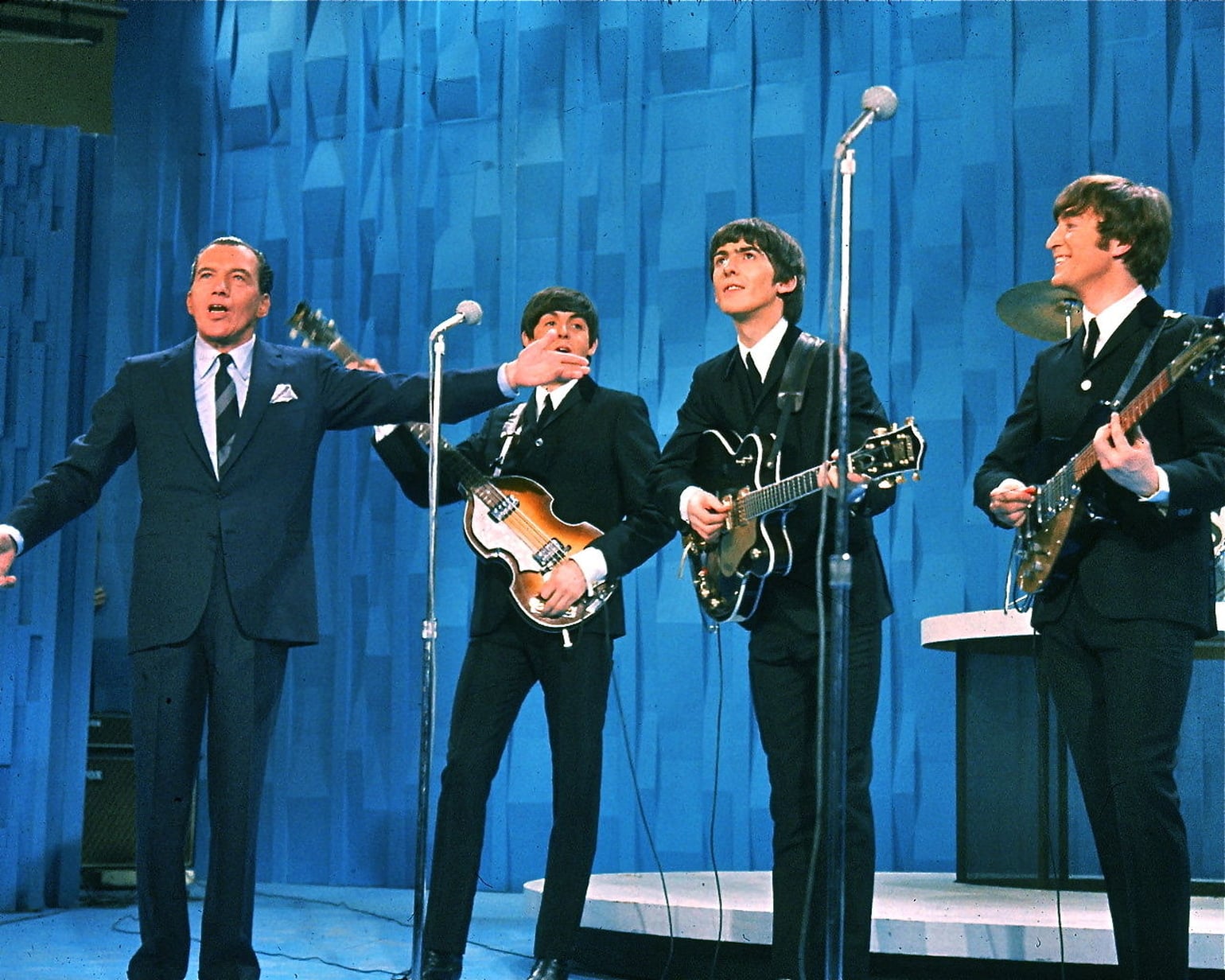
Alex Robinson from Capital Area Christian Church in Mechanicsburg and Etters, PA brings us this design inspired by the Beatles’ first appearance on Ed Sullivan.
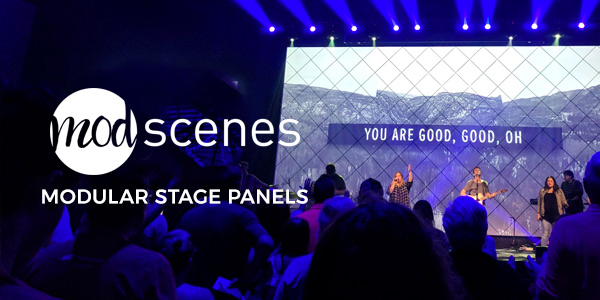
The wall was 8′ tall and was stapled to flats that they’ve used for multiple series/sets. There were only 3 contact points from top to bottom along the 8′ height. The top and bottom Coroplast pieces moving all the way down the line were scored at three different points and alternated up and down to give the suggestion of some randomness too and to get closer to the Sullivan design. The bend angle was maintained under the Coroplast’s own strength, but they had to be careful not to score them too deeply.
They flipped the weave in some ways. They thought they could flip something like that vertically and make it an asymmetrical pattern. They added two triangle shaped pieces of coro to each side of the wall to suggest Christmas trees and kind of give it a little more seasonal flair.
They also did a Let It Be Christmas festival of trees and people decorated Christmas trees according to different Beatles song titles. This allowed them to kind of “crowd source” the decoration of the lobby and unleash a lot of creativity.




Related: Planning modular scenery? This guide explains Broadway and Hollywood stage flats, including framing, bracing, finishes, and storage.
How the Sullivan-Inspired Backdrop Works
The impact of this set comes from repetition with a controlled break in the pattern. Long Coroplast strips create a rhythm across the wall, while alternating the scored bends keeps the surface from looking like a flat grid. The original team attached the wall to reusable flats at three points over its eight-foot height. That underlying structure matters: it gives each flexible strip a consistent starting position, so the angles read as an intentional design instead of a collection of loose pieces.
If you want to adapt the idea, begin with a measured sketch of your stage width and the sightlines from the far-left and far-right seats. Mock up one narrow section before cutting material for the whole wall. Put the test section under your normal front light and side light, then view it both in person and through a camera. Small changes in the bend angle can make a large difference in the shadows, especially when the folds are repeated across the full backdrop. Keep enough space behind the surface for access to the flats and any lighting you plan to use.
Coroplast is light and easy to shape, but scoring is the step to practice. Mark the fold lines consistently, cut only deeply enough to encourage the bend, and try a sample before committing to full-length pieces. The original build relied on the material’s own strength to hold the angle, so an overly deep score could weaken the fold. Label the pieces and photograph the spacing during assembly; volunteers can then recreate the pattern more quickly when the set is reused.
The asymmetry is useful beyond the Beatles reference. Rotate or rearrange sections to change the visual weight without rebuilding the entire wall. For a seasonal service, the original designers added triangular Coroplast pieces at the sides to suggest trees. A different accent color or lighting cue could shift the same structure toward another series while keeping the core flats in place. Their lobby tree display also shows how a stage concept can continue into the gathering space without requiring every piece to be built by the scenic team.
Related Designs
- Light Squares – A repeating geometric frame pattern with a different lighting approach.
- Shooting Stars & Bricks – Layered wall texture and light for a dimensional stage.
- LED Wave Pattern – Repetition and light used to create movement across a backdrop.
- What are Stage Flats? – A practical guide to the reusable scenic foundation behind this build.
- Sky Full of Stars – Another way to carry a seasonal visual idea across the stage and room.
Pro Tips for a Folded Coroplast Stage
Test the score first: Make one short sample strip and check that it bends cleanly without tearing or losing its spring.
Plan for camera angles: Walk the room and check your stream framing before fastening every section; repeated folds can merge visually from a distance.
Secure the flats: Confirm the support structure and attachment points are appropriate for your room, and keep access clear for safe setup and removal.
Document the pattern: Number the strips and save a few assembly photos so the design can be reset or adapted by another volunteer team.
Related: Hollow Crosses – See how scored Coroplast and interior LED lighting create dimensional cross shapes for a church stage.
Related: For another dimensional Coroplast approach, explore the Triangle Wall projection-mapped backdrop, which combines opaque faces with translucent, backlit edges.


What a great place to draw inspiration from.
Xander! Nice work dude!
Haha, thanks Zach!