



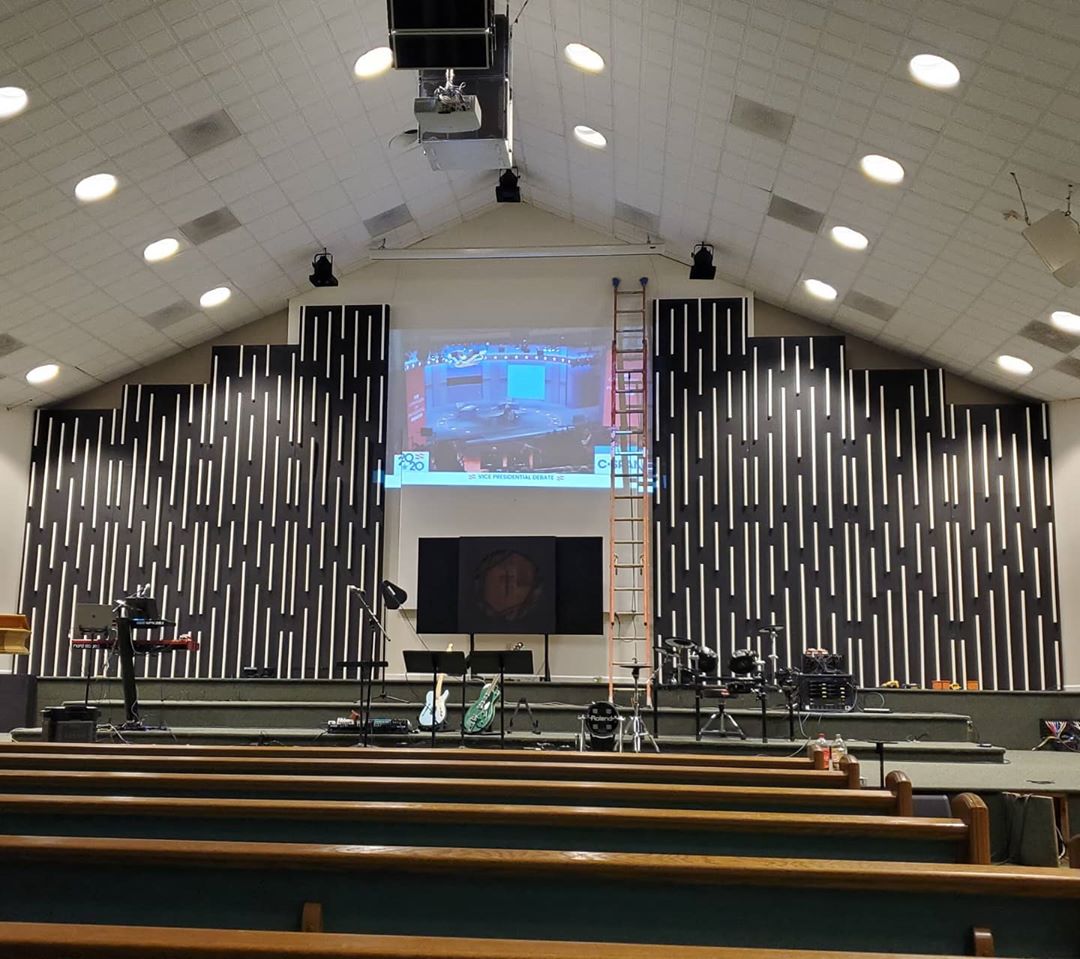
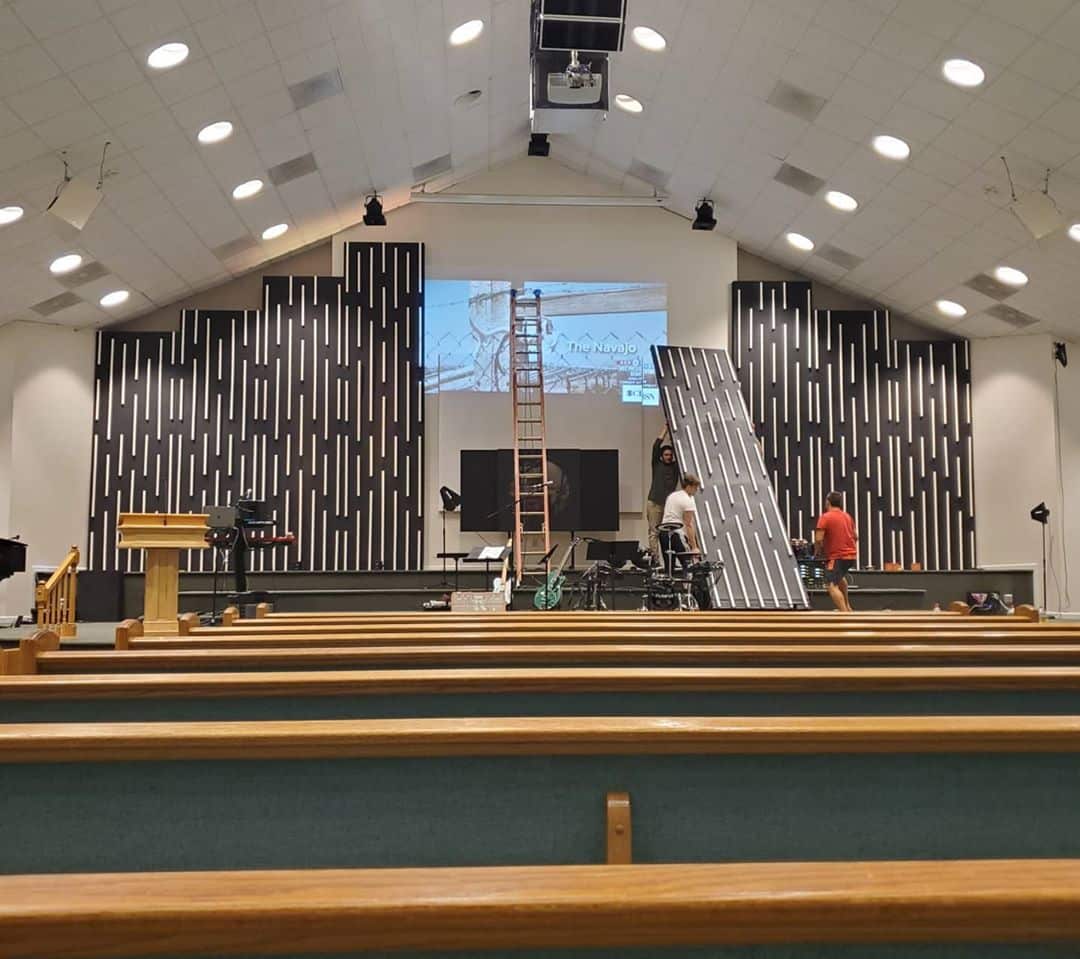
Bella Krizhevskiy from First Slavic Baptist Church in Charlotte, NC brings us this cool PVC design.
They were inspired by Hanging Pipes.
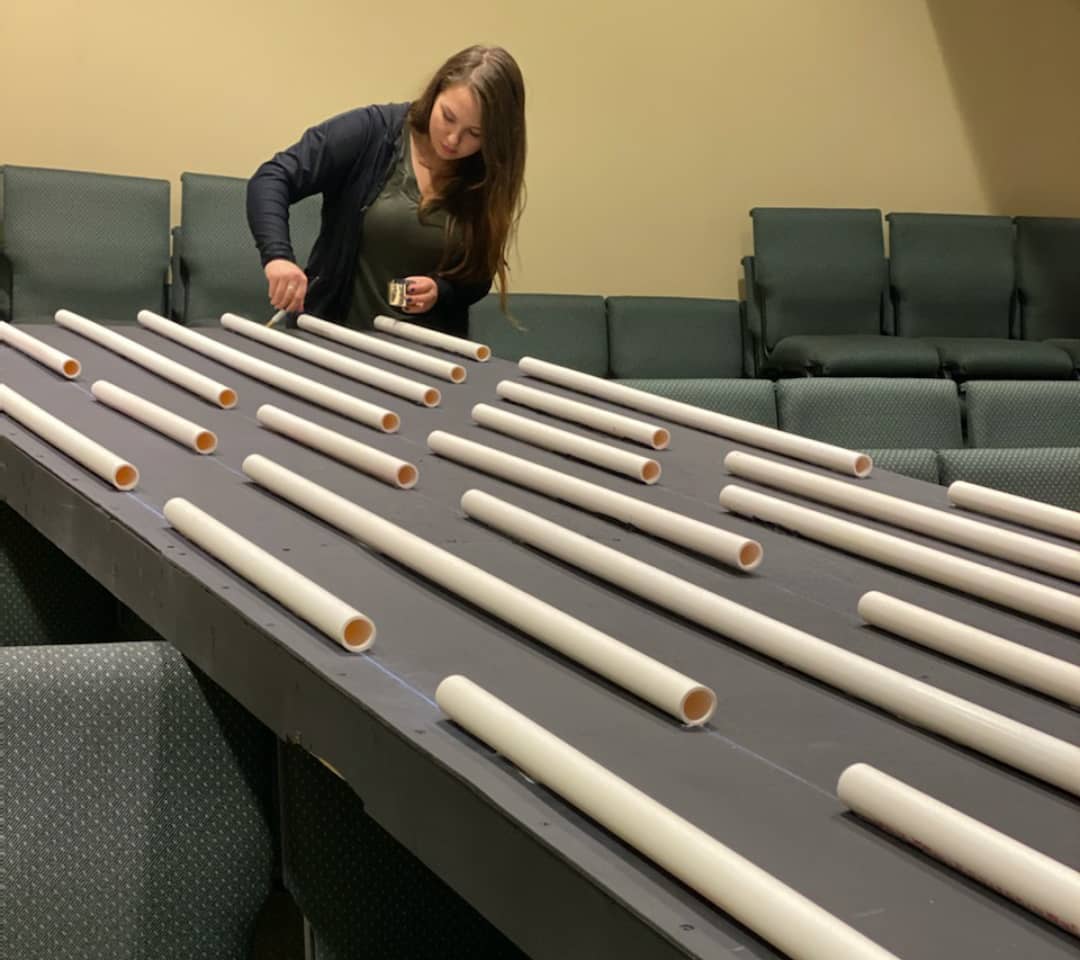
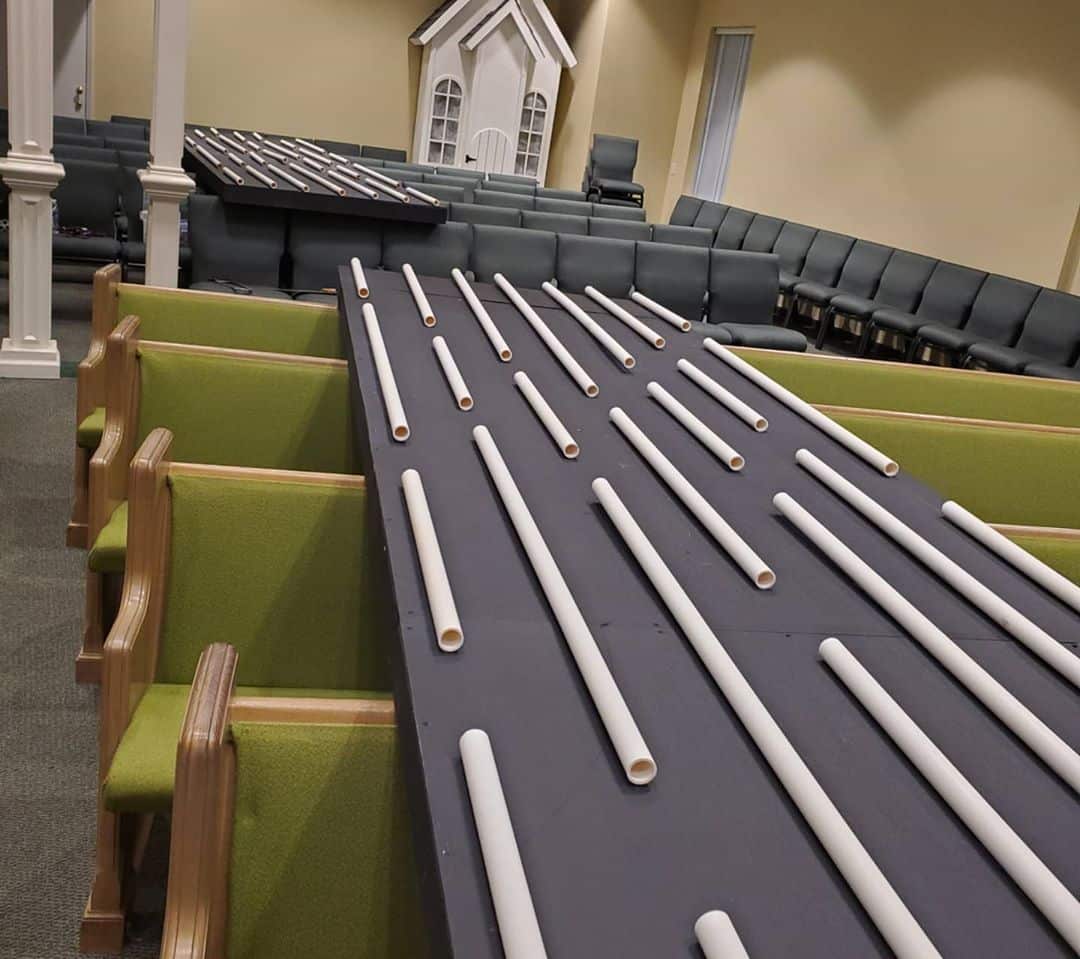
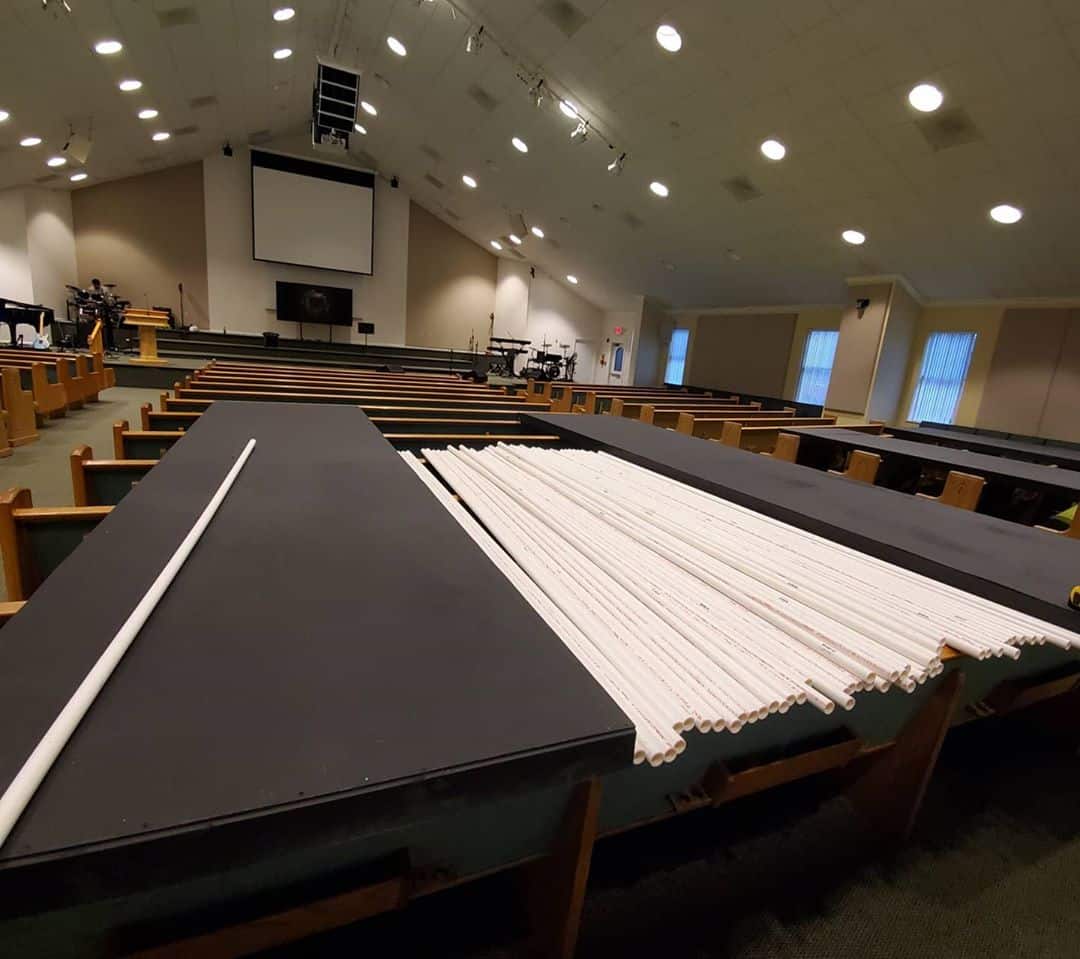
They started by cutting PVC pipes at 5ft, 4ft, 3ft, and 2ft. They were all 9-inches apart above each other and they were 6 inches apart next to each other.
They used 680 feet of PVC pipes and liquid nail.
It took them 3 and a half days with the help of a friend.
How to Create This PVC Pipe Pattern Design
This geometric PVC pipe pattern creates a stunning three-dimensional backdrop that transforms any church stage into a modern worship space. The staggered heights and precise spacing create visual rhythm that draws the eye upward, making your stage feel larger and more dynamic.
To recreate this design, you’ll need 2-inch diameter PVC pipes in various lengths. The key to this pattern is the graduated sizing—starting with 5-foot sections at the top and stepping down to 2-foot sections at the bottom. This creates a cascading waterfall effect that catches light beautifully when properly illuminated.
The installation requires a sturdy backing surface. Bella’s team used 2×4 framing with plywood backing, then secured each pipe using construction-grade liquid nail adhesive. Hot glue won’t provide enough holding power for this application. Allow at least half a day for the adhesive to fully cure before moving the panels into position.
Spacing is critical for the visual impact. The 9-inch vertical spacing between rows and 6-inch horizontal spacing between pipes creates the dense, patterned look that makes this design so effective. LED uplights positioned at the base of the wall wash the pipes with color, creating dramatic shadows and highlights that change with your lighting programming.
This design works particularly well for churches with limited stage depth since the entire installation sits flush against the back wall. The total material cost runs approximately $200-300 depending on local PVC prices, making it an affordable option for churches of any size.
Related Designs
- Patterned PVC – Another stunning PVC pipe arrangement using staggered hanging pipes for a dimensional backdrop
- Hanging Pipes – The original inspiration design featuring suspended PVC sections using paracord
- PVC Pipe Organ – A vertical PVC installation mimicking traditional pipe organ aesthetics
- Geometric Panels – Angular designs using similar materials for a modern stage look
- Vertical Pipe Wall – Floor-to-ceiling PVC arrangement creating dramatic height
Pro Tips for PVC Pattern Designs
Plan Your Layout First: Before cutting any pipe, create a full-scale drawing or use painter’s tape on the floor to visualize the spacing. Small adjustments in pipe placement can dramatically change the final look, so experiment until you find the pattern that works best for your space.
Use Quality Adhesive: Don’t skimp on the liquid nail. Construction-grade adhesive is essential for keeping pipes attached long-term. Bella’s team learned that hot glue simply won’t hold the weight of PVC pipes over time, especially in churches with varying temperatures and humidity levels.
Lighting Makes the Difference: This design truly comes alive with proper lighting. Position LED pars or moving washes at the base of your pipe wall, aiming upward. The light creates shadows between pipes that add depth and dimension that flat lighting can’t achieve.
Paint for Perfection: While you can leave PVC its natural white color, a coat of flat white spray paint eliminates any manufacturer markings and creates a uniform surface that reflects light more evenly. Budget extra time for painting—PVC requires light sanding for paint to adhere properly.



Can you let us know what you used to glue the pvc pipes to? is this drywall or some type of foam board?
I wonder if hot glue would work for adhering the pipes to the wall panels?
Hot glue will 100% NOT work. Had to use construction grade Liquid nail.
Account for at least half A-day for it to dry if not longer
Did you install lights in between these?
We used liquid nail and it was attached to a “wall” made of 2×4 framing and plywood
How did you Light the design?
And what specific kind of light is it?
Thanks.