



Tanner Lambert from First Baptist Church at The Villages in The Villages, FL brings us this fabric-filled stage design.
From Tanner: I came on staff here at FBCATV back in August of 2016. A vision we had was to enhance our times of worship through lighting and visuals. We have a huge, 51′ long and about 20′ high, back wall behind our choir and it was very bare. I took some measurements, along with the help of our maintenance tech, and we figured we could do something with it.
In the past they have hung things on it for performances during peak times of year, but nothing year round. After Christmas we looked at doing something different and keeping up with our designs for different sermon series. When I design, I design so we are adding to what we currently have on the stage so we do not have to have a HUGE work day or week to get what we need done. Sometimes adding here and there can make all the different in the world.
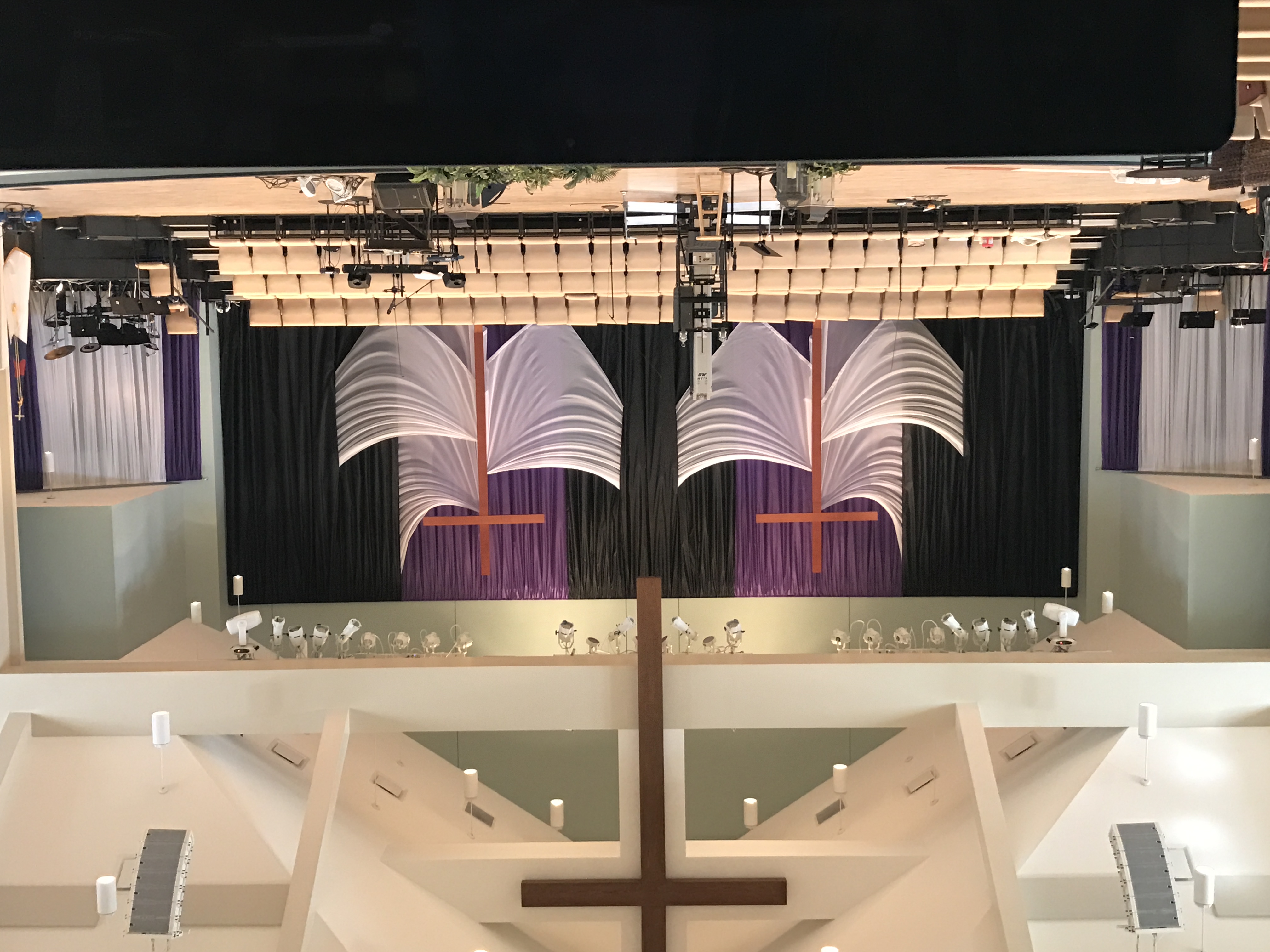
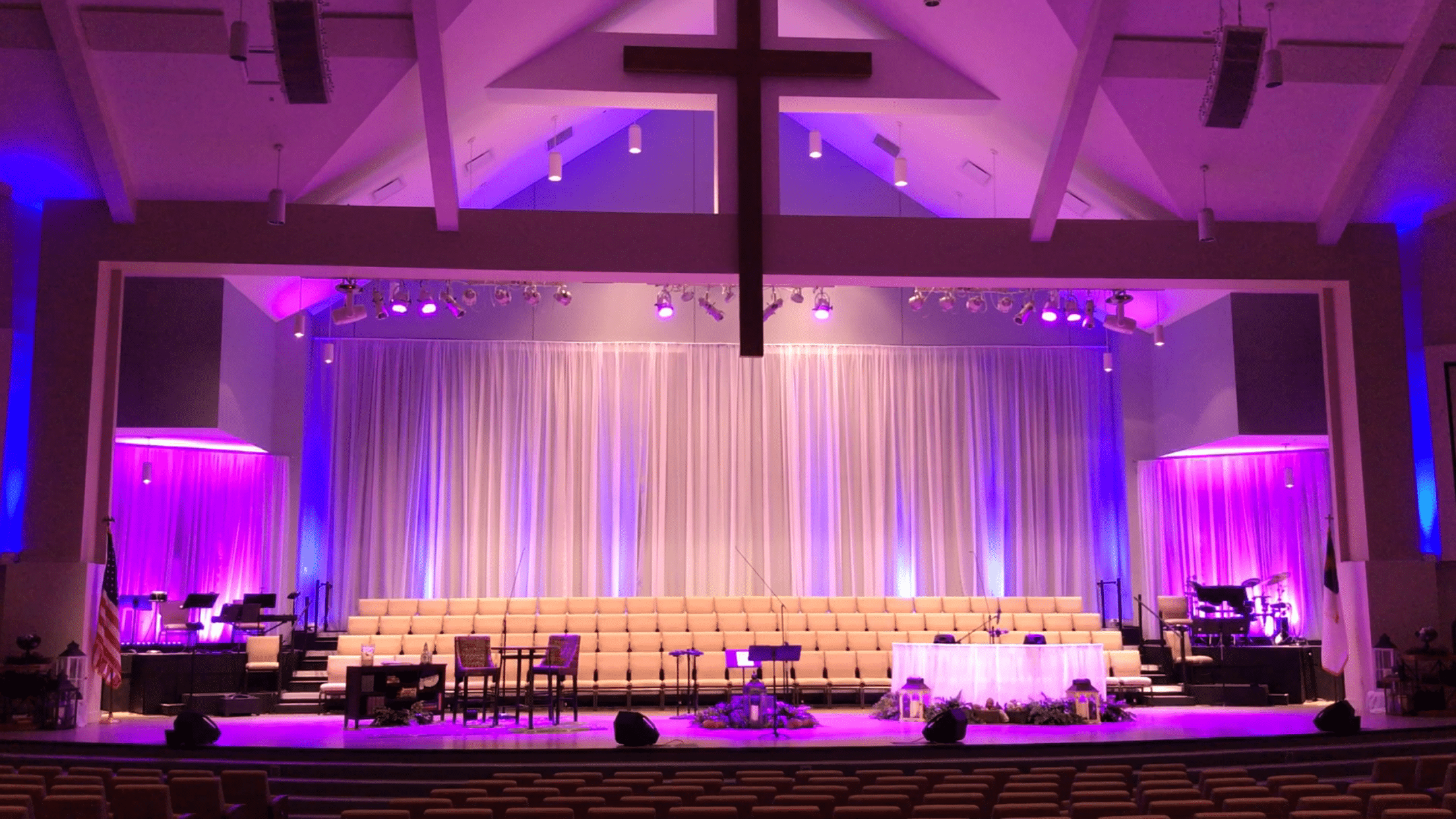
This design started in January with the white curtains being hung across the back wall. These are 10′ wide, 18′ long white voile fabric that I got from ROSEBRAND. A company that specializes in stage fabrics. I got 110 yards of fabric. Had it made into 10′ wide curtains that we would hang off of 10′ long PVC pipe that we attached with zip ties to a wire we have hanging from side to side into the metal studs of the structure. Each 10′ PVC pipe had two sections of curtain on it. So, one PVC pipe had two 10′ wide, 18′ Long pieces of fabric on it. Each with one closed end so when you pull the fabric it does not come off the end of the PVC pipe.
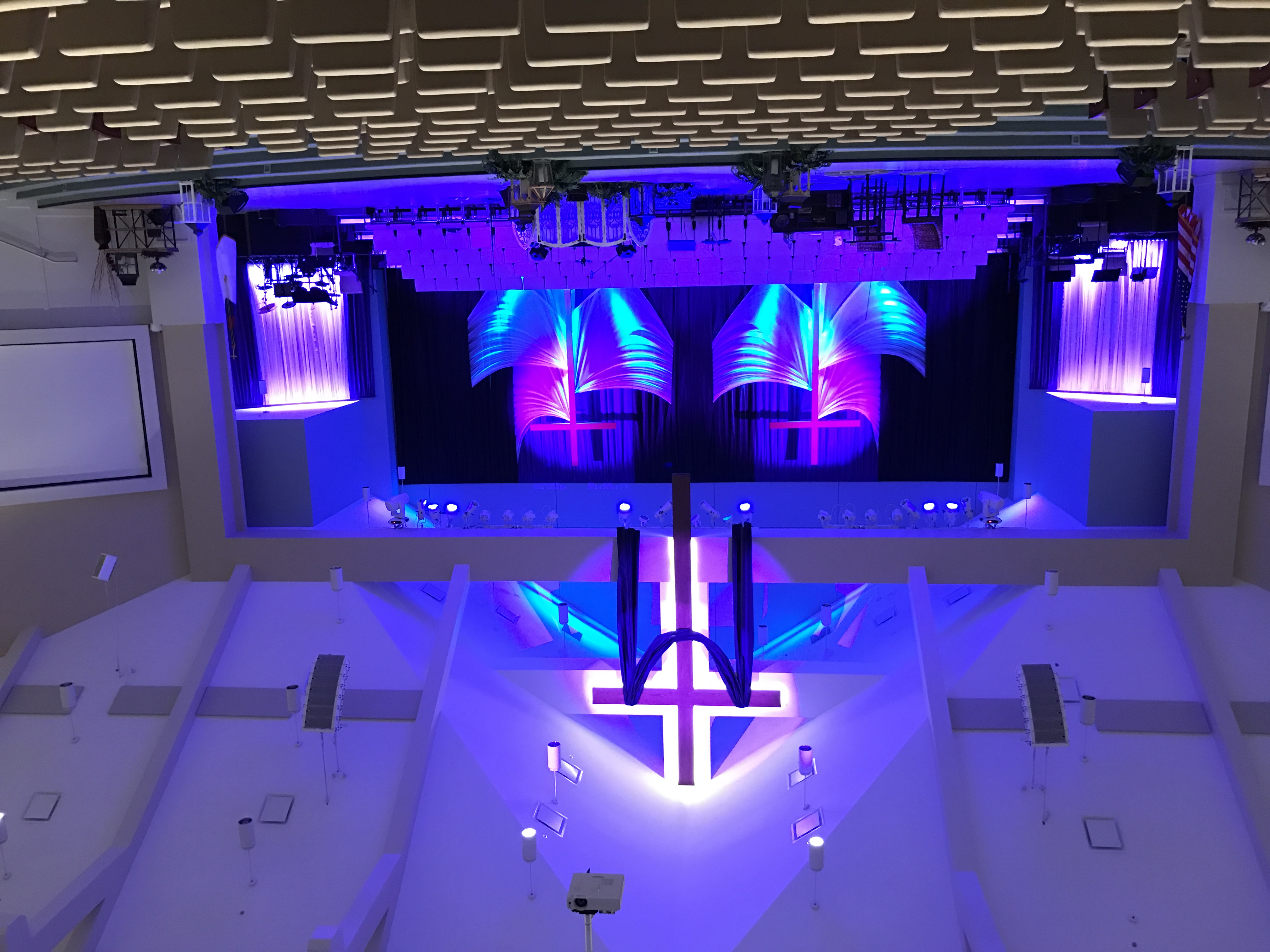
In March we added the Crosses which were made of 2×4’s and paneling. The 2×4 made the cross then the paneling was added to the sides to make it match the cross we have currently hanging in the sanctuary. They were stained to match the cross in the middle. The crosses were attached to the choir riser by building a base that screwed to the riser then the 2×4 slid down into this base and was attached with bolts.
Then we hung the purple and black Poly Silk fabric (100 Yards Each). I got this fabric from the same company. We took the fabric had it made into 5′ wide pieces and they were about 30′ long. We took three pieces of fabric, pulled it onto a 10 foot piece of metal conduit zip tied the fabric so it would not move to the conduit and zip tied the conduit to the existing PVC pipe and Wire that was hanging. After we got it hung over top of the white fabric we pulled the white fabric through the cracks of the black fabric and took bull clips, attached it to the fabric, and draped the fabric to our liking to the back of the cross on screws. We took bull clips to the edges of where the fabric was being pulled through and attached them so you would not see the wall behind the fabric. We also took remaining fabric and dressed our cross that is up year round. On Easter Sunday this fabric will change from black to purple.
For this stage design to be pulled off it was about a $2,500 – $3,000 dollar design that took us about 4 months to complete. After Easter this design will come down and we will have a blank wall again for a few months.


Why Fabric Works for Church Stage Design
Fabric has become a staple material in church stage design, and this cross-and-fabric installation demonstrates why. Unlike rigid materials, fabric moves—it responds to air currents, catches light differently throughout the service, and creates organic shapes that feel alive. This dynamic quality brings energy to worship spaces that static backdrops simply cannot match.
The versatility of fabric extends beyond aesthetics. Large fabric panels can hide structural elements, divide spaces, or create intimate worship environments within larger rooms. They’re lightweight compared to wood or metal, making them ideal for portable churches or venues with weight restrictions. When properly tensioned, fabric creates clean lines and professional appearances.
From a theological perspective, fabric carries rich symbolism. The flowing nature of draped material evokes the movement of the Spirit. The way light passes through translucent fabrics creates an ethereal quality that suggests the divine breaking into our physical space. Many churches use fabric specifically during Lent or Easter to symbolize transformation and resurrection.
The practical benefits are equally compelling. Fabric panels pack down small for storage and transportation. They can be dyed or painted to match seasonal color schemes. Wrinkles can be steamed out quickly, and damaged sections are easier to replace than solid materials. For churches watching their budgets, fabric offers professional results at a fraction of the cost of hard scenery.
Related Designs
- Cloth Sun – Another creative use of fabric to create dynamic stage elements
- How to Hang Stage Fabric – Technical guide for fabric installation techniques
- Blacking Out Your Stage – Using fabric for masking and stage management
- Crown and Thorns – Fabric-based design for Easter season
- Winding Thorns – Textile design approach for seasonal stage elements
Pro Tips for Working with Fabric on Stage
Choose the Right Material: Not all fabric works for stage design. Look for materials with good drape—silks, sheers, and lightweight polyesters work well. Avoid heavy fabrics that don’t move or cheap materials that look wrinkled no matter what you do. Test samples under your lighting before committing to large purchases.
Plan Your Hanging Points: Fabric needs secure attachment points that can handle the weight when gathered. Use theatrical grommets, strong thread, or fabric adhesive for reinforcement. Always test your hanging method with a small section before installing the full piece. The last thing you want is fabric falling during a service.
Consider Lighting Carefully: Fabric transforms dramatically under different lighting conditions. What looks white under house lights might glow amber under warm LEDs. Test your fabric under actual service lighting conditions. Front lighting creates different effects than backlighting—experiment with both to achieve your desired look.
Have a Wrinkle Plan: Even carefully stored fabric wrinkles. Invest in a quality garment steamer and plan time for touch-ups before services. For wrinkle-resistant options, consider crinkled or textured fabrics where some irregularity looks intentional rather than sloppy.


Leave a Reply
You must be logged in to post a comment.