


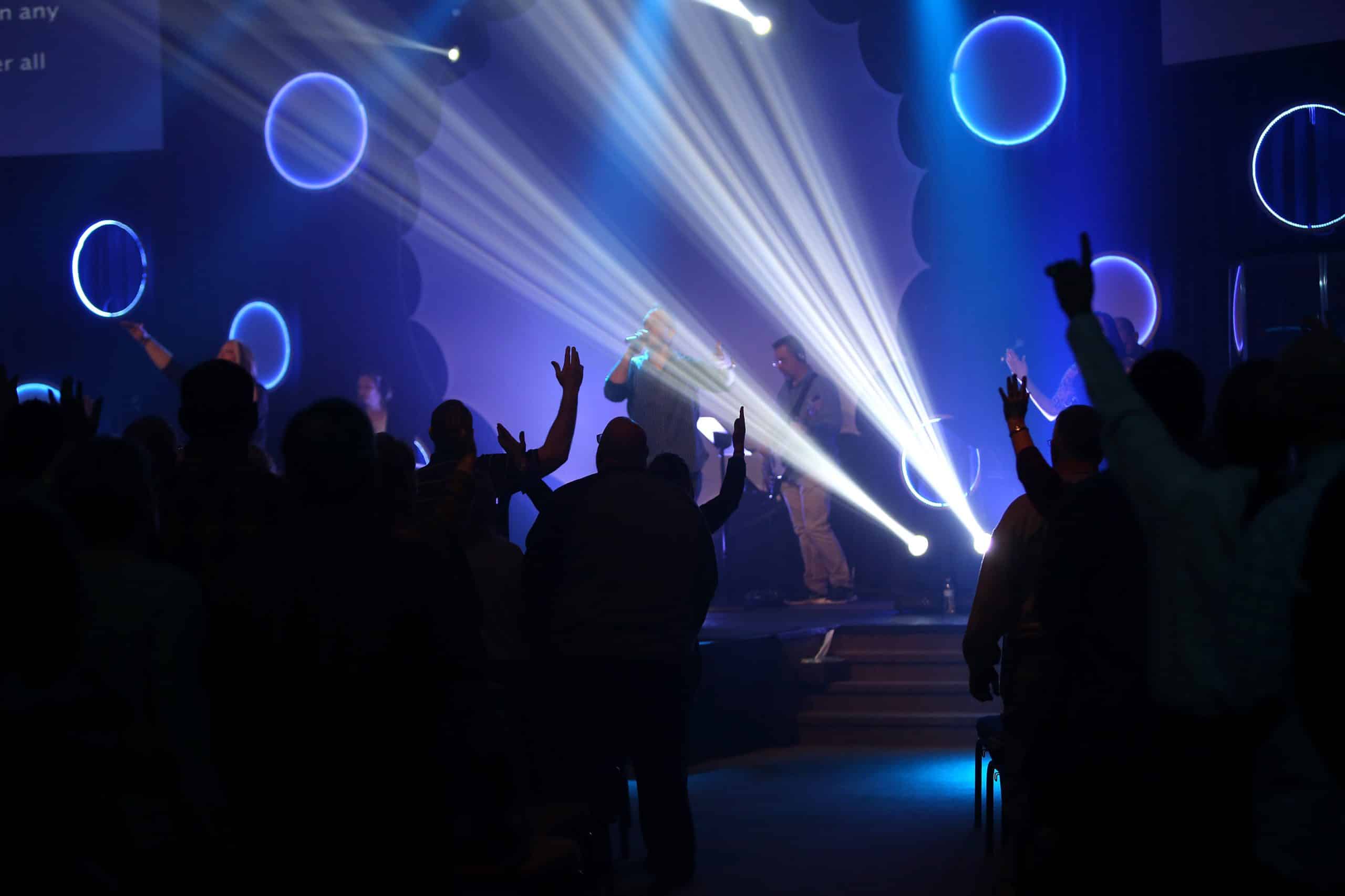
Josh Bengen from Crossroads Church in Jersey Shore, PA brings us this fun use of circles for their stage.
They started out their design with sheets of plywood for the circles. They used a CNC machine to cut them out into circles. Then they super glued LED tape to the inside of them. They soldered ethernet cable from the end of the LED tape to the DMX decoder. They picked a few to wrap with Spandex they picked up at Joann fabric. For their center screen we used a trampoline frame they got donated from a member in their congregation and welded it together. The screen was purchased from StretchShapes.net.
Materials:



Creating Dynamic Stage Designs with Circular Elements
Circular shapes have long been a favorite among church stage designers for their ability to create visual harmony and draw the eye toward a central focal point. The geometric perfection of circles represents unity, wholeness, and eternity—concepts that resonate deeply with worship environments. When combined with modern LED lighting technology, these simple shapes transform into dynamic visual elements that can adapt to different moods, seasons, and sermon themes.
The versatility of circular stage elements extends beyond pure aesthetics. Unlike angular designs that can feel rigid or confrontational, circles create a sense of welcome and inclusivity. They naturally guide the congregation’s attention toward the center of the stage, making them ideal for highlighting worship leaders, speakers, or performance areas. The soft edges of circular forms also photograph beautifully, creating compelling visuals for livestreams and promotional materials.
One of the most appealing aspects of this design approach is its scalability. Churches with limited budgets can start with a few smaller circles and expand their collection over time. The modular nature of circular panels means you can rearrange them for different configurations—clustered together for an intimate setting, spread apart for a more expansive feel, or arranged in patterns that complement specific sermon series or seasonal themes.
Working with LED Tape in Stage Design
LED tape has revolutionized church stage design by providing affordable, flexible lighting solutions that were once only available to professional touring productions. The key to successful LED tape installation lies in understanding both the technical requirements and the creative possibilities. When properly diffused and controlled, LED tape can produce effects ranging from subtle ambient glow to vibrant color washes that transform your entire worship space.
The DMX control system mentioned in this design represents the gold standard for church lighting control. By connecting LED tape to DMX decoders, churches gain precise control over color, intensity, and effects programming. This integration allows lighting operators to create custom scenes that complement different moments in the service—from contemplative prayer times to energetic worship sets. The ability to program and recall these scenes instantly makes LED tape an incredibly practical choice for busy church production teams.
Heat management and power distribution are critical considerations when working with LED tape installations. While LEDs run cooler than traditional stage lighting, they still generate heat that can affect performance and longevity if not properly managed. Using quality LED tape with adequate copper content for heat dissipation, combined with proper power supply sizing, ensures your investment will serve your church for years to come. Always calculate your total power draw and add a 20% safety margin when selecting power supplies.
Related Designs
- LED Sunburst – A stunning radial LED pattern using similar tape light techniques to create a dramatic sunburst effect
- Round and Round – Another creative circular stage design featuring rotating or layered circular elements
- Circles of Light – A minimalist approach to circular stage design using suspended illuminated rings
- Hex Pattern – Geometric honeycomb pattern using wood and LED lighting for a modern worship aesthetic
- LED by the Spirit – Creative LED strip installation with dynamic color capabilities and DMX control
Pro Tips for Circular Stage Designs
Plan Your Spacing Carefully: The visual impact of circular elements depends heavily on their arrangement and spacing. Before cutting any materials, create a scale drawing of your stage and experiment with different circle sizes and positions. Consider sight lines from various seating areas and how the design will appear on camera. Leave adequate space between circles for lighting effects to breathe—overcrowding can make the design feel cluttered and diminish the impact of your LED programming.
Invest in Quality Diffusion Materials: Raw LED tape produces harsh, point-source light that can create unwanted glare and hotspots. The spandex fabric used in this design provides excellent diffusion while maintaining color accuracy. When selecting diffusion materials, test them with your specific LED tape to ensure they produce the soft, even glow you’re looking for. Stretch fabrics, frosted acrylic sheets, and specialized LED diffusion panels all offer different aesthetic qualities worth exploring.
Consider Structural Support: Large circular panels can be surprisingly heavy, especially when constructed from plywood and fitted with LED tape. Plan your mounting system carefully, considering both the weight of the panels and the dynamic forces they may experience from HVAC airflow or accidental contact. Use appropriate hardware for your ceiling or wall structure, and always prioritize safety over aesthetics. When in doubt, consult with a structural engineer or experienced stage designer.
Program with Purpose: The most impressive lighting design can become distracting if not used thoughtfully. Develop a lighting plan that serves your worship experience rather than dominating it. Create preset scenes for different service elements—subtle warm tones for prayer and communion, vibrant colors for celebration and praise, and clean white light for teaching and announcements. Train your volunteers to understand the emotional impact of different colors and intensities so they can respond appropriately to the flow of each service.
Related: Word Lights – another creative LED lighting design using Chromlech panels
Related: Pointillism – A budget-friendly styrofoam ball stage design that creates stunning pointillism-inspired texture with LED lighting.
Related: Soul Levels – An elegant minimalist foam design from Indonesia featuring flowing organic shapes cut with a hot knife.


Leave a Reply
You must be logged in to post a comment.