


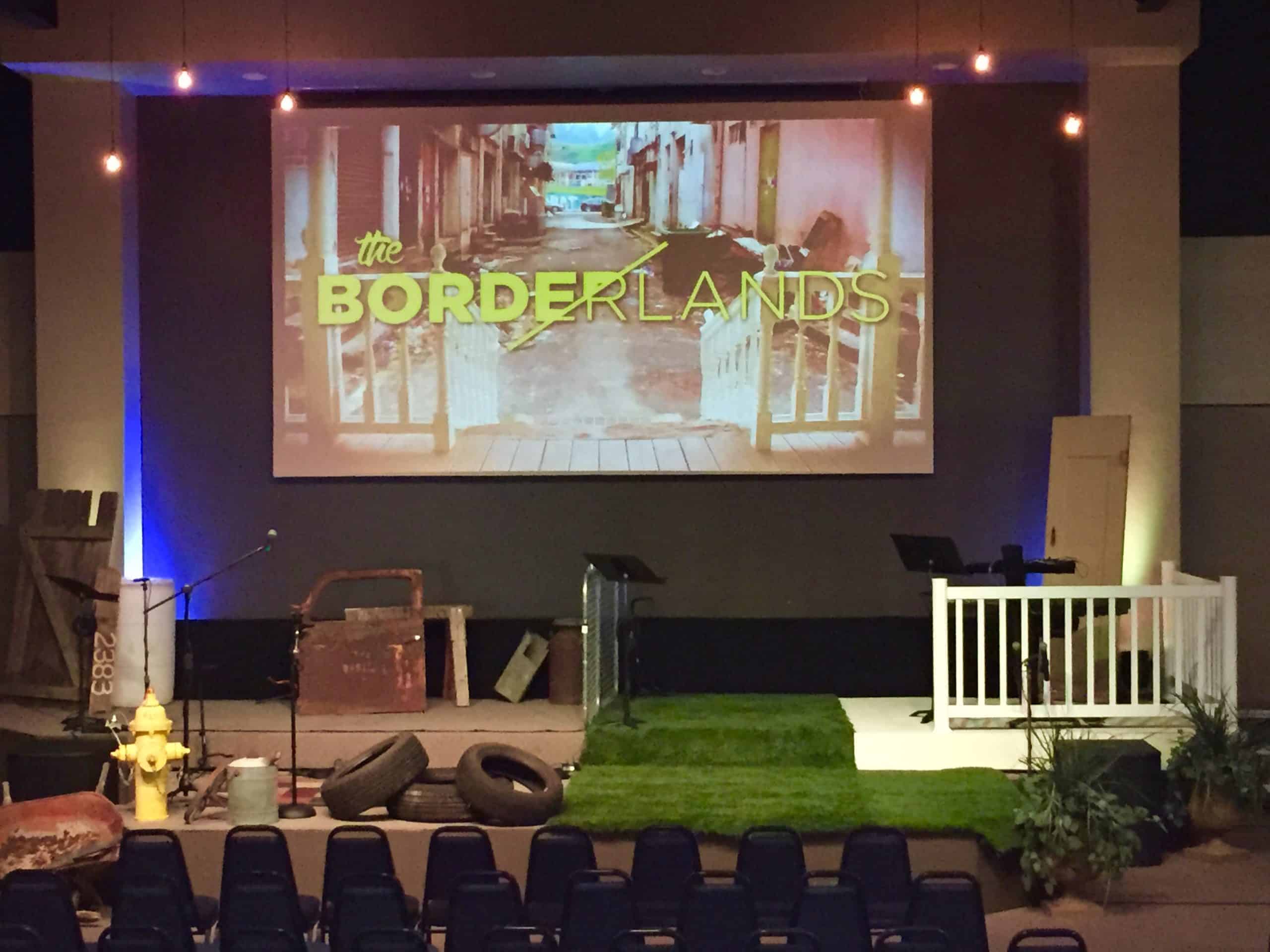
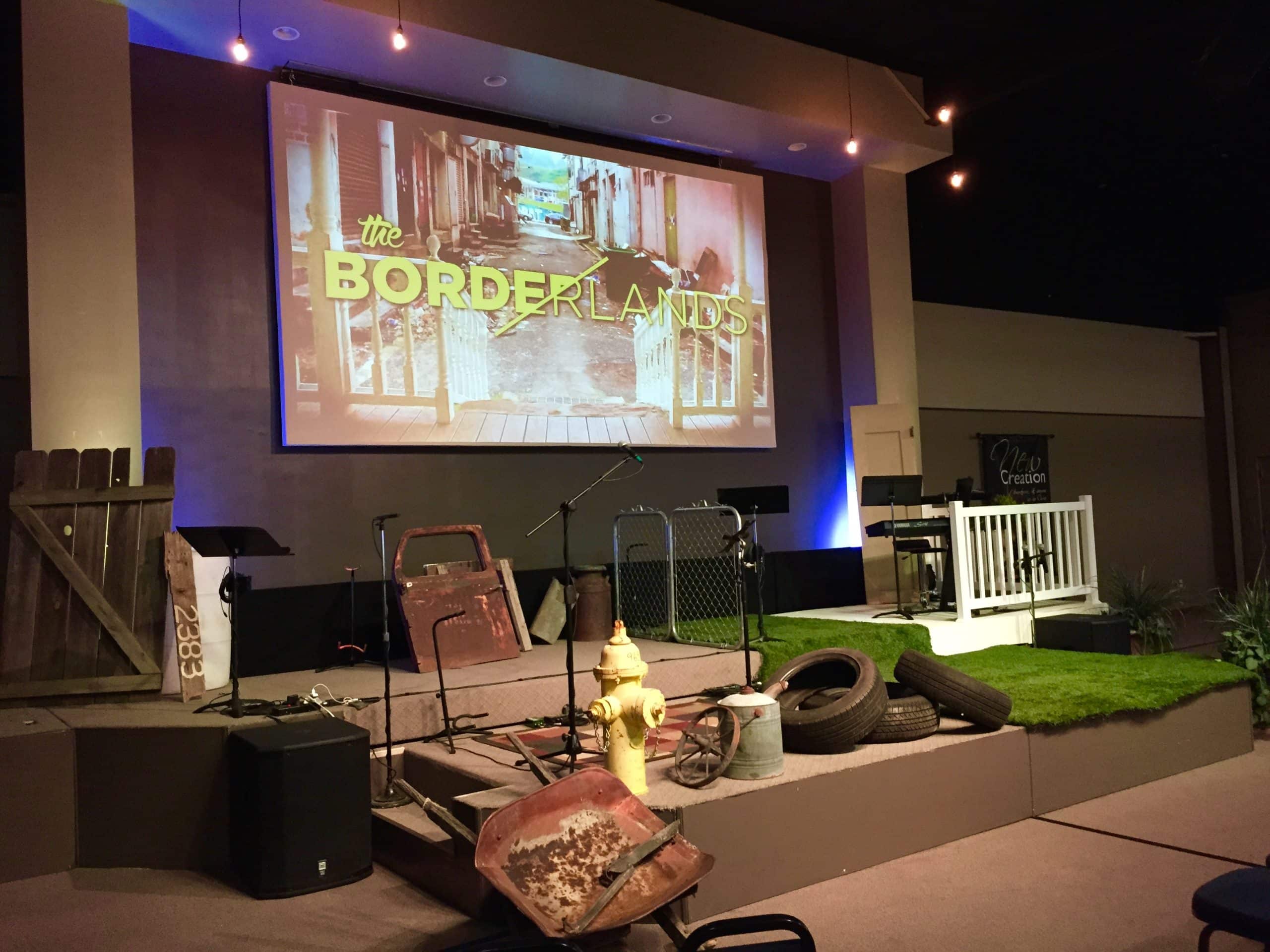
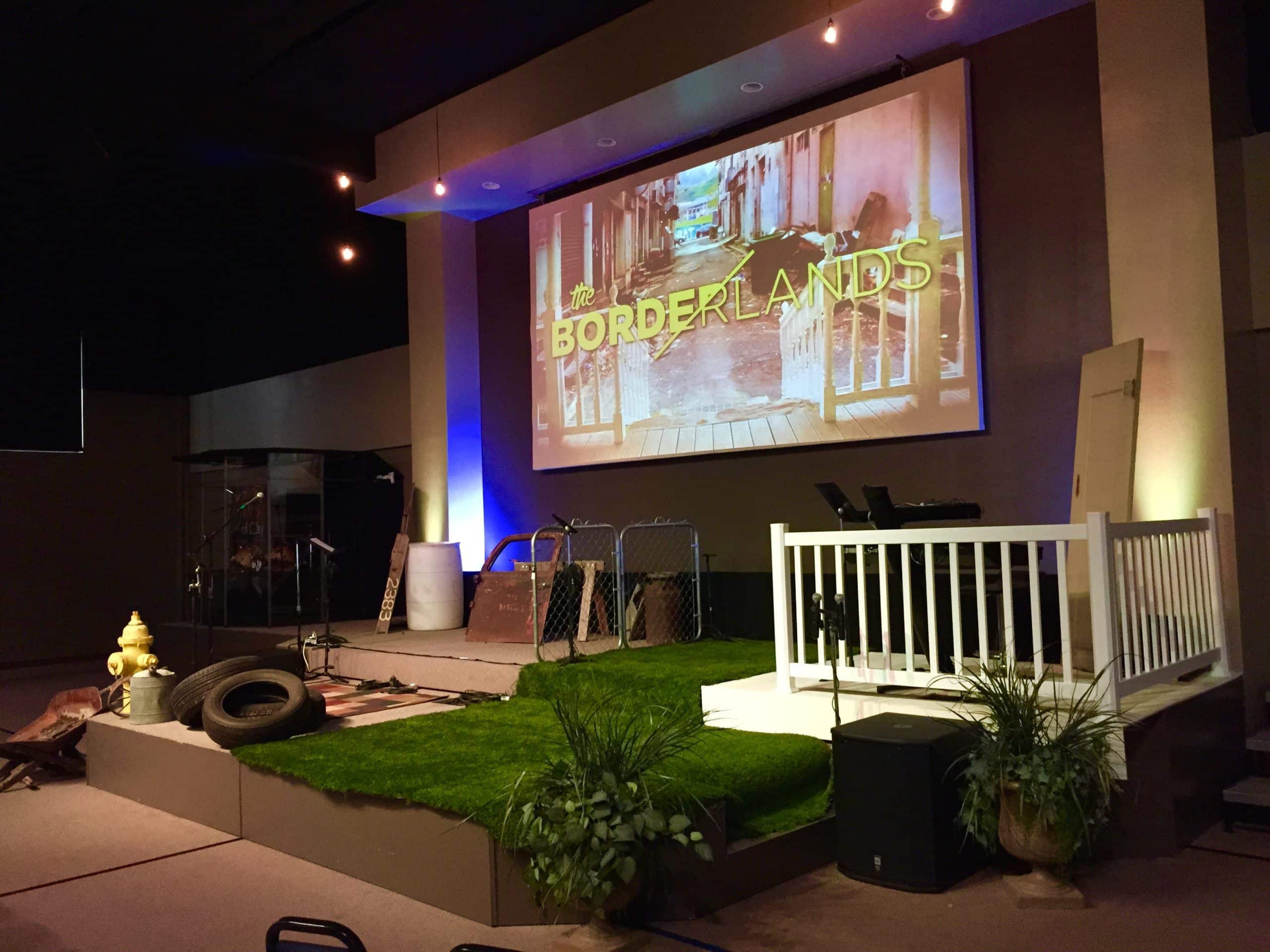
Tony Ziolko from New Community Christian Church in Salina, Kansas brings us this design themed from the John Mark McMillian song Borderland.
The idea of life in Christ which is represented on the nice porch and life separated from Christ in the world represented with the alley. The theme of the series was To Live On the Porch, Work in the Alley.
The graphic was designed by their Associate Pastor Chris Pahls and stage design was Associate Pastor Tony Ziolko.
The side of the porch used plywood painted white ($30 from Lowes) and then screwed into the stage. They purchased white porch railing from a regional home improvement store—3 posts and 2 rail kits ($200). The grass that was represented by the turf was a lucky shot. The local high school was replacing their football field turf at the same time and they were able to get it for free. The chain link fence—they bought 2 gates ($80). The gates were intentional because they wanted to separate the world from Christ but wanted to make a symbol that wasn’t just a fence, but a fence gate. Because if you are on the porch, you are called back to the alley. For the alley side, all free. Tony asked people in the church for “junk” to make it all happen.
Creating Symbolic Stage Designs for Sermon Series
Visual storytelling through stage design has become an essential element of modern worship experiences, helping congregations connect with sermon themes on a deeper, more emotional level. This Borderlands design from New Community Christian Church demonstrates how thoughtful symbolism can transform abstract theological concepts into tangible, immersive environments. The stark contrast between the pristine porch and the cluttered alley creates a powerful visual metaphor that resonates with the human experience of navigating between sacred and secular spaces.
The genius of this design lies in its accessibility and authenticity. Rather than relying on expensive theatrical elements, the team embraced a resourceful approach that mirrors the very message they sought to communicate. The free turf from a local high school represents the unexpected blessings that often arrive when churches engage with their broader communities. Similarly, the “junk” collected from congregation members transforms what others might discard into meaningful visual elements, demonstrating how God redeems and repurposes our brokenness.
The intentional choice of a gate rather than a solid fence carries profound theological significance. Gates suggest invitation and possibility—they can be opened or closed, representing the human capacity to choose relationship with Christ or remain separated. This subtle design decision transforms a simple structural element into a teaching tool that reinforces the sermon series message week after week. The visual reminder that those on the porch are “called back to the alley” challenges comfortable faith and encourages active engagement with the world.
Material selection played a crucial role in creating distinct zones within the design. The white porch railing and painted plywood establish a clean, ordered space that visually communicates peace and sanctuary. In contrast, the collected items forming the alley create organic texture and visual interest through their variety and imperfection. This juxtaposition helps worshippers intuitively understand the difference between life in Christ and life apart from Him before a single word is spoken.
Practical implementation considerations made this design achievable for volunteer teams with limited technical expertise. The plywood panels screw directly into the stage, providing stability without complex rigging. The porch railing attaches with standard hardware available at any home improvement store. For churches considering similar symbolic designs, the key lesson is starting with a clear visual concept and sourcing materials that authentically represent that idea, even if they don’t match traditional theatrical aesthetics.
Related Designs
- Falling on My Stage – Discover how to create a stunning layered foam card stage design with custom light towers and dynamic LED lighting effects.
- Taste the Rainbow – Learn how to build a wavy Coroplast backdrop with offset studs for dynamic stage lighting and visual depth.
- Notes and Lines – See how to create sheet music-inspired LED tube designs using fluorescent light protectors and diffused lighting.
- Arched Stained Glass – Explore cathedral-style stage designs using foam, fabric, and creative lighting for dramatic worship environments.
- 5 Bars – Learn how to construct budget-friendly LED bars using cable trays and LED strips for under $150.
Pro Tips for Symbolic Stage Design Projects
Start with Your Message: Before selecting materials or sketching layouts, clearly articulate the core concept you want to communicate. Write a single sentence that captures the visual metaphor, then let that guide every design decision. This clarity prevents costly detours and ensures all elements work together cohesively. Share this concept statement with your team so everyone understands the “why” behind each design choice.
Source Authentically: The most compelling symbolic designs use materials that genuinely represent the ideas being communicated. Rather than buying new items that look like what you need, seek out the real thing. Contact local businesses, schools, and community organizations for donations or surplus materials. Not only does this approach reduce costs, but it also creates stories that deepen the congregation’s connection to the design.
Create Visual Contrast: Effective symbolic design relies on clear differentiation between concepts. Use contrasting colors, textures, and organizational approaches to help viewers instantly understand what they’re seeing. In this Borderlands design, the clean white porch versus the chaotic alley creates immediate visual comprehension without requiring explanation. Consider how lighting can enhance these contrasts through color temperature and intensity.
Build for Flexibility: Sermon series designs often need to adapt or expand as the teaching progresses. Construct modular elements that can be repositioned or supplemented with additional pieces. Document your original layout with photos and measurements so volunteers can recreate the design consistently. Consider how the design might evolve week by week to support the developing narrative of the series.
Related: A Questionable Stage – Another powerful Easter stage design using simple materials to create spiritual impact
Related: Firmly Rooted – Discover how to create a stunning cross with roots stage design using butcher paper and natural elements for under $35.
Related: Gym Project – Discover how to transform a gym into a stunning worship space using Coroplast, projection, and creative lighting techniques.
Related: The Lost Stage – Discover how Quest Community Church created an epic Lost-themed stage design with a full airplane fuselage and jet engine for immersive special events.
Related: North Point Apps – Discover how North Point Church built a stunning gridded stage design with 342 App Icons using steel pipe structures and professional construction techniques.


Leave a Reply
You must be logged in to post a comment.