

Evan Courtney and his team from The Fields Church in Mattoon, Illinois bring us this creative stage from their Easter service.
To open the service, the stage had a couple 55 galloon drums spray painted and a cross/memorial of Jesus’ death.
Throughout the service they slowly transitioned the stage to a bright white scene to show the congregation the transition from dark to light.
To create the transition some of their kids:
- Removed the trash bags that were in the 55 galloon drums, and turned them over, and added a white table cloth, lamp and a vase of daisies.
- Removed the memorial of Jesus’ death.
- Added 10-12 tables covered with table clothes and table lamps, and also added a couple floor lamps.
- Placed several vases of white flowers on the tables and stage.
While the kids were doing hat, two teams were painting 20′ lilies on white fabric as it was raised into the air.
Then they passed out white flowers to the congregation.
The spread three 30′ white pieces of fabric into the crowd that they passed over their heads from the front to the back. Then they released 200 balloons at the front of the stage (which actually spontaneously turned into balloons being hit into the air from person to person).
Pretty cool way to transform a room!


Planning a Dark-to-Light Easter Stage Transformation
The memorable feature of this design is not simply the finished white stage. It is the congregation watching ordinary objects change meaning during the service. Lamps, flowers, covered tables, and painted fabric work together to turn a somber setting into a bright celebration. The suggestions below are ways to adapt that storytelling approach, not additional construction details reported by The Fields Church.
Begin by writing down the opening picture and the final picture. Sketch where the cross, drums, tables, and musicians will be in each scene, then mark the routes volunteers need between them. Decide which changes the audience should watch and which can happen quietly outside the main sightline. A smaller church might use two tables and a few flower arrangements rather than reproduce every element. Preserve the clear contrast between the two scenes instead of trying to match the original scale.
Rehearse the Transition as Part of Worship
Create a cue sheet that lists each movement in order, including who carries an item, where it goes, and what signals the next action. Rehearse first with work lights on, then with the actual service lighting and music. Time the change at a comfortable walking pace. If children participate, assign adult supervision and give them lightweight, simple tasks; leave heavy objects, power connections, and overhead work to responsible adults.
Prepare each table as a complete unit wherever possible. Check that cloths do not trail into walking routes and that vases remain stable when people pass nearby. Group lamps so they read as a deliberate arrangement rather than scattered household furniture. Test the final scene from the back row and through the livestream camera with someone standing at the speaking position. The white surfaces should feel bright without overwhelming faces or losing all detail on camera.
Adapt the Materials to Your Room
Inventory suitable lamps, tables, cloths, and vases already available before preparing a shopping list. Compare real flowers with reusable artificial arrangements, and test a small grouping under the planned lighting before ordering the full quantity. Keep any estimate separate from the original submission: no complete project budget was reported here. Include storage, cleaning, approved attachment hardware, and setup time in your own plan.
The original story includes raised fabric, fabric passed over the congregation, and balloons. Those moments are not essential to communicating the transformation. A stationary white backdrop and flowers placed at the stage edge can retain the visual idea with less audience movement. If you include suspended scenery, have a qualified installer plan its support and movement. Confirm venue requirements for fabric, electrical equipment, clearances, and exits before rehearsal. Use compatible lamps and controls, and avoid treating decorative tables or drums as load-bearing platforms.
Related Designs
- Clever Christmas Wreath Lamps – Compare another service-centered design that gives decorative lighting a symbolic role.
- Shining Shimmering Splendid – Explore sheer fabric, small lights, and standing lamps in a layered seasonal setting.
- Painted and Brushed – See another approach to painted scenic surfaces and volunteer-made visual texture.
- Cross Brings Life – Consider white paper flowers for a reusable Easter focal point.
- White Stage – Compare a coordinated white backdrop, floor, and platform skirts.
Pro Tips for Lights and Flowers
Assign one cue leader: Give volunteers a single person to watch for transition signals so movements stay coordinated with the service.
Check lamp brightness together: Test the whole collection at once. Different shades and bulbs can create distracting bright spots even when each lamp looks suitable by itself.
Keep the transformation readable: Choose a few unmistakable changes, such as uncovering white tables and adding flowers, rather than filling every moment with activity.
Plan a repeatable reset: Photograph both scenes, label the table positions, and store small props together so another volunteer team can recreate the arrangement.

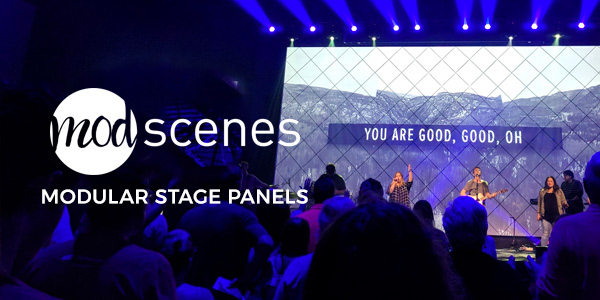

Thanks for highlighting us.
Here is the video of the actual creative element. http://vimeo.com/22825463
And more in depth details of videos used, and how we pulled it off. http://bit.ly/fZgZUB
Hi,
what software do you use for the three projectors? Looks realy good.
@Raphi – The software we use is ProPresenter and then a TripleHead2Go device. If you have any other questions shoot me an email evan.courtney@gmail.com
where did you get your screen from?
I’m not positive on the exact company. Its a spandex material.