


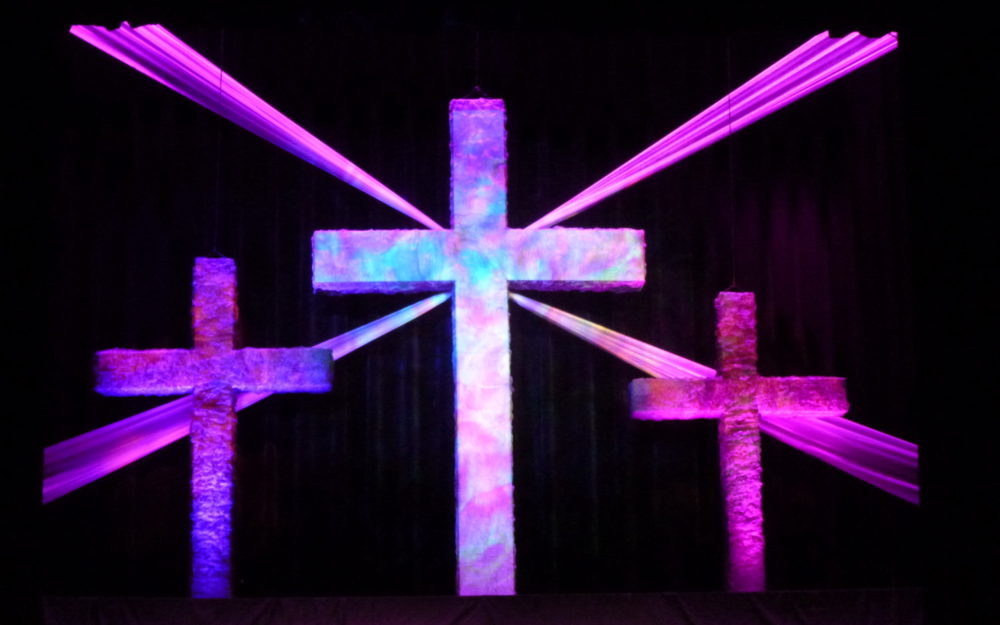
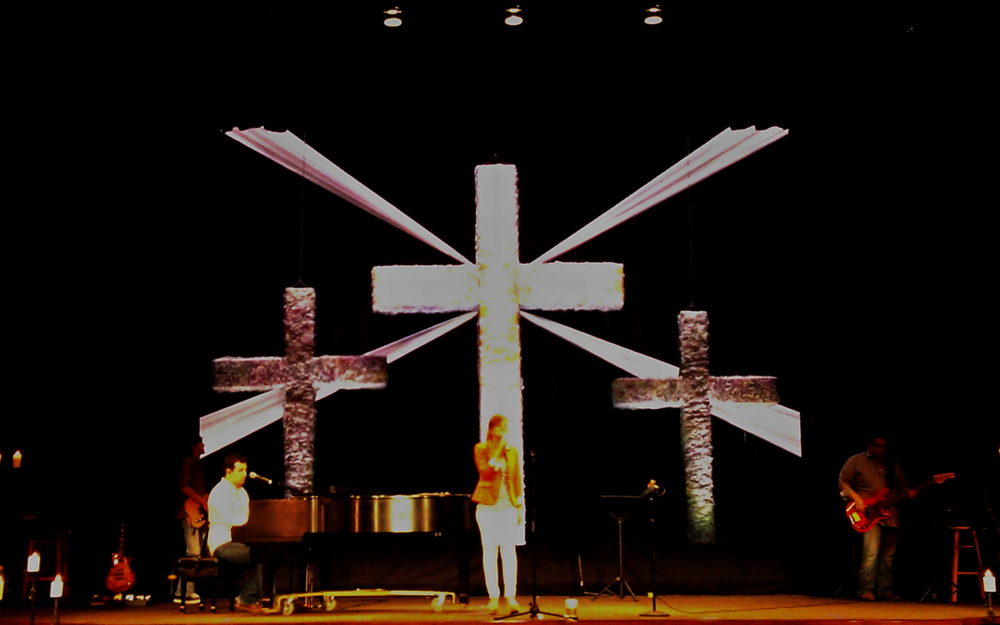
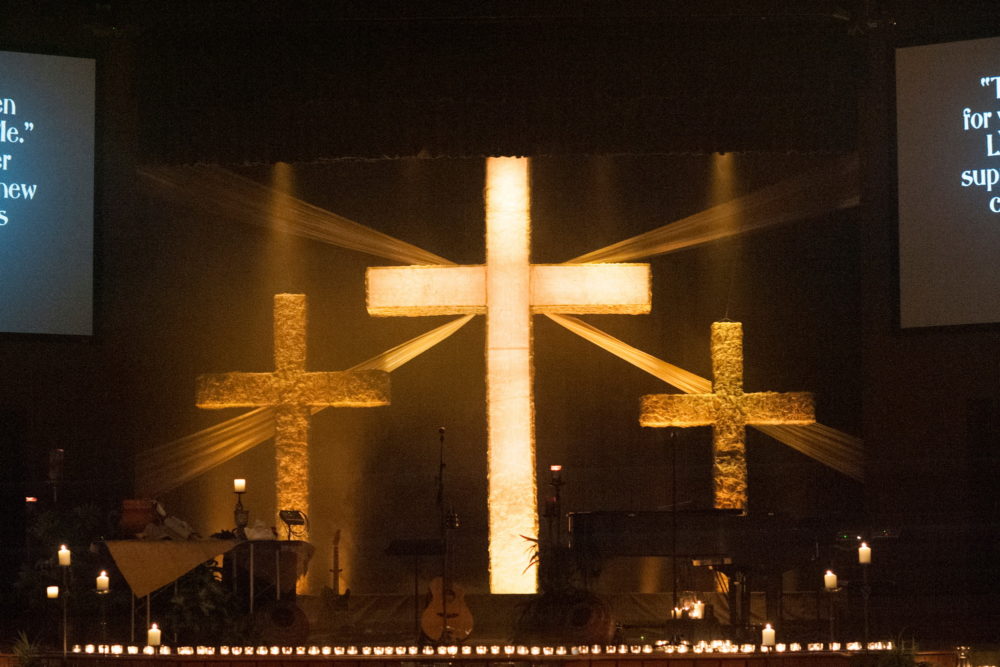
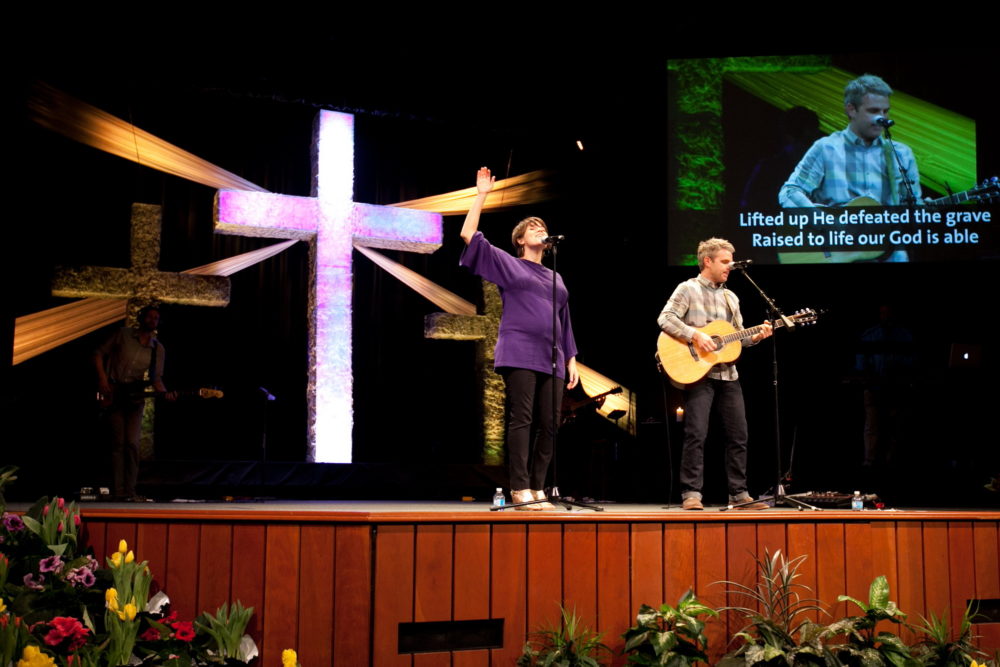
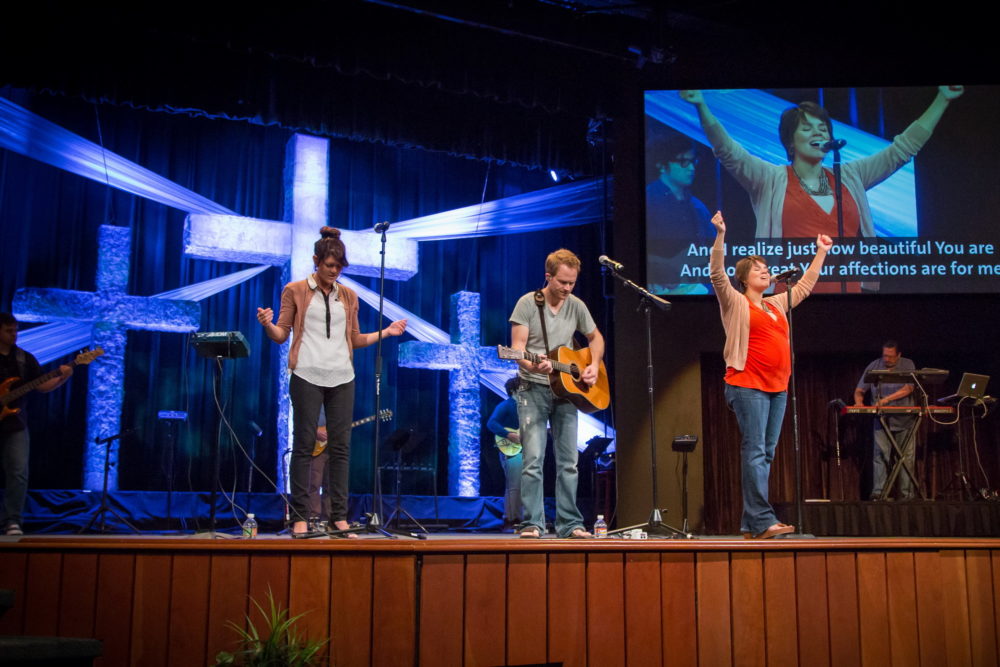
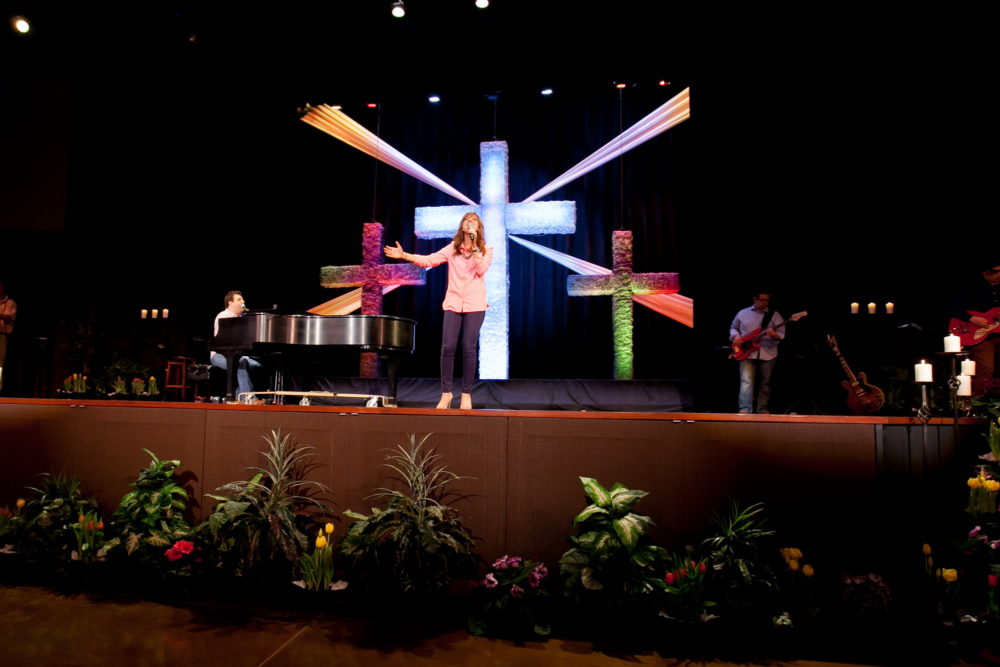
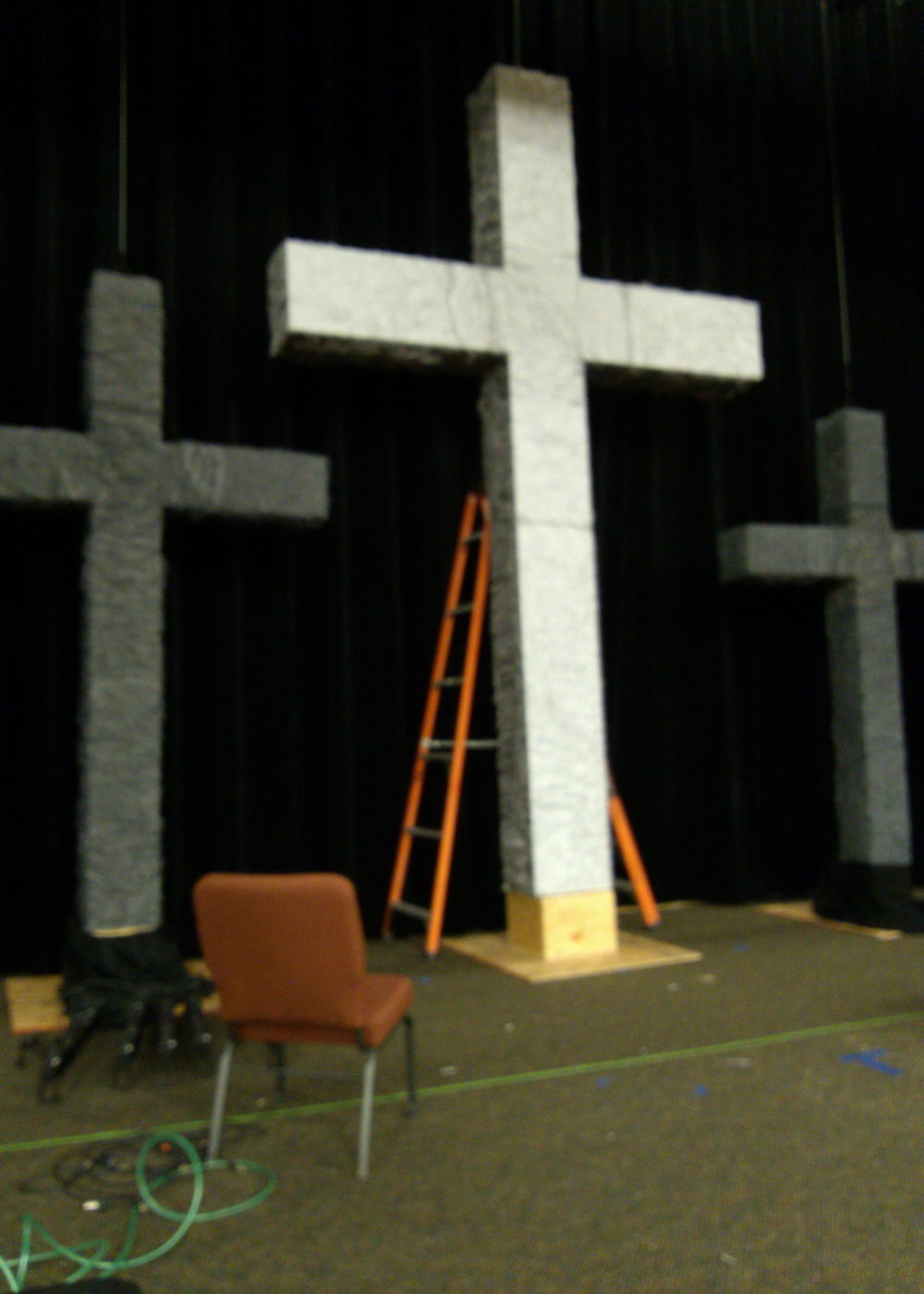
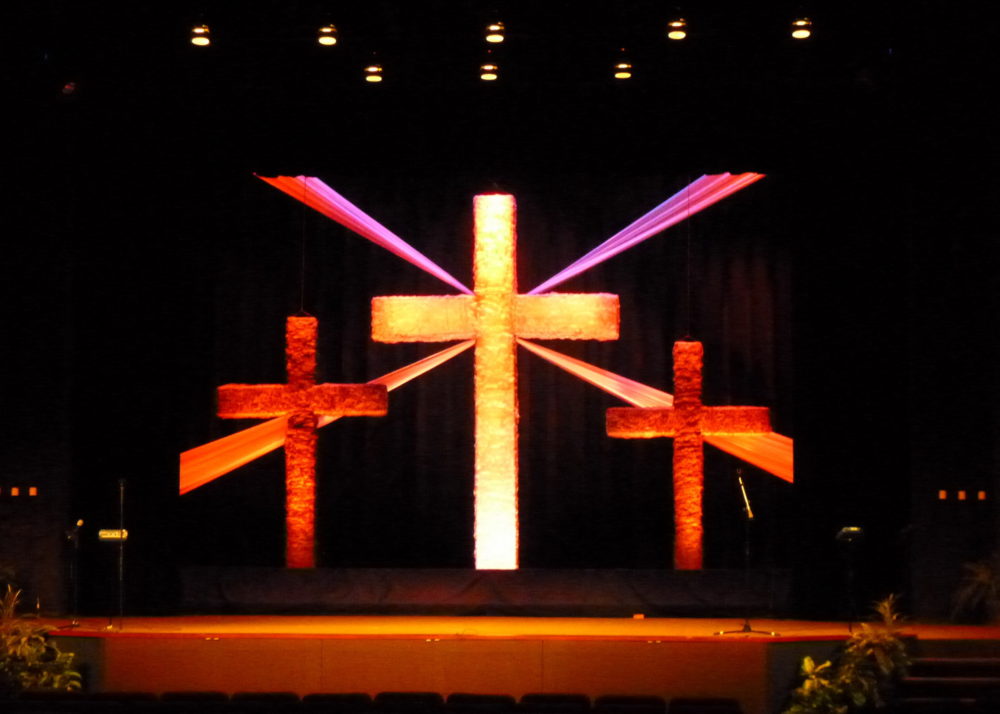
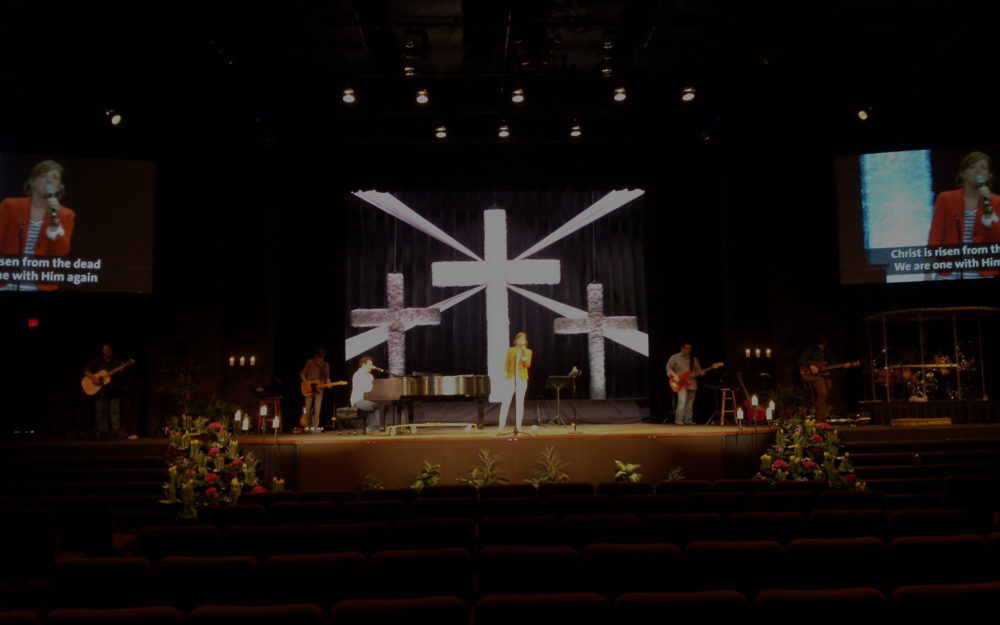
Pat Miller and Brandon Stephens from Faithbridge Church in Spring, TX bring us this soft Easter backdrop.
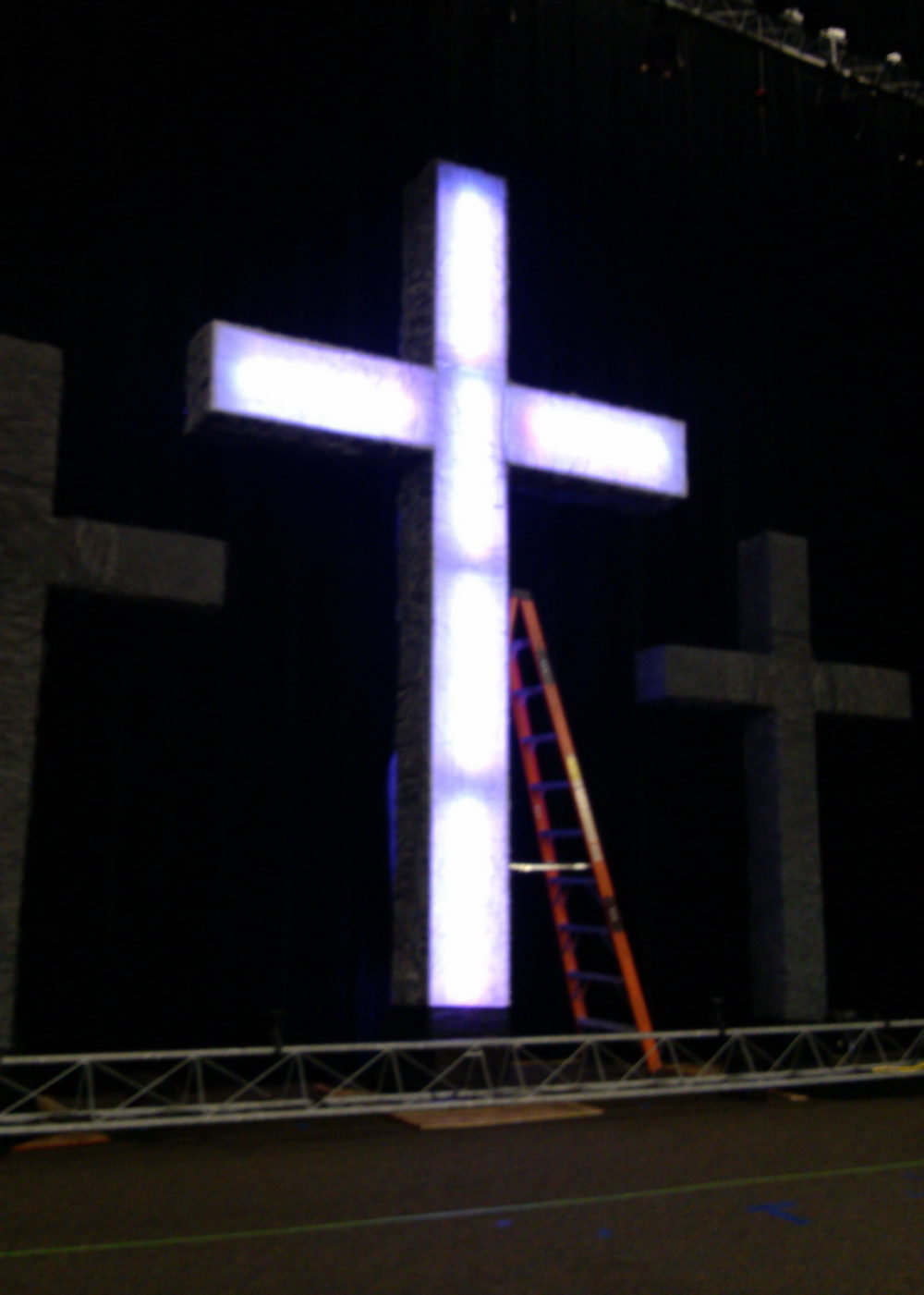
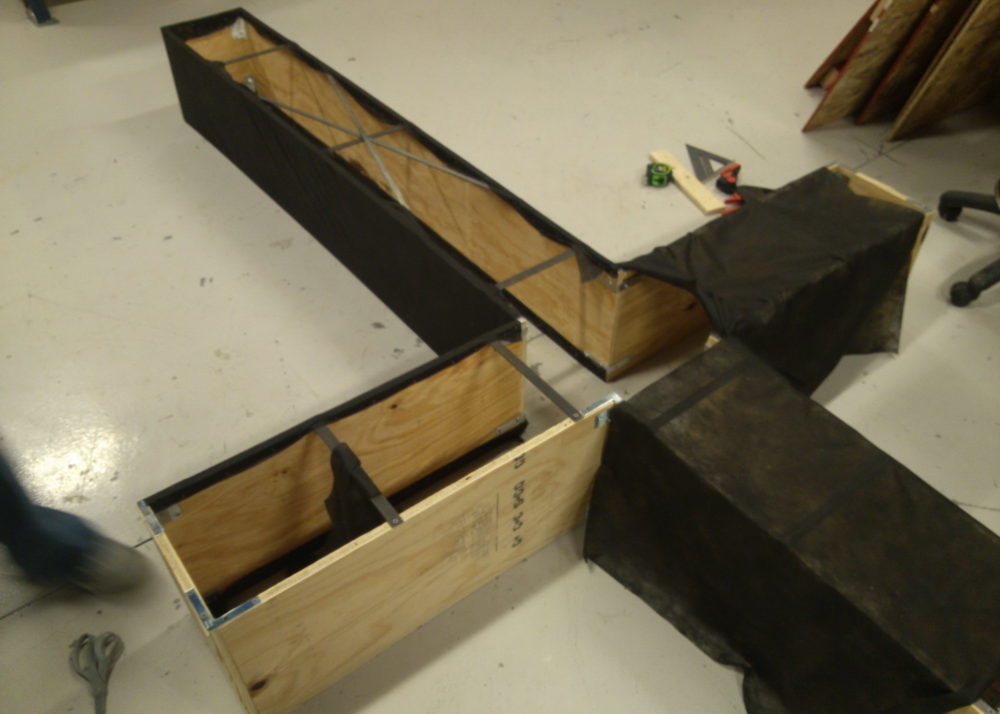
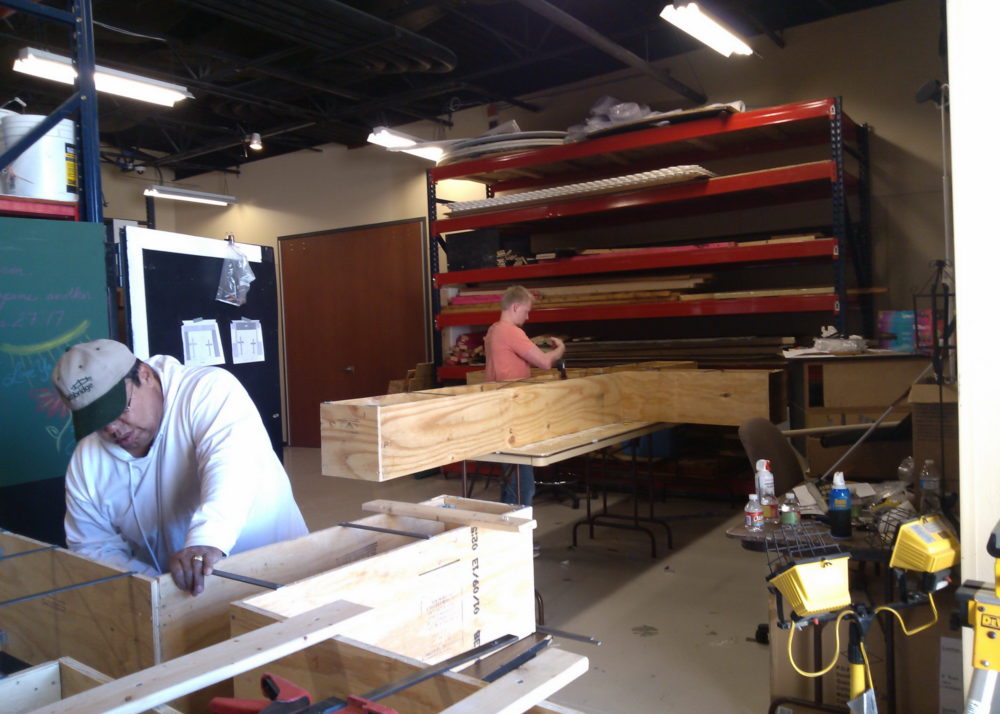
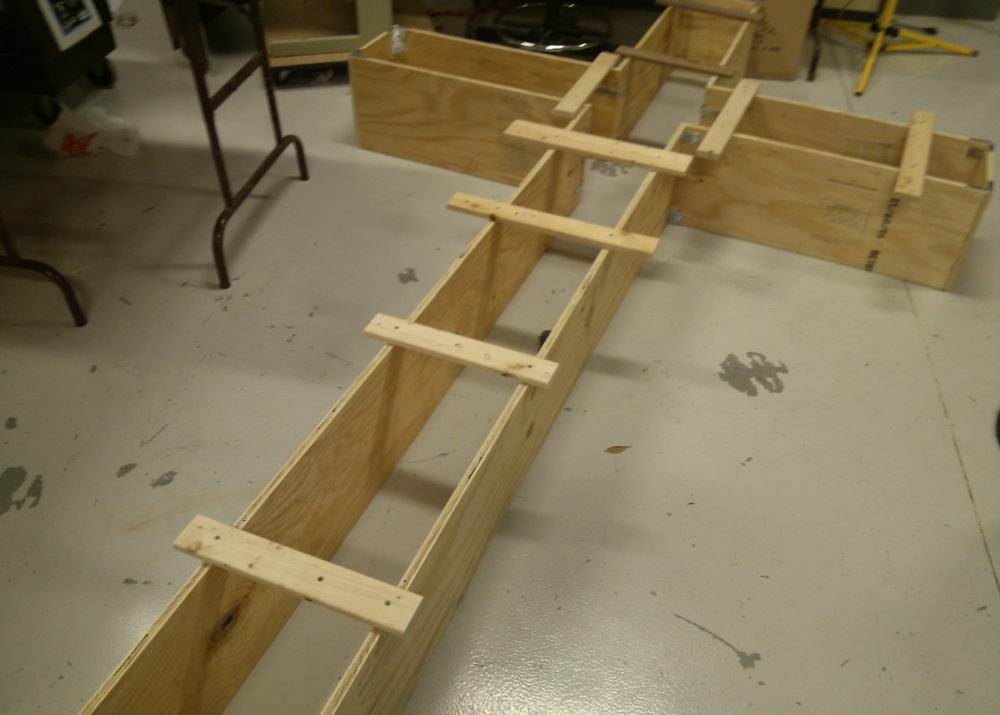
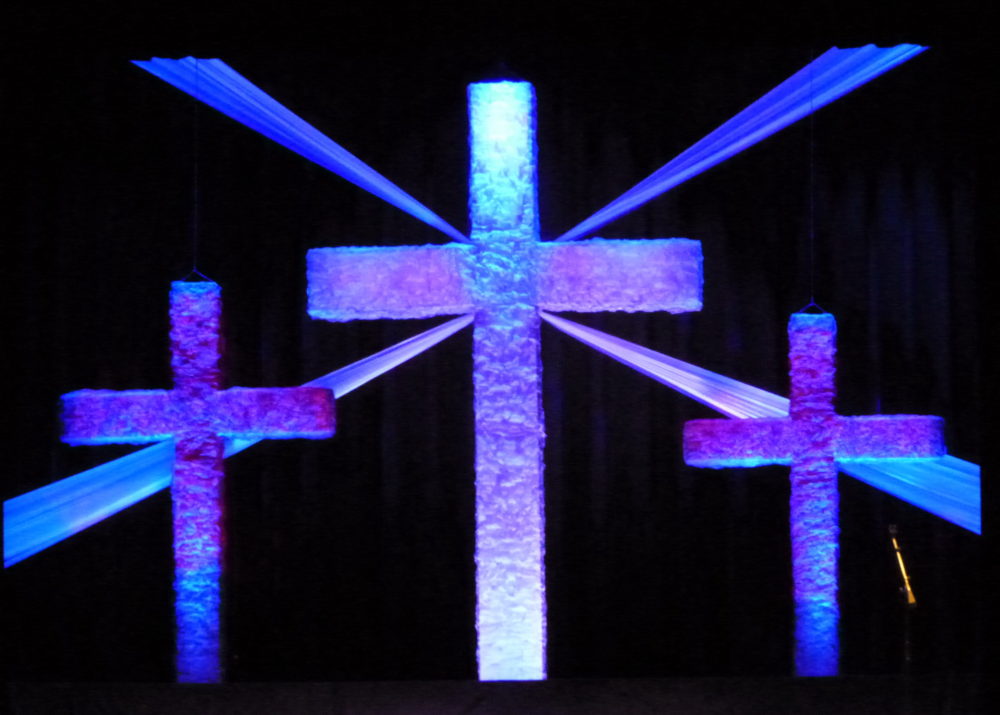
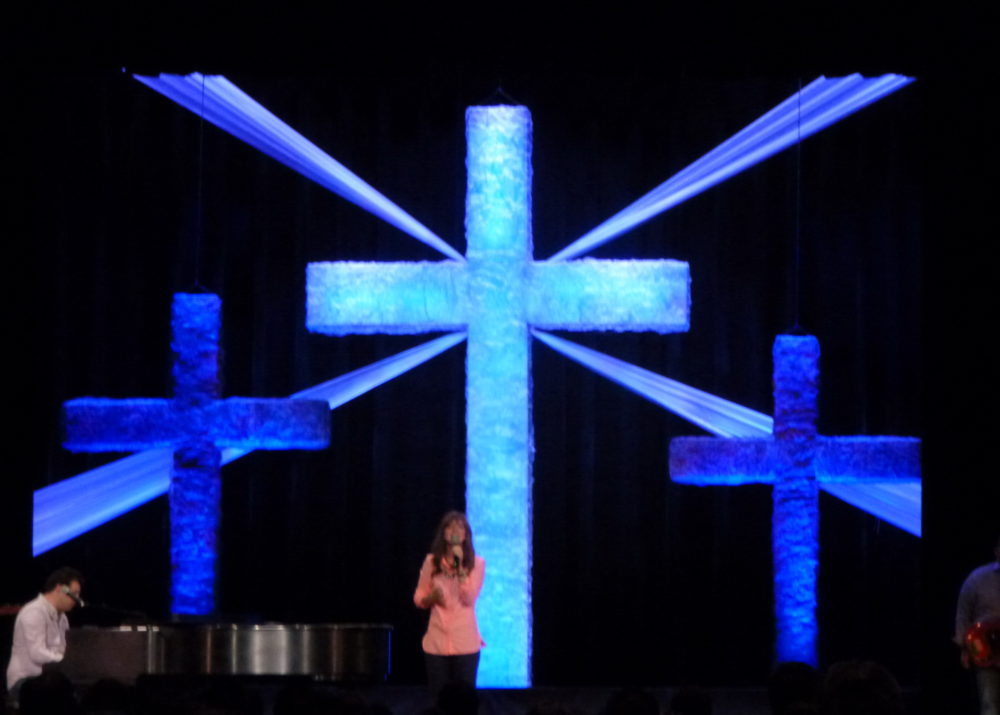
They constructed three plywood framed crosses; open on the back, white Coroplast on the front and a layer of black landscape fabric on the sides. The large center cross was then covered front and sides with crumpled bright aluminum screen. The smaller crosses were covered with crumpled charcoal (black) aluminum screen. The crumpled screen created some interesting looks depending on how you lit it.
They backlit the large center cross with six Chauvet Colorband Pix fixtures inside and lined the sides inside with aluminum foil to maximize the light. This gave it a white glowing effect. They used their inventory of Chauvet Tri-Tour LED pars on the floor in front and hung above to light the fronts of all the crosses. The front lighting was positioned close to the crosses to better catch the texture of the crumpled screen. The “rays of light” coming from the center cross were done with some donated shear white fabric. All of the crosses were supported from above with steel cables as well as screwed down to plywood bases.
They spent about $600 on each stage for plywood, Coroplast, aluminum screen, landscape fabric, foil and fasteners. The LED lights were all from their inventory.
Creating Texture with Aluminum Screen
The Soft Crosses design demonstrates how everyday materials can create extraordinary results when applied with intention. The crumpled aluminum screen technique used by Pat Miller and Brandon Stephens at Faithbridge Church transforms simple crosses into luminous sculptures that respond dynamically to lighting changes.
The key to this texture is in the crumpling technique. Rather than smooth, flat application, the screen is loosely crumpled and then attached to the cross frames, creating countless facets that catch and reflect light. This approach means the crosses look different from every angle and under every lighting condition—a static structure with dynamic visual properties.
The material selection shows thoughtful consideration of both aesthetics and theology. The bright aluminum on the central cross creates a glowing, ethereal quality perfect for representing hope and resurrection. The charcoal screen on the flanking crosses provides contrast while maintaining textural harmony. The black landscape fabric on the sides ensures clean edges and professional finish.
Internal lighting takes this design to another level. The six Chauvet Colorband Pix fixtures inside the center cross, combined with aluminum foil lining to maximize reflection, create that distinctive glow that seems to emanate from within. This technique—lining interior spaces with reflective material—is applicable to countless other designs and dramatically increases lighting efficiency.
Construction Details and Variations
The $600 cost per stage reflects quality materials: plywood for structural frames, Coroplast for smooth front surfaces, aluminum screen for texture, landscape fabric for clean edges, and aluminum foil for light reflection. The LED fixtures were existing inventory, which kept costs manageable.
For churches wanting to adapt this concept, consider scale variations. The three-cross arrangement works at various sizes—from intimate chapel settings to large auditorium stages. The proportional relationship between the center and side crosses (typically 2:1 or 3:2 height ratio) matters more than absolute dimensions.
Alternative materials can achieve similar effects. Chicken wire or hardware cloth can substitute for aluminum screen, though they create different textures. Fabric versions using metallic organza or lamé offer lighter weight options. The key is finding materials that interact interestingly with light.
Related Designs
- Romans Reflections – Elegant use of greenery and layered elements
- Slat by Slat – Textural backdrop with LED backlighting
- Turn Back Time – Creative construction with Coroplast elements
- Jitter Plates – Budget-friendly textural surface technique
- Fragmentation – Dynamic industrial aesthetic
Pro Tips for Cross Designs and Easter Stages
Test Your Screen Texture: Before committing to full coverage, experiment with different crumpling techniques on sample pieces. Some materials crumple into tight balls while others form looser waves. The density of crumpling affects how light interacts with the surface.
Plan Your Internal Lighting: When backlighting or internally lighting structures, position fixtures to avoid hot spots while ensuring even illumination. The aluminum foil lining technique used here is essential—without it, much of your light gets absorbed rather than reflected outward.
Consider the Complete Service: Easter services often include multiple elements—baptisms, communion, special music. Design your stage to accommodate these activities. Ensure crosses are positioned to not block sightlines to baptisteries and that the lighting scheme works for both celebratory and reflective moments.
Build for Multiple Uses: While designed for Easter, crosses can be adapted for other services throughout the year. Consider how your crosses might work for Good Friday, regular Sunday services, or special events. Modular construction allows you to use individual crosses or the complete arrangement as needed.
Related: Haze Days – How much haze to use in church services.
Related: Light Bulb Wall Panels – Modular light panels for church stages.


Leave a Reply
You must be logged in to post a comment.