


When you spend 17 weeks in the book of Romans, every sermon carries weight—and every visual element on stage tells part of the story. Whether you’re a seasoned production designer or stepping into this role for the first time, crafting a stage that visually supports your message can make all the difference.
In Fredericksburg, VA, at Stafford Crossing Community Church, Chris and the worship arts team brought this vision to life with thoughtful, reusable, and richly layered design.
A Stage That Speaks Truth — and Beauty
1. A Backdrop with Substance-
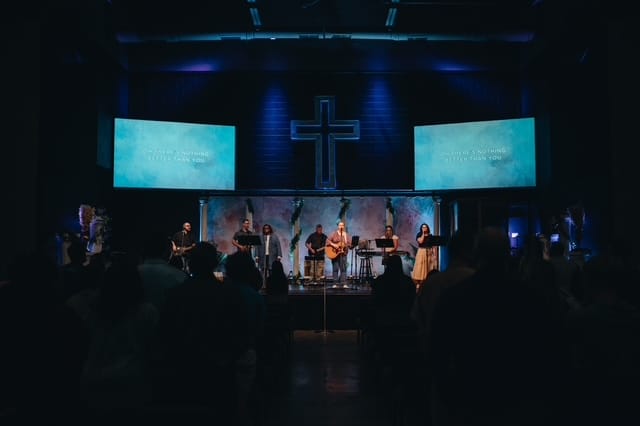
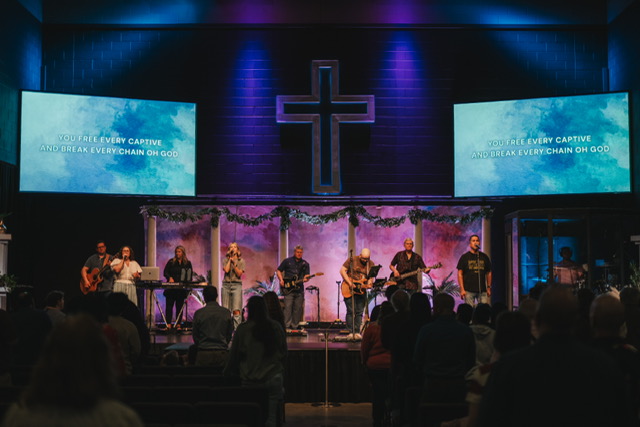
The series began with a striking mottled-color backdrop, printed in vivid detail by 777Sign.com.This backdrop anchored the visual theme: textured, dynamic, and deeply resonant—much like Paul’s letter to the Romans.
2. Columns as a Visual Foundation
Fiberglass columns from Lowe’s flanked the back of the stage, echoing the classical architecture that evokes Rome itself. These clean vertical elements provided structure—and a nod to the timeless truths conveyed in the text.
3. Layers of Greenery for Depth and Life
To soften the scene and create depth, Chris added lush garlands of greenery and fake potted palms. Visually rich and versatile, these elements brought a sense of life that complemented the backdrop’s texture—without overwhelming the central elements.
4. Front Corners Dressed with Reusable Flair
At the stage’s front corners, Chris placed paper columns, sourced from Oriental Trading Company (about $200 per set). Surrounding them with silk olive trees, palms, ficus plants, and decorative vases added vibrancy. Best of all? Many of these pieces are repurposable—ready for Easter, Good Friday, or future sermon series.
5. Lighting That Layers Mood and Focus
Bringing the set to life, Chauvet ColoRado Battens were used for up lighting. These fixtures added dimension, accentuated textures, and allowed for subtle shifts in atmosphere across the 17-week series.
Why This Design Works So Well
- The book of Romans balances robust theology with deep relational truths. This set mirrored that tension:
- Strong, architectural elements (columns) for biblical foundations
- Rich textures and lush greenery for spiritual growth and vibrancy
- Dynamic lighting to guide emotion and focus
Add in Stafford Crossing Community Church—a non-denominational church rooted in biblical teaching, warm community, and uplifting worship—and Chris’s thoughtful design reflected not just Romans, but the values of the lively congregation in Fredericksburg, VA.
Designing for Long-Term Sermon Series
When planning a stage design that needs to last for 17 weeks, several key considerations come into play. First, durability matters—invest in quality materials that can withstand weekly wear and tear. The fiberglass columns and printed backdrop used here can be stored and reused for future series, making them cost-effective over time.
Second, consider the visual longevity. A design that looks stunning in week one needs to remain engaging week after week. The layered approach used here—backdrop, columns, greenery, and lighting—creates enough visual complexity that congregants notice new details throughout the series. The textured backdrop reveals different qualities under varying lighting conditions, keeping the visual experience fresh.
Third, plan for seasonal transitions. Since this series spans multiple months, the design needed to work whether it was the dead of winter or early spring. The combination of warm greenery and architectural elements provides year-round relevance. The team at Stafford Crossing also designed the setup to accommodate occasional modifications—swapping out plant arrangements or adjusting lighting scenes—to provide subtle variations throughout the series.
From a budget perspective, this design demonstrates smart resource allocation. The backdrop investment ($200-400 depending on size) serves as the visual anchor, while the columns ($50-80 each at Lowe’s) provide structural presence. The greenery and paper columns ($200 from Oriental Trading) add volume without significant expense. The lighting fixtures represent the largest investment but are permanent equipment that serves the church year-round.
Implementing This Design in Your Space
Adapting this concept to different auditorium sizes requires thoughtful scaling. For smaller spaces (under 200 seats), consider using 2-3 columns instead of a full set, and reduce the backdrop width proportionally. The key is maintaining visual balance—ensure the stage elements don’t overwhelm the room or feel lost in it.
For larger venues (500+ seats), scale up the column height and consider adding additional layers of greenery or secondary backdrop elements to ensure the design reads clearly from the back rows. The Chauvet ColoRado Battens work well in medium to large spaces; smaller venues might achieve similar effects with more affordable LED strip options.
Related Designs
- Slat by Slat – Another textured backdrop approach using wooden slats with LED backlighting
- Soft Crosses – Elegant use of layered materials and internal lighting for Easter
- Turn Back Time – Creative construction techniques for building dramatic stage elements
- Jitter Plates – Budget-friendly textural wall option using paper plates
- Fragmentation – Dynamic use of corrugated metal for dramatic visual impact
Pro Tips for Sermon Series Stage Designs
Plan for the Long Haul: When designing for multi-week series, build in elements that can be slightly modified week to week. Changing lighting colors, adding seasonal touches, or repositioning greenery can keep the design feeling fresh without requiring major rebuilds.
Layer Your Lighting: The difference between a good stage design and a great one often comes down to lighting depth. Use up-lighting, down-lighting, and backlighting in combination to create dimension. The Chauvet ColoRado Battens used here provide both color flexibility and reliable performance.
Invest in Reusable Elements: Quality columns, artificial plants, and durable backdrops may cost more upfront but save money over time. Build a “design library” of these elements that can be repurposed and recombined for future series.
Consider Sight Lines: Before finalizing placement, walk the entire auditorium and check sight lines from different seating areas. What looks perfect from center stage might be partially obscured from side sections. Adjust element positioning to ensure all congregants have a clear view.
Related: Blacking Out Your Stage – Stage masking techniques for churches.
Related: Shorty Got Low, Low, Low – See how Lighthouse Church used mirror-topped boxes and spandex to transform their low-ceiling stage design.


Leave a Reply
You must be logged in to post a comment.