



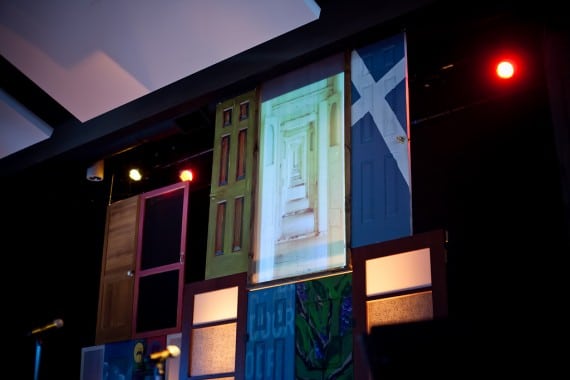
Tracy Grubbs from Lake Forest Church in Huntersville, NC, brings us this set for their series “Open Doors”.
Tracey shopped Habitat for Humanity ReStore for some great doors that varied in size and color. Then they recruited artists from the church to paint a door–no other instructions, no theme for the doors. Then they assembled them into 3 door walls.
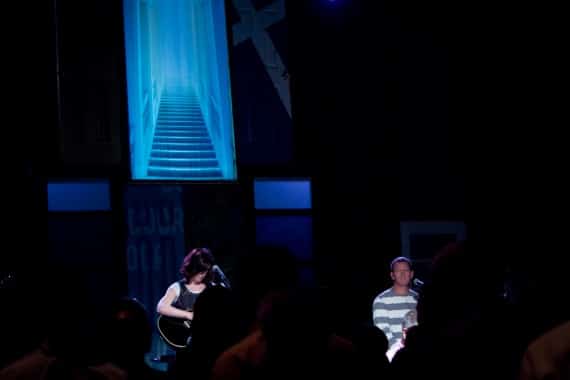
They lit them with Source4s from the front with a seedy pink color and through the glass with a yellow-gold color. Then they created a ‘digital door’ using Coroplast and a projected image.
They also had “response stations” associated with the series. They were fashioned as doors as well, carrying the image through the whole service.
Total cost of the doors: $200.




Why a Door Backdrop Works
Old doors give a stage instant texture without asking volunteers to build a complicated scenic wall. Different heights, panels, glass, and paint finishes create a rhythm across the platform, while the shared door shape keeps the collection cohesive. In this Lake Forest Church design, the doors also reinforced the Open Doors series theme. The response stations carried that visual language beyond the stage, helping the room feel like one connected environment rather than a backdrop and a separate activity area.
For a similar design, start with a simple floor plan. Measure the usable stage width, note exits and camera sightlines, and sketch three groupings before buying anything. ReStores, salvage yards, and church members can provide a mix of hollow-core and solid doors. Choose a few strong shapes first, then fill gaps with narrower pieces. Test the arrangement on the floor so a tall door does not hide a vocalist or block a projection surface. Photograph the trial layout and label each door before moving it into place.
Building and Lighting a Reclaimed-Door Set
Make stability the first construction decision. Doors can be heavy and unexpectedly top-heavy, especially when several are joined into one wall. Have a qualified team design freestanding bases or approved attachments for the venue, keep the assembly clear of exits, and check that hinges, glass, and hardware cannot snag people or cables. Remove loose knobs and sharp edges. If a door is painted, clean it and test primer on a small area so artwork adheres to the existing finish. Invite artists to vary color and pattern, then repeat one or two colors across the groups to tie the set together.
Light the doors in layers. A soft front wash reveals the painted surfaces; a warmer backlight can make glass panels glow and separate the doors from the background. Aim fixtures from audience and camera positions before settling on color, because a saturated wash may flatten fine artwork. The projected Coroplast door offers another layer of contrast: keep spill off its surface so the digital image remains legible. Build a simple teaching look as well as a more colorful music look, and rehearse transitions with the response stations visible.
The original team sourced its doors for $200, a useful example of what creative reuse can accomplish. That figure is not a current project estimate: your budget should also include lumber or rated hardware for support, paint, transport, safe electrical runs, and any rental lighting. When planning, price the complete installation rather than only the reclaimed pieces. Store doors upright and secured between uses so the set remains practical to reuse.
Pro Tips for a Door Stage Design
- Vary the silhouettes: Mix heights and panel styles, but leave enough open space around faces and instruments for clear sightlines.
- Anchor every grouping: Have a competent builder verify bases, connections, and venue-approved attachment points before volunteers work nearby.
- Test color on camera: Compare warm and cool looks on the actual painted doors, not just on an empty stage.
- Carry the theme into the room: Repeat a door shape or painted detail at response stations without obstructing circulation.
Related Designs
- Pallet Canvas – See another adaptable backdrop made from reused materials.
- Sloppy Love – Explore a stage built from salvaged industrial elements.
- Glowing Woods – Pair reclaimed wood texture with integrated light.
- Weathered – Compare a rustic set using recycled scenic pieces.
- Road Trip – See how collected props carry a series theme across the stage.
Related: Offset – Compare four separated projection panels with a white wood-strip backdrop, including masking and lyric-layout ideas.


The worship arts design team at Lake Forest never ceases to amaze me with their creativity and resourcefulness. They are remarkably creative in ways I can’t begin to touch. Kudos to an awesome team who ‘Brings it’ every Sunday!
a door able! (sorry SOMEONE had to say it!!!) LOL
Ha! Nice :)