



Brian from Canaan Baptist in St. Louis, MO brings us this stage design that transitioned over services.
For Good Friday service through their Easter services, they set out to design a stage that was multi-puposed, functional, and told the story from death to life.
They started with reclaimed wood from previous designs and created (7) 3′ x 3′ boxes which only cost them time. This reclaimed wood was also used behind their band using a zagged fence set up to provide a bit of continuity to their stage design. Also only costing time.
They added six ceiling to floor burlap banners (in the rustic feel-to complement the boxes). They chose a bright-shaded burlap, because they knew they wanted them to be able to “pop” the light from their up light LED PAR-64s, especially on Easter Sunday. This cost them $200 at a local Hobby Lobby, and had to be special ordered about 3 weeks out.
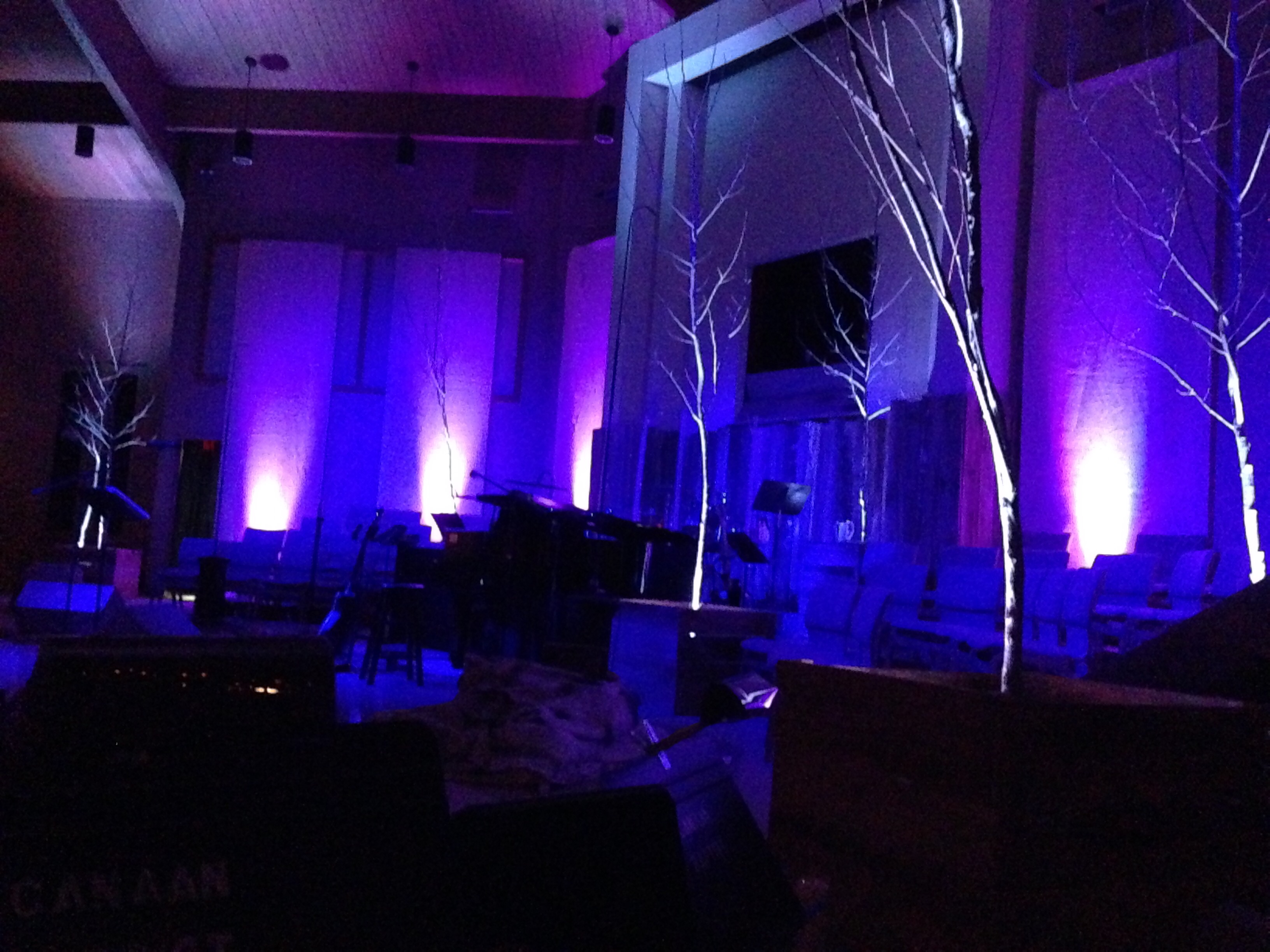
For their Good Friday service, they used trees cut from the back of their property a month ahead of time to allow them to dry and also allowing them to lightly hit them with some white spray paint (they wanted the true dead feeling for their Good Friday Service). This again, only cost them time.
For Easter Sunday, they did a quick exchange of the dead trees for live cherry and pear trees (which worked perfectly because they were budding and showing the new life). These cost $40 each at a local discount nursery. That total cost was $280, which they recouped as they sold them to church members after Easter.
Good Friday
They used rich purple colors, accented by the pure LED white up light to create a feeling of death.
Easter Sunday
They had a dramatic change using vibrant “spring colors” to up light the banners and living trees.
Design Concept and Spiritual Journey
The creative team at Canaan Baptist envisioned a stage that would physically manifest the theological journey from death to life that defines the Easter season. This ambitious design required careful planning and a deep understanding of how visual elements can reinforce spiritual messaging. The transformation from somber Good Friday to celebratory Easter Sunday needed to be both dramatic and meaningful, creating a worship environment that would help congregants experience the resurrection story in a tangible way.
The multi-purpose nature of this design demonstrates exceptional stewardship of resources. Rather than creating two separate sets, the team developed a single foundation that could be modified quickly between services. This approach not only saved money but also created a powerful visual metaphor: the same stage that represented death and mourning on Friday would burst into life on Sunday, mirroring the Christian narrative of transformation and hope.
Construction Techniques and Material Selection
The reclaimed wood boxes showcase creative resourcefulness that many churches can emulate. By repurposing materials from previous designs, the team minimized costs while adding layers of history and meaning to the set. Each 3′ x 3′ box was constructed to be lightweight yet sturdy, allowing for easy repositioning during the service transition. The zagged fence pattern behind the band created visual rhythm and depth, drawing the eye across the stage while maintaining the rustic aesthetic.
The burlap banner selection reveals sophisticated thinking about material properties and lighting interaction. Burlap’s natural texture catches and diffuses light beautifully, creating soft, organic shadows that add dimension to the stage. The bright shade chosen specifically for this project ensured that the up-lighting would create vibrant, saturated colors rather than appearing muted or dull. This attention to how materials respond to LED lighting demonstrates professional-level design thinking accessible to volunteer teams.
The tree transformation strategy shows remarkable planning and horticultural knowledge. By cutting trees a month in advance, the team allowed natural drying to occur, creating the authentic “dead” appearance desired for Good Friday. The light application of white spray paint enhanced this effect without making the trees look artificial. The replacement with live cherry and pear trees brought genuine new life to the stage, their budding branches providing organic, ever-changing beauty throughout the Easter services.
Lighting Design and Color Psychology
The lighting strategy for this design leveraged color psychology to enhance the emotional impact of each service. Purple lighting on Good Friday created an atmosphere of solemnity and reflection, appropriate for commemorating Christ’s sacrifice. The use of pure white accent lighting provided contrast and visual interest while maintaining the somber mood. This combination demonstrated how thoughtful lighting choices can guide congregational emotions without a single word being spoken.
For Easter Sunday, the shift to vibrant spring colors represented more than just a visual change—it was a theological statement. The warm yellows, fresh greens, and bright pinks flooding the stage communicated joy, renewal, and celebration. The LED PAR-64 fixtures provided the intensity needed to make these colors pop against the burlap and wood elements, while their energy efficiency kept operating costs low. The ability to program these color changes allowed for smooth transitions during worship, enhancing rather than interrupting the flow of the service.
Budget Analysis and Cost Recovery
This project’s financial model offers valuable lessons for churches of all sizes. With a total cash outlay of just $480 ($200 for burlap banners plus $280 for live trees), the team created a professional-quality stage transformation. The decision to sell the live trees to congregation members after Easter effectively made the Easter Sunday portion of the design revenue-neutral, demonstrating creative thinking about resource lifecycle.
The heavy reliance on volunteer labor and reclaimed materials kept costs minimal while maximizing impact. Churches with limited budgets can learn from this approach: invest in elements that create the most visual impact (the burlap banners and trees), while sourcing structural materials from existing inventory or donations. The result proves that effective stage design doesn’t require massive budgets—just creativity, planning, and willing volunteers.
Related Designs
Explore these other creative stage designs featuring natural elements and seasonal transformations:
- Psalm Fence – A stunning garden fence design using faux greenery and rustic wood elements that creates a natural, organic worship environment
- Branch Out – An innovative tree branch installation that brings the beauty of nature indoors with dramatic lighting effects
- Wooden Pallets – Creative reclaimed wood design showcasing how pallet materials can create beautiful, textured backdrops
- Rustic Cross – A reclaimed wood cross design that complements natural, earthy stage aesthetics perfectly
- Garden Wall – A living wall concept using natural materials to create an immersive garden atmosphere on stage
Pro Tips for Seasonal Stage Transformations
Plan Your Transition Strategy: When designing a set that changes between services, map out every step of the transformation process. Time your changeover during rehearsal to identify bottlenecks. Have dedicated volunteers assigned to specific tasks, and create a checklist to ensure nothing is forgotten in the rush between services.
Choose Living Plants Wisely: If incorporating live trees or plants into your design, research species that will look their best during your service dates. Visit nurseries several weeks in advance to select specimens with the right growth stage. Consider post-service plant disposition—selling to members, donating to local organizations, or replanting on church property.
Maximize Material Reuse: Before purchasing new materials, audit your existing inventory and previous set pieces. The reclaimed wood in this design came from earlier projects, demonstrating how today’s backdrop can become tomorrow’s building blocks. Keep a organized storage system that makes materials easy to find and inventory.
Test Your Lighting Colors: LED lighting can look different on various materials. Test your color palette on actual set pieces before the service to ensure the mood you want is what you’ll get. Purple that looks rich on white walls may appear muddy on wood or fabric. Make adjustments early to avoid last-minute surprises.


Related: 80’s Points – A vibrant youth room remodel featuring colorful detachable wood panels and creative LED lighting on a budget.
Related: Hidden Candle Holds – Discover how Crosspointe Church created stunning pallet towers with integrated candle shelving for their worship stage.


Leave a Reply
You must be logged in to post a comment.