



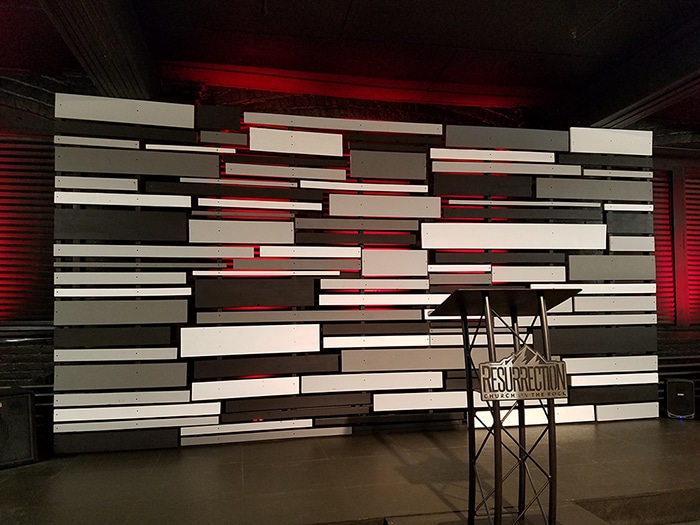
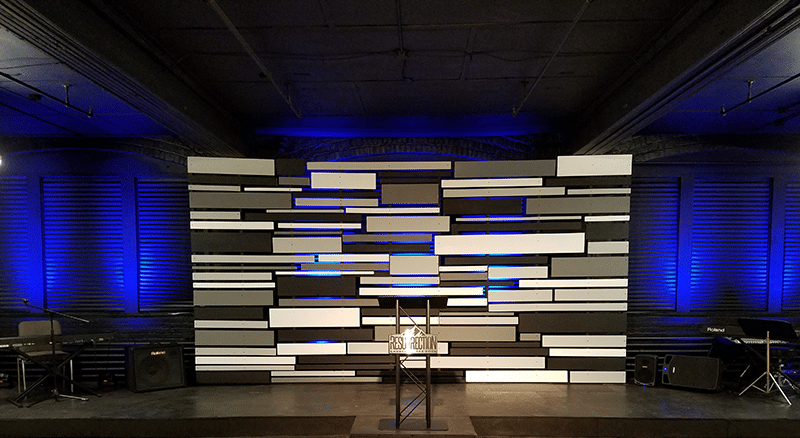
Marcus from Resurrection Church On The Rock in Cleveland, OH brings us this slate design.
From Marcus: We rent a 6500 square foot loft in downtown Cleveland. We were inspired by the other slat walls however, wanted to do something totally different. We used 4 different size slats coupled with 4 different color paints to pull this off. Materials cost about $250 (Home Depot) not including the LED back lighting. Still looking to add more LED lights. For the stage floor, we used flipped over carpet tiles.
The framing behind the slats was simply 2×4’s painted black. We also used black shutters to cover the windows.
Building a Dynamic Slat Wall
The beauty of this slat wall design lies in its combination of simplicity and visual impact. Marcus and the team at Resurrection Church On The Rock created a versatile backdrop that transforms under different lighting conditions while remaining budget-friendly and relatively easy to construct.
The four different slat sizes create rhythm and visual interest, preventing the wall from looking monotonous. By varying the widths—perhaps using 1×2, 1×3, 1×4, and 1×6 boards randomly across the surface—the eye travels across the wall naturally. The four different paint colors add another layer of depth, creating subtle variations that catch light differently.
Construction technique matters for durability. The 2×4 framing behind the slats provides structural integrity while the black paint ensures the frame disappears visually. When building your own version, consider using outdoor-rated paint if your space experiences humidity variations, as this prevents warping and extends the lifespan of the installation.
The LED backlighting is what truly brings this design to life. While Marcus mentions wanting to add more LED lights, even a modest investment in LED strip lighting can create dramatic effects. Place lights behind the slats at varying heights to create pools of colored light that bleed through the gaps. RGB LED strips offer color flexibility, allowing the backdrop to shift from warm amber for worship to cool blues for reflective moments.
Cost Breakdown and Material Alternatives
The $250 material cost breaks down roughly as: lumber for slats and framing ($150-180), paint and supplies ($50-70), and miscellaneous hardware ($20-30). This makes it an accessible project for churches of any size.
For an even more budget-conscious approach, consider reclaimed lumber from pallets or construction sites—just ensure boards are straight and free of nails. Paint can be sourced from Habitat for Humanity ReStores or mis-tint sections at hardware stores for significant savings.
The flipped carpet tiles used for the stage floor demonstrate creative problem-solving. Carpet tiles are durable, replaceable if damaged, and provide a professional appearance at a fraction of the cost of traditional stage flooring. Look for commercial-grade tiles from office liquidators or flooring contractors.
Related Designs
- Romans Reflections – Layered backdrop approach using columns and textured backdrops
- Fragmentation – Another dynamic textured wall using corrugated metal
- Soft Crosses – Creative use of layered materials with internal lighting
- Jitter Plates – Budget-friendly textural option using paper plates
- Turn Back Time – Creative construction with wood and Coroplast elements
Pro Tips for Slat Wall Construction
Randomize Your Pattern: Avoid creating obvious repeating patterns with your slat sizes. Use a random number generator or literally draw sizes from a hat to ensure an organic, visually interesting arrangement. Step back frequently during installation to assess the overall look.
Test Your Lighting Before Finalizing: The gaps between slats are what make this design shine—literally. Before permanently attaching all slats, test your LED placement and brightness to ensure the light bleeds through attractively. Adjust spacing if needed.
Paint with Purpose: When using multiple colors, consider how they’ll read from a distance. High-contrast colors create bold statements, while subtle tonal variations offer sophistication. Test paint colors on sample boards and view them from the back of your auditorium before committing.
Plan for Portability: If your church meets in a rented space, design the wall in manageable sections that can be transported and reassembled. Use bolts rather than permanent fasteners for frame joints, and label each piece for efficient setup.
Related: Cross and Fabric – Creating fabric-filled worship spaces.
Related: PVC Pipe Trusses – PVC construction for church stages.


Please contact, i want to do this to my our church
pastordejiadeiye@dominionwonders.org
Thanks
Pst Deji Adeiye
Are these painted 1x or coraplast?
I want to do this design, can you tell me what material is used?