


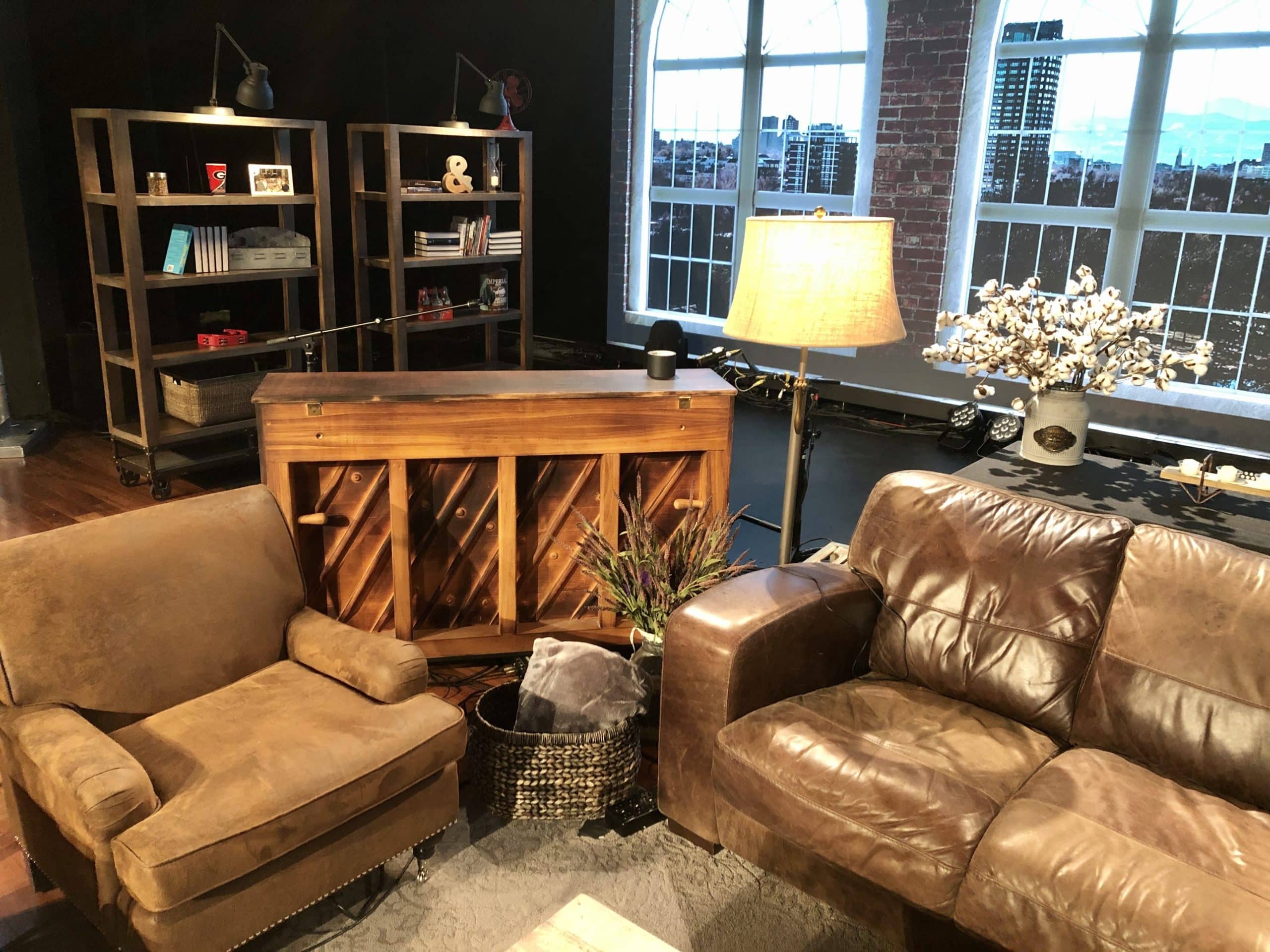
Mike Gerrells from Mission Hills in Littleton, CO brings us this cool use of their LED wall for a livestream.
This design was to make the stage look like they were in a living room during the COVID-19 shelter in place. They used furniture from all over the campus and then set up a studio light package. The backdrop with the windows was two pictures from shutterstock that they put on their 2.9 mm LED wall.
Using LED walls for stage design has become increasingly popular in church settings, offering incredible flexibility and visual impact. The 2.9mm pixel pitch used in this design provides excellent resolution for close-up shots during livestreaming, ensuring that the window imagery looks crisp and realistic even when viewers are watching on large screens at home. This level of detail is crucial for creating an immersive environment that draws congregants into the worship experience, even when they’re participating remotely.
The concept of transforming a traditional church stage into a cozy living room setting demonstrates how churches can adapt their environments to meet changing needs. During the pandemic, many congregations discovered that creating intimate, home-like settings helped bridge the gap between in-person and online worship experiences. This approach can still be valuable today for special series, small group gatherings, or creating a more conversational atmosphere for teaching segments.
When sourcing imagery for LED wall backdrops, stock photo sites like Shutterstock offer extensive libraries of high-resolution window and interior scenes. Look for images with natural lighting that can complement your stage lighting design. Consider the time of day and season you want to portray—morning light creates a different mood than evening sunsets, and snowy winter scenes evoke different emotions than lush summer greenery. The key is selecting imagery that supports your message and creates the emotional tone you want for each service.
Studio lighting plays a critical role when working with LED wall backdrops. The team at Mission Hills used a professional light package to ensure that the on-camera talent was properly illuminated without creating glare on the LED panels. When positioning lights, be mindful of the color temperature of both your stage lighting and the imagery on the LED wall. Mixing warm and cool tones can create visual dissonance, so aim for consistency or intentional contrast that enhances rather than distracts from your presentation.
Furniture selection for stage environments should consider both aesthetics and functionality. Pieces that look great on camera might not be comfortable for speakers during long teaching sessions. Similarly, items that are comfortable might appear bulky or awkward on screen. Test your furniture choices from multiple camera angles before committing to the final arrangement. Consider scale carefully—what looks appropriate in person might appear too large or small through the lens.


Related Designs
- Living Room – Another cozy living room stage design perfect for intimate worship settings
- Living Room Set Design – Detailed approach to creating comfortable home-like stage environments
- Room for Living – Innovative use of residential furniture and decor on stage
- Windowed – Creative window concepts using projection and LED technology
- Crowned in LED – Stunning LED wall implementation for modern worship spaces
Pro Tips for LED Wall Stage Designs
Choose the Right Pixel Pitch: For church stages where cameras will capture close-ups of speakers, a 2.9mm to 3.9mm pixel pitch offers the best balance of image quality and cost. Tighter pixel pitches (1.9mm) work well for very close viewing but come at a premium price. Wider pitches (4.8mm+) may show visible pixels on camera.
Calibrate Your Colors: LED walls can display colors differently than printed materials or projection screens. Always test your imagery on the actual LED panels before the service, and adjust brightness and color saturation as needed. What looks perfect on your computer monitor may need tweaking for the LED environment.
Plan for Power and Data: LED walls require significant electrical power and data distribution. Work with a qualified AV integrator to ensure your electrical infrastructure can support the panels. Plan cable runs carefully to avoid trip hazards and maintain a clean look both on stage and behind the scenes.
Create Content Libraries: Build a collection of backdrop imagery and motion graphics that work well with your LED wall specifications. Organize files by season, theme, and color palette so your team can quickly find appropriate visuals when planning services. Consider investing in custom motion graphics that match your church’s branding.
Related: Word Lights – a dynamic lighting design featuring vertical LED pillars


This is great! Could we get the links to the photos used from stock photo?