



Emily Perry from Johnston Evangelical Free Church in Johnston, IA brings us this fabric strip stage design.
Materials:
– strips of fabric of varying sheens
– fishing line
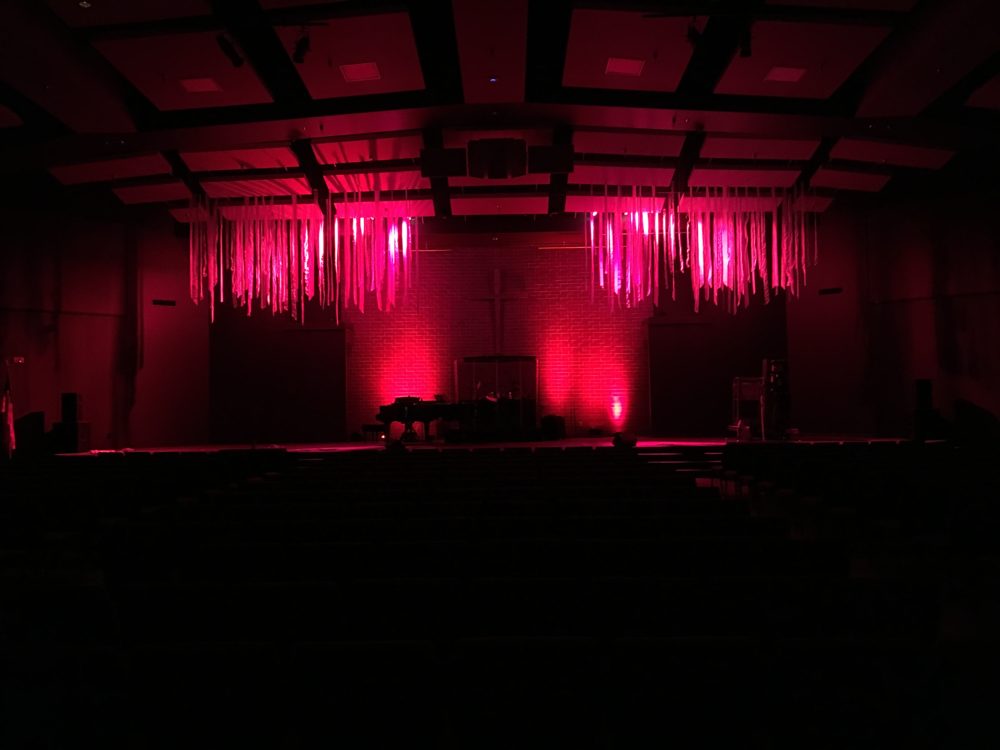
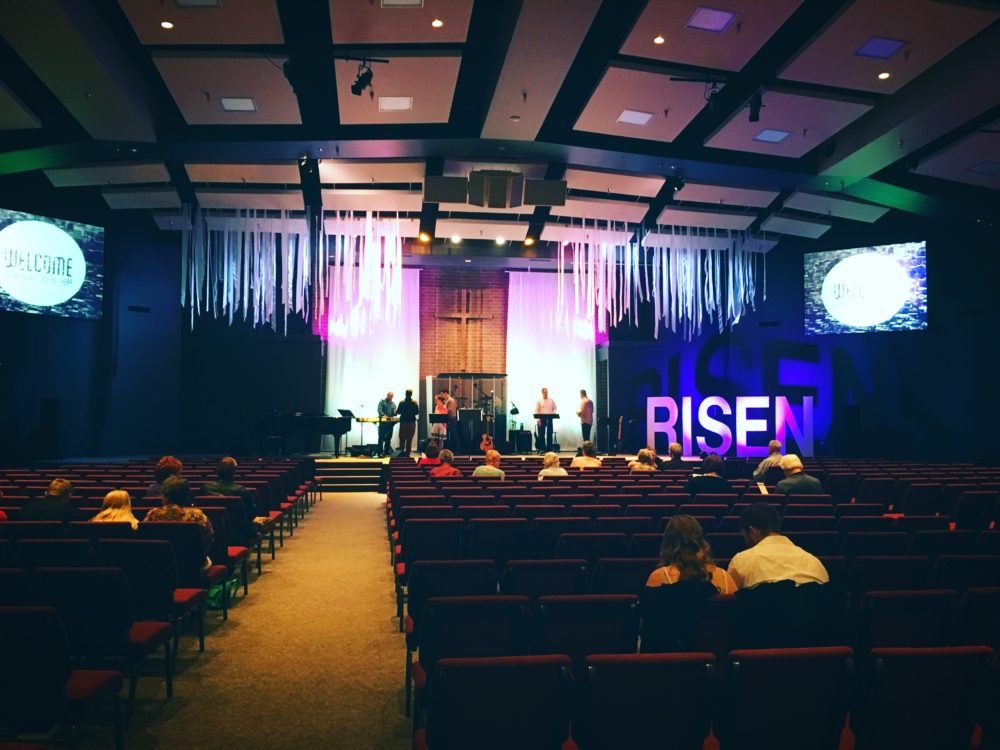
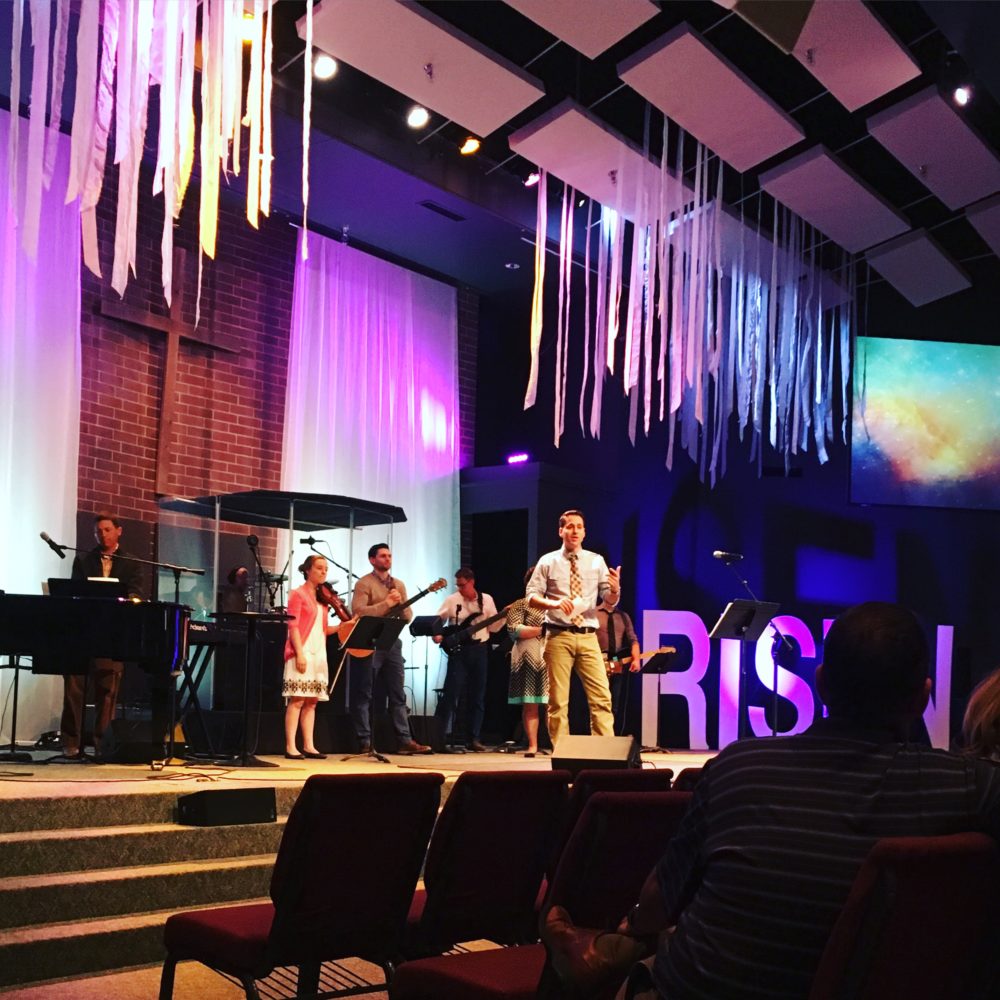
For this design, they cut the fabric into strips of varying lengths and then attached them to the fishing line. Then they strung the line up to the ceiling. For Good Friday, they used just red light and kept the sanctuary pretty dark to give it a somber effect. For Easter, they added the “risen” cut out of Coroplast, white drapes, and bright colors.
Creating Dynamic Fabric Strip Stage Designs
This elegant fabric strip design from Johnston Evangelical Free Church demonstrates how simple materials can create powerful visual impact in worship spaces. The falling strips of fabric create a sense of movement and depth that transforms an ordinary stage into an immersive environment. What makes this approach particularly effective is its versatility—the same basic installation can evoke completely different moods simply by changing the lighting and adding seasonal elements.
The technique of suspending fabric strips from fishing line is both practical and visually striking. Fishing line is nearly invisible when properly tensioned, giving the illusion that the fabric is floating in mid-air. This creates a magical, ethereal quality that draws the congregation’s eye upward and adds vertical interest to the stage. The varying lengths of the strips create natural rhythm and visual texture, while the different fabric sheens catch and reflect light in interesting ways.
For churches considering this design, the material selection is crucial. Lightweight fabrics like chiffon, organza, or lightweight satin work best because they flow naturally and respond well to air movement. Heavier fabrics may look stiff and unnatural. The varying sheens mentioned in the materials list—mixing matte fabrics with slightly shiny ones—create depth and dimension that keeps the design interesting from different angles and under different lighting conditions.
The seasonal transformation demonstrated in this design is particularly noteworthy. By planning the installation with flexibility in mind, the church created a foundation that could adapt from the solemnity of Good Friday to the celebration of Easter. The red lighting for Good Friday created a somber, contemplative atmosphere appropriate for remembering Christ’s sacrifice. The addition of the “risen” Coroplast cutout, white drapes, and brighter colors for Easter transformed the same physical structure into a symbol of hope and resurrection.
This approach of designing for transformation is valuable for churches with limited resources or volunteer time. Rather than completely rebuilding sets for different seasons, consider how a single installation can evolve. The fabric strips serve as a constant visual element while lighting, signage, and accent pieces provide the seasonal context. This strategy maximizes both budget efficiency and visual impact.
Related Designs
- Simple Fabric – An elegant approach to using fabric as a primary stage design element with clean lines and beautiful draping.
- Columns and Mod Scenes – Features spandex fabric columns that create dramatic vertical elements with lighting effects.
- Shattered Spandex – A creative fabric design using stretched spandex panels to create dynamic visual texture.
- Tube Ceiling – Suspended fabric tubes create immersive overhead lighting effects perfect for worship environments.
- Using Stage Fabrics and Soft Goods – A comprehensive guide to selecting and working with different fabric types for stage design.
Pro Tips for Fabric Strip Stage Designs
Plan Your Attachment Points: Before installing, map out exactly where each fishing line will anchor to your ceiling. Use eye bolts or other secure hardware rated for the weight of your fabric. Space attachment points 12-18 inches apart for a full, lush look, or further apart for a more sparse, minimalist aesthetic. Always test your attachment points with weight before adding fabric.
Consider Airflow: Fabric strips move with air currents, which can be beautiful but also distracting if excessive. Position your strips away from HVAC vents if possible, or embrace the movement as part of the design. Some churches use small fans to create gentle, controlled movement that brings the installation to life.
Lighting Makes the Difference: The same fabric installation can look completely different under various lighting conditions. Experiment with uplighting from the floor, downlighting from above, and colored gels to achieve different moods. LED fixtures with color-changing capability offer maximum flexibility for different services and seasons.
Storage and Reuse: Fabric strips can be carefully removed and stored for future use. Roll them gently rather than folding to prevent creases, and store in a dry location. Label each strip’s approximate length if you plan to reinstall them later, saving significant setup time.
Related: Psalm Fence – A beautiful garden fence stage design with faux greenery and metal letters perfect for sermon series on Psalms or creating natural, rustic worship environments.


Leave a Reply
You must be logged in to post a comment.