



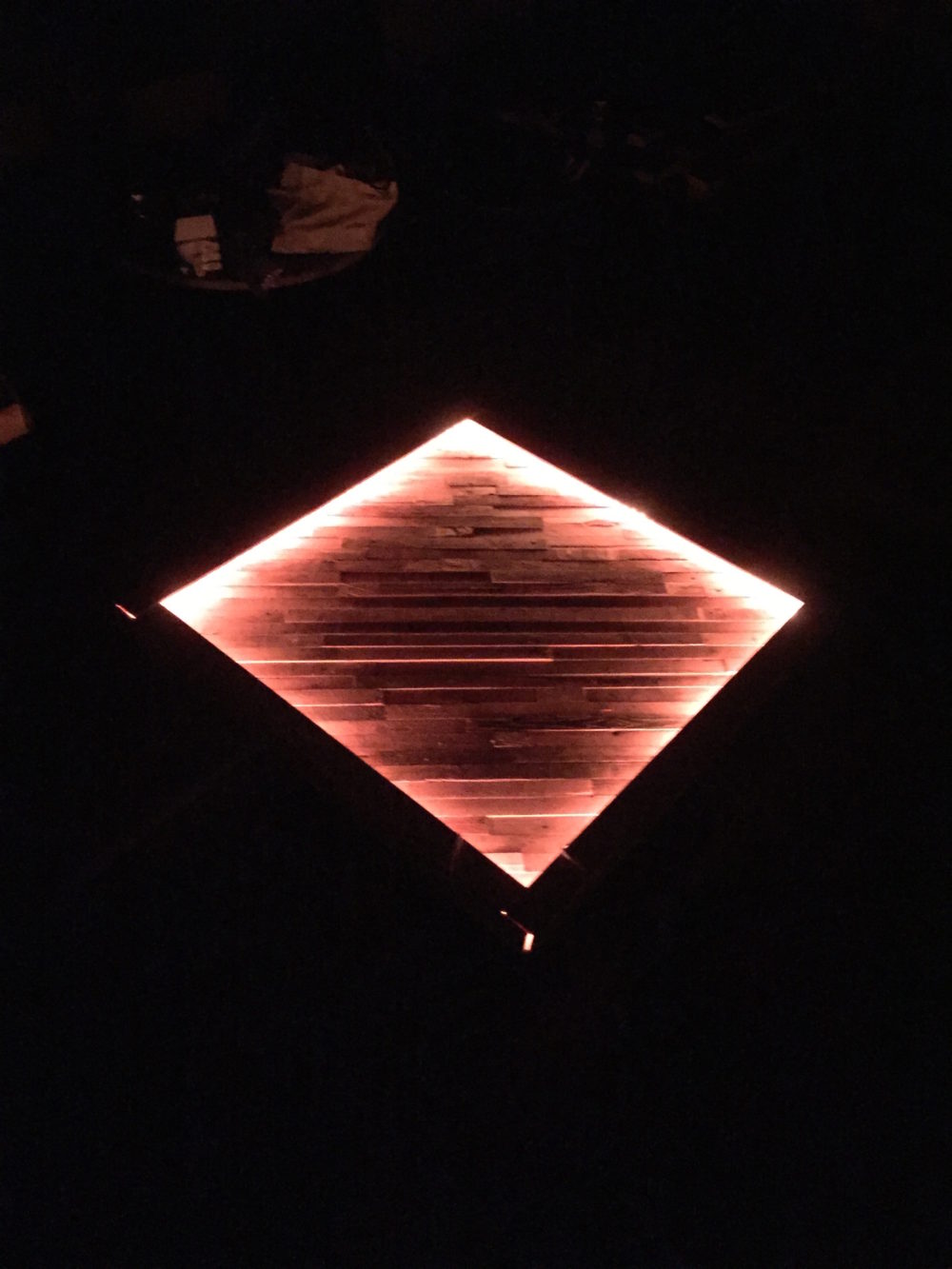
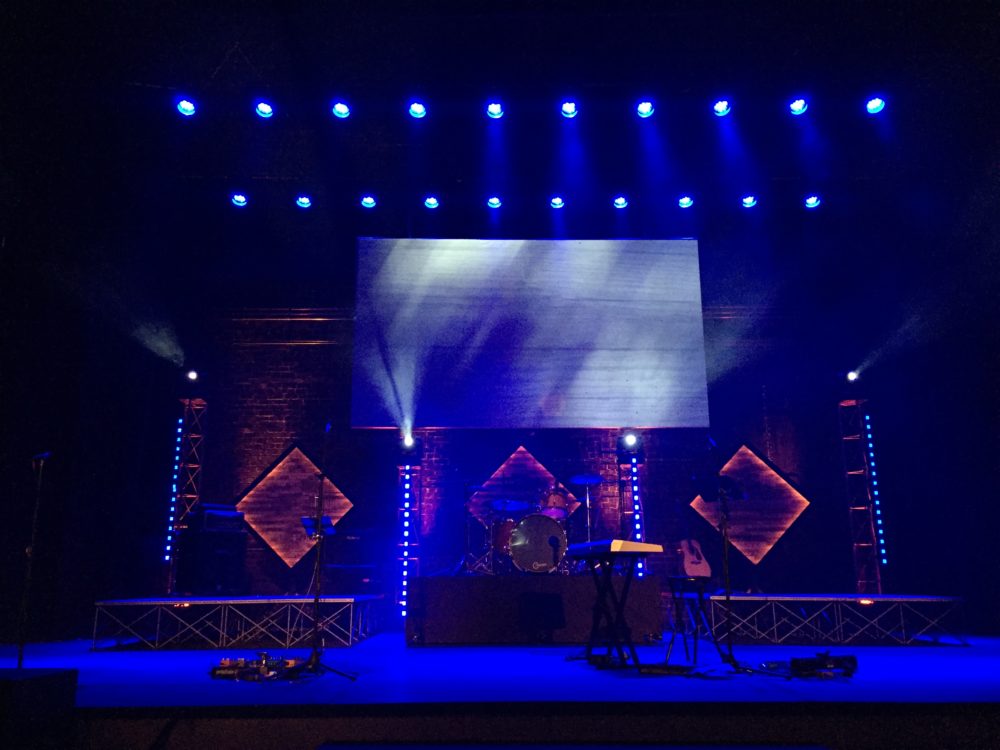
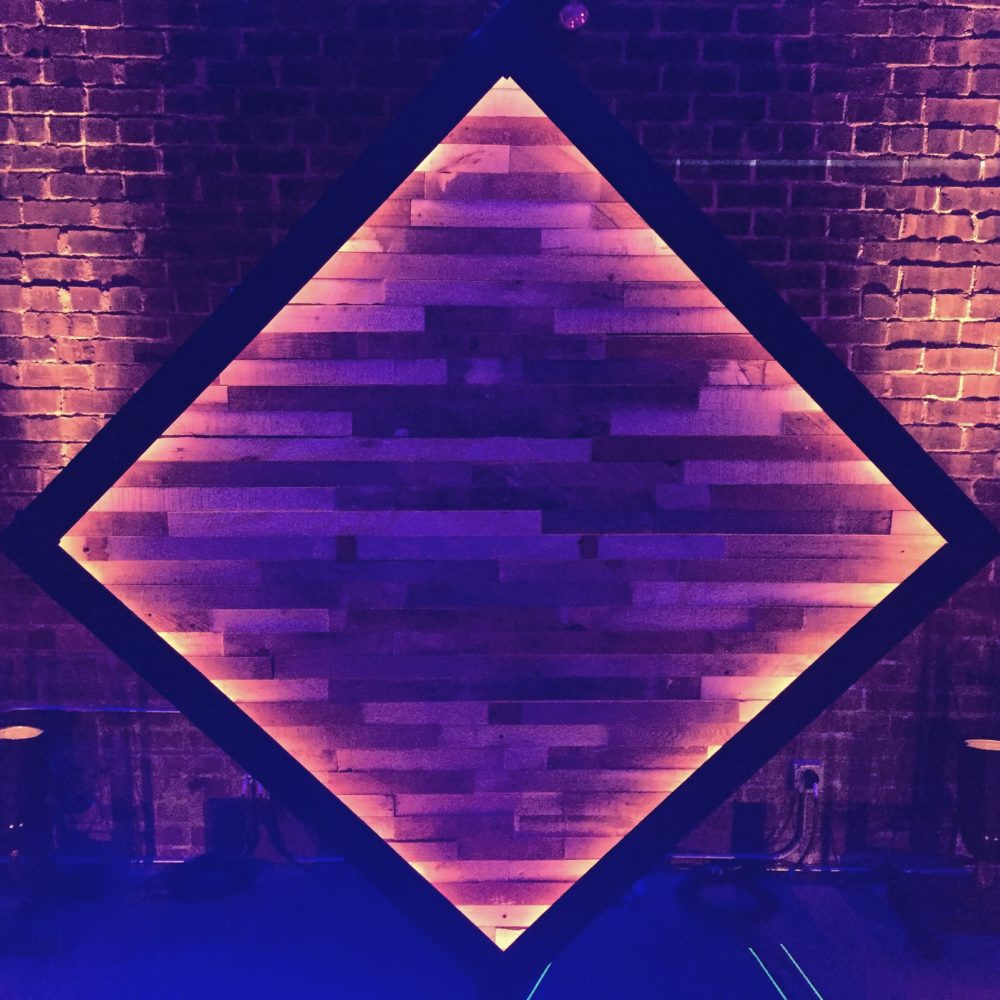
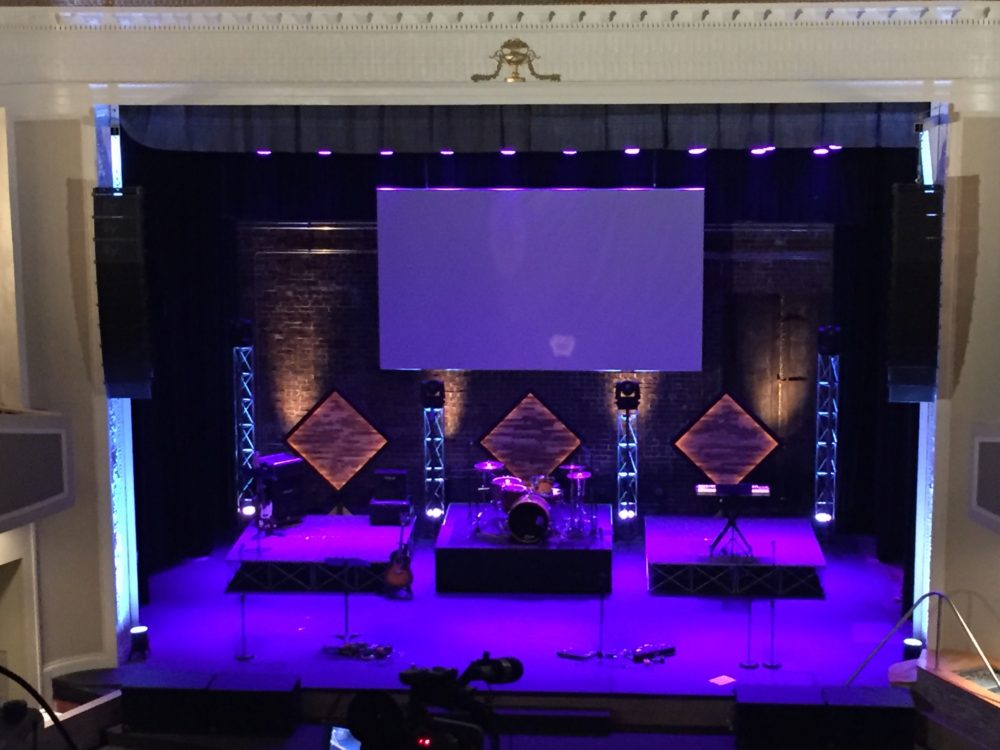
Matt Lee from The Crossing in Hannibal, MO, brings us these awesome repurposed wood panels with a little glow.
Materials:
- 1/4″ Plywood
- Pallet/scrap wood
- 18-gauge brad nails
- 2 1/2″ screws
- Rope light
- Metal wire
Process:
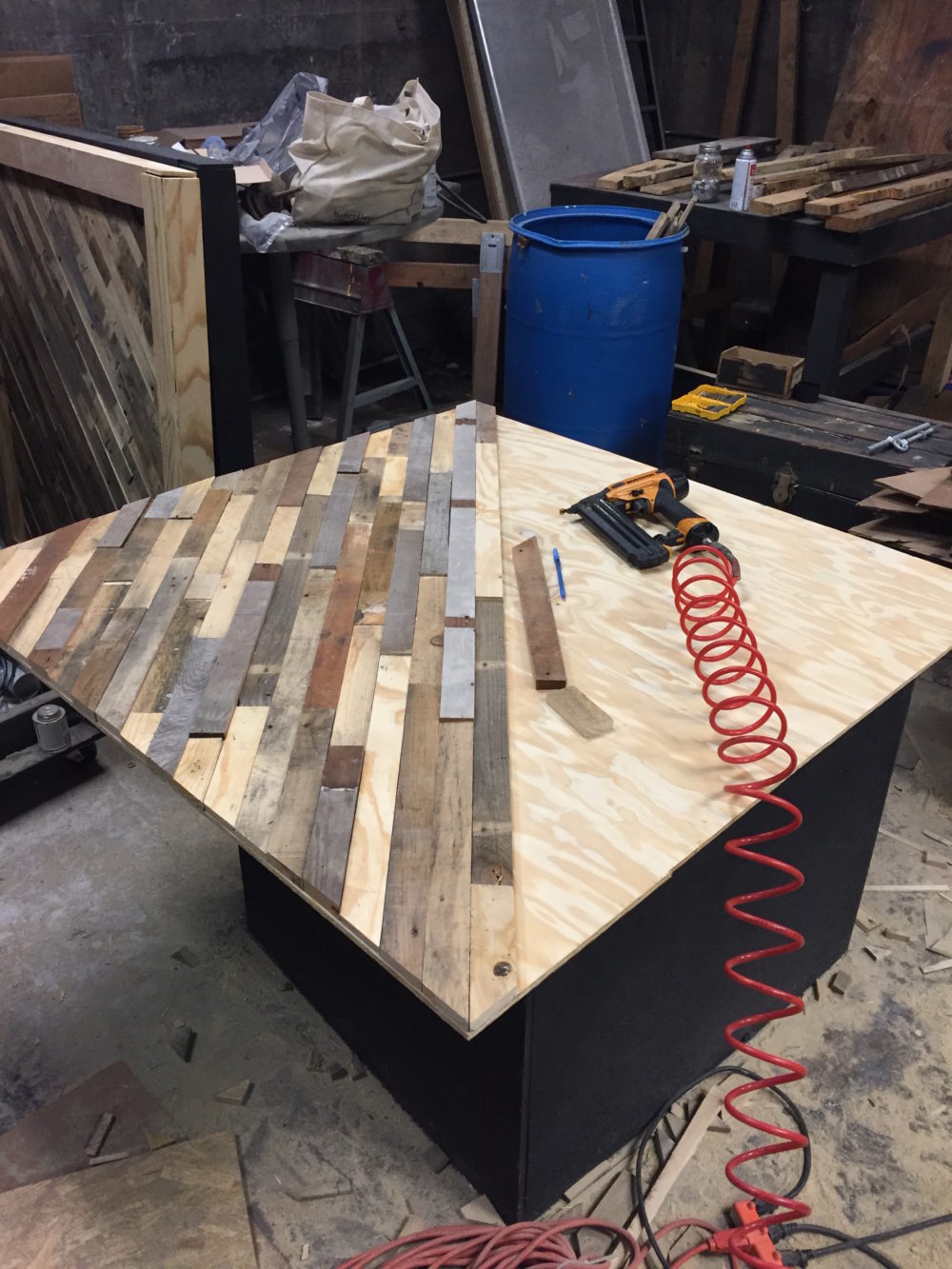
- Cut the plywood into 4-foot squares.
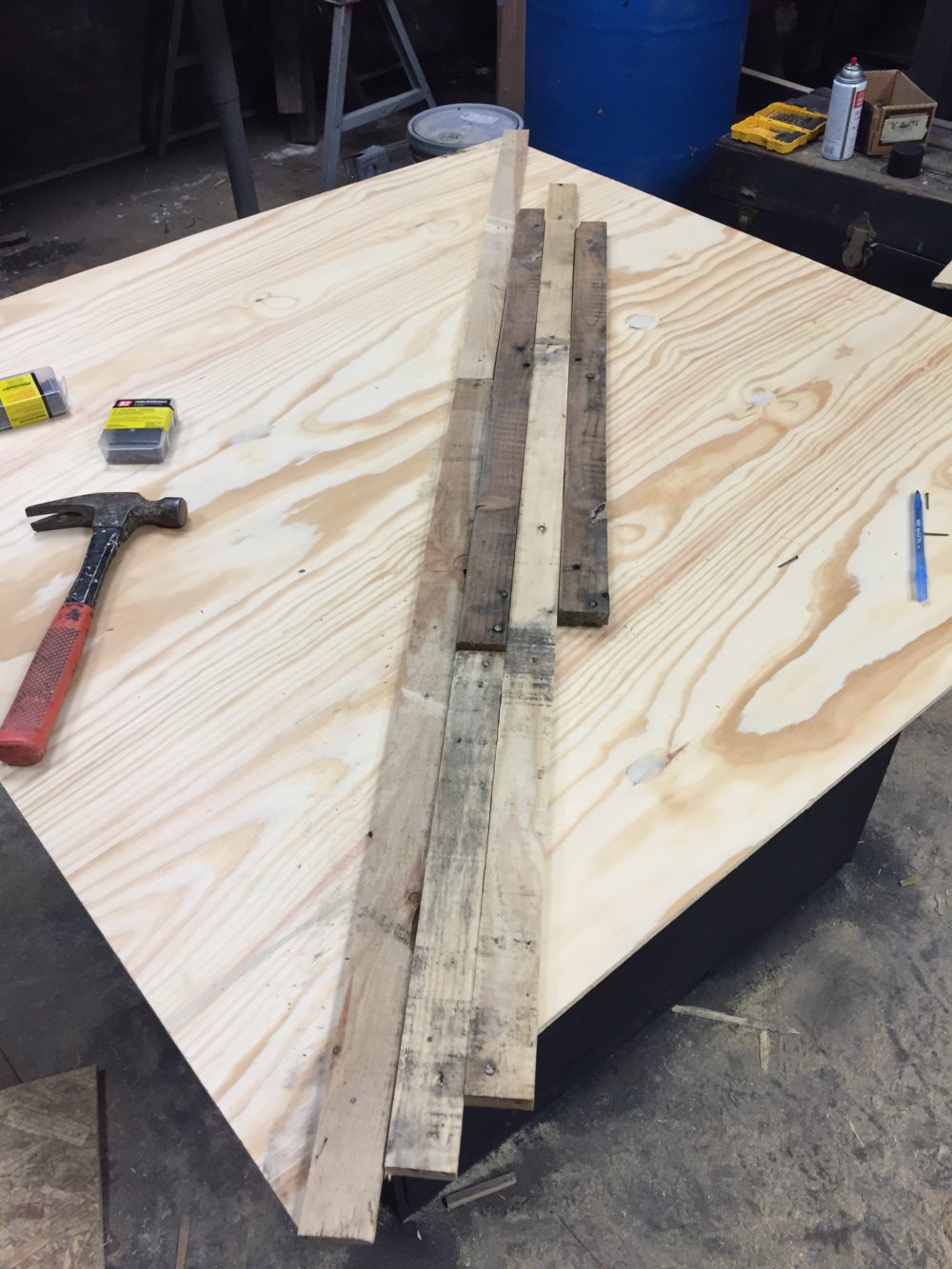
- Set the fence on the table saw to 1 3/4″ and rip the pallet wood down.
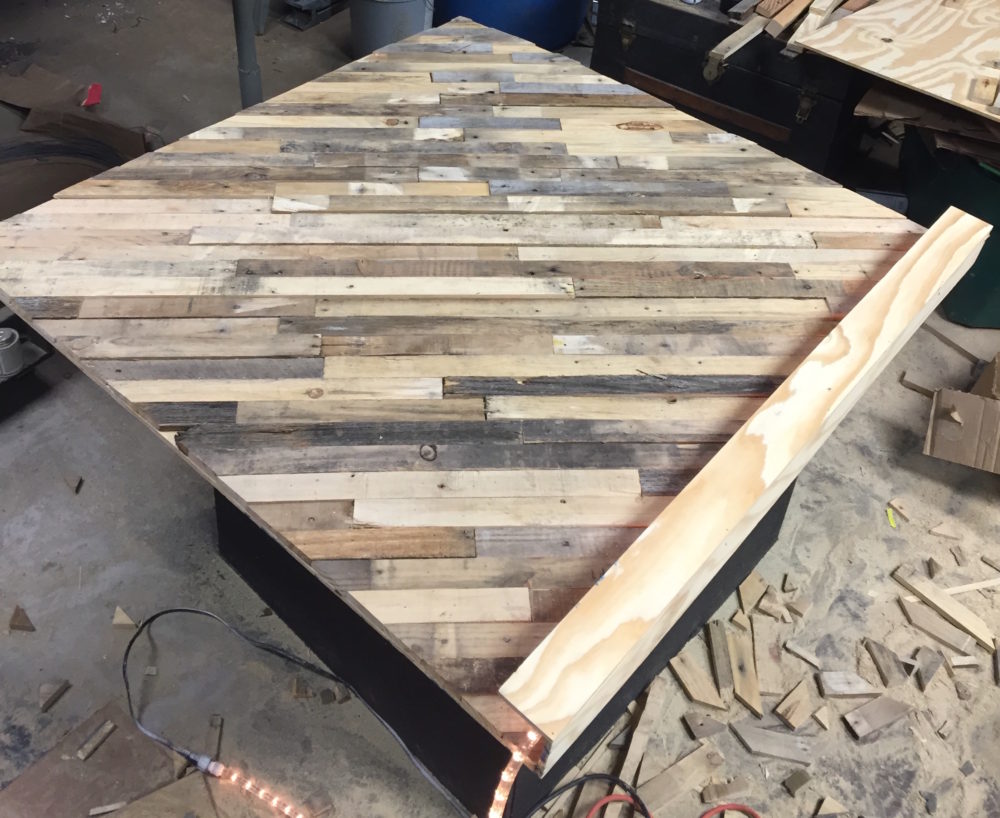
- Cut strips to random lengths and cut a 45-degree angle on the end before nailing it on.
- Cut 3″ strips to create the trim work around the edge to hide the rope light.
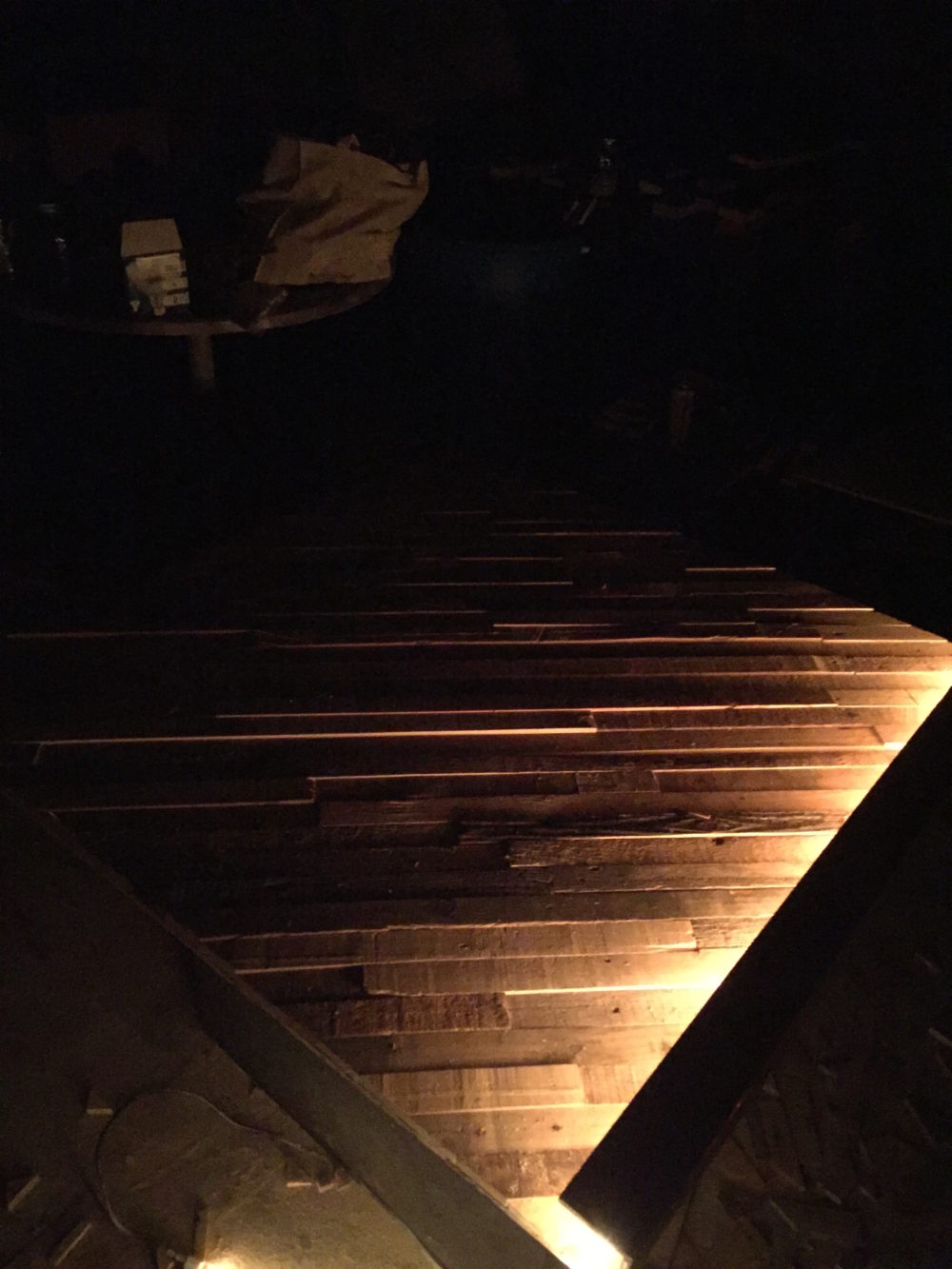
- Drill holes on each corner and in the middle of the trim, and run wire through to attach the rope light inside the trim.
- Use screws to attach 4″X 4″ posts to the back of the pallet squares.
- Stand the squares up and attach boards cut at a 45-degree angle to the posts for kickers to make the squares secure.
Each square had two rope lights, 8 feet long each, inside. Each rope light ran up one side and down the next. They used portable dimmers to be able to control the intensity of each rope light individually.
The only purchase that was made was for the plywood and screws. They already had the rest of the supplies that they needed from previous sets.
In total, they spent less than $40 for the entire set.
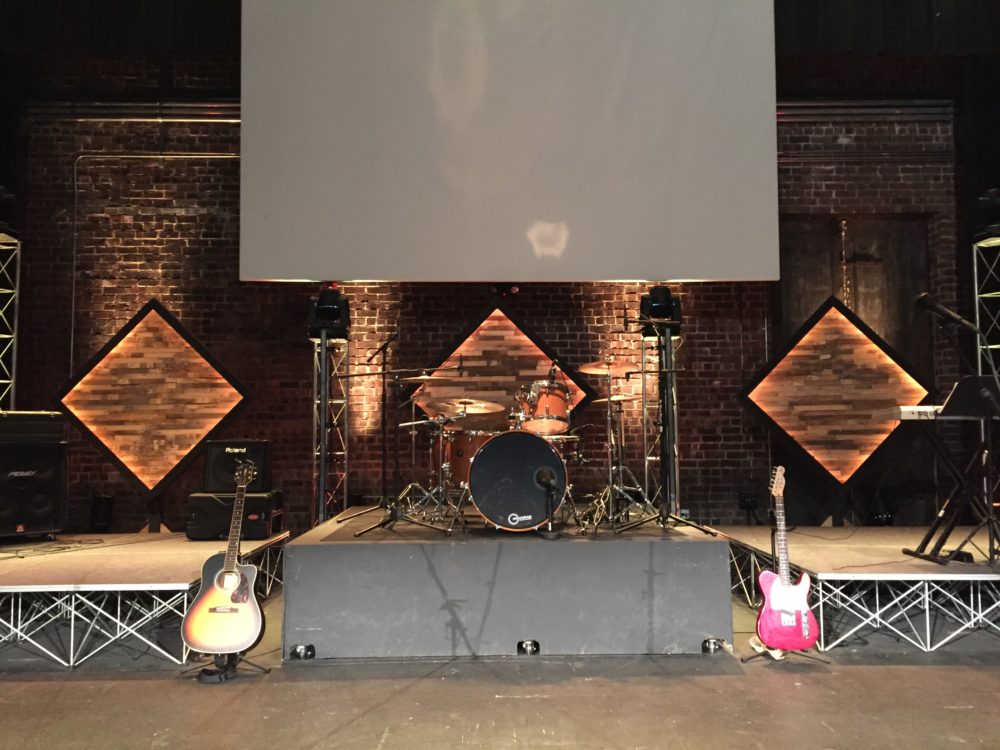
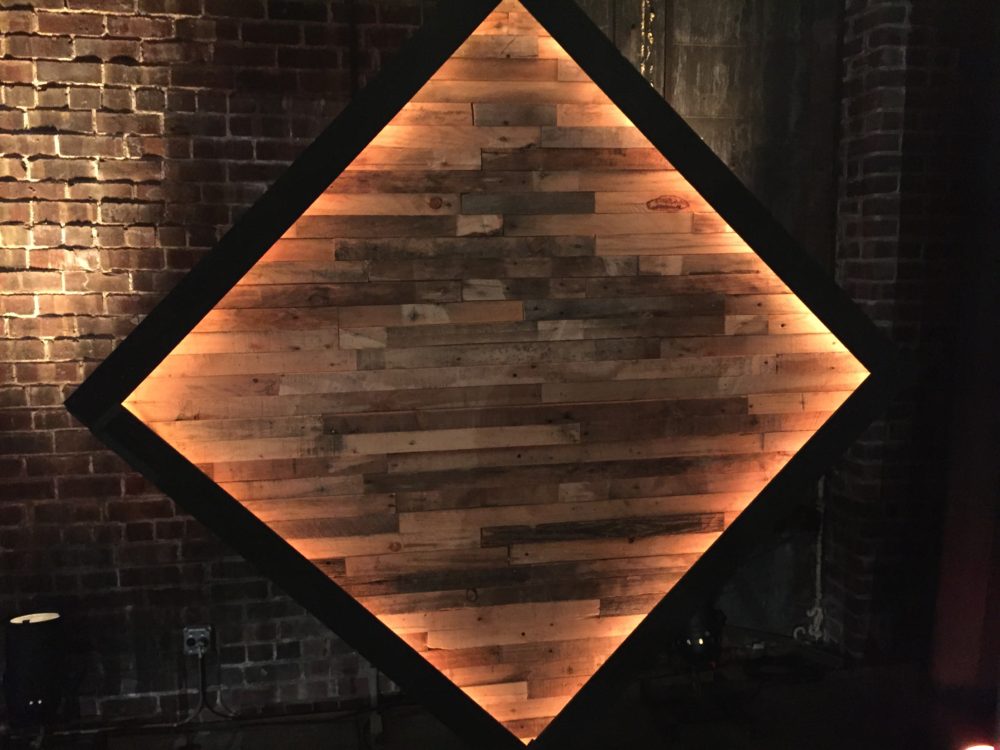
Why This Glowing Wood Backdrop Works
This design gets its impact from contrast. The rough pallet boards bring natural texture and visible grain to the stage, while the rope light creates a clean halo around each square. Because the light source is tucked behind the three-inch trim, the congregation sees the glow instead of the individual bulbs. That indirect lighting makes inexpensive materials look intentional and gives the panels depth on camera as well as in the room.
The four-foot-square format also makes the set easy to scale. A smaller room could use one or two panels as a focal point, while a wider platform could repeat the same module across the back wall. Rotating the direction of the pallet strips or varying the stain on each panel would add movement without changing the basic construction method. Keep enough open space between panels so every illuminated edge remains visible from the main seating area.
Build Planning, Materials, and Lighting
Before cutting plywood, mark the finished panel locations on the stage with painter’s tape. This reveals whether four-foot modules will interfere with screens, musicians, doors, or sightlines. Build one test square first, then place it under the actual stage lights. Pallet boards vary in thickness, so the sample helps the team confirm nail length, trim depth, balance, and the amount of light spill before repeating the process.
Inspect reclaimed lumber carefully and remove every old nail, staple, or screw before it reaches the table saw. Reject boards with chemical residue, heavy mold, or severe splits. Sand sharp edges while preserving enough texture to keep the reclaimed look. If pallet wood is unavailable, inexpensive cedar fence pickets, plywood strips, or thin common boards can create a similar pattern with more consistent dimensions.
For the glow, choose rope light rated for the intended indoor use and never bury its power connections where the crew cannot inspect them. Maintain the manufacturer’s bend radius, provide strain relief, and keep dimmers and extension connections off walkways. Modern LED rope light is a useful alternative because it typically draws less power and produces less heat. Test every run before fastening the trim, then label each plug and dimmer so volunteers can troubleshoot quickly.
Budget and Installation Options
The original team kept the entire set below $40 because most of the lumber and lighting came from previous projects. Churches starting from scratch can control costs by sourcing clean scrap wood locally, borrowing a brad nailer, and designing panel dimensions around full plywood sheets to minimize waste. A dark stain can unify mismatched boards, while a clear matte finish helps contain dust and splinters without hiding the grain.
Freestanding panels need more than visual appeal; they need dependable support. Size the rear posts and angled kickers for the panel weight, fasten them with appropriate structural screws, and add ballast or approved anchors when necessary. Keep braces out of traffic paths and have a qualified person review the installation. If panels are flown or attached to a wall, use rated hardware and follow the venue’s rigging requirements rather than adapting the floor-standing method.
Related Designs
- Weathered – See another layered wood environment that pairs reclaimed texture with controlled stage lighting.
- Faithful Creation – Explore a resourceful build that turns pallet wood into a warm, dimensional backdrop.
- Ground Zero – Find inspiration for arranging rough wood elements into a strong visual focal point.
- Rise Up – Discover a reclaimed-wood design with a bold silhouette and practical construction ideas.
- Bottled Lights – See how inexpensive illuminated elements can add depth, repetition, and atmosphere.
Pro Tips for Glowing Reclaimed-Wood Panels
- Mock Up the Glow: Tape one rope-light loop behind a scrap frame and view it from the back row and through the livestream camera. Adjust the trim depth until the bulbs disappear, but the halo remains even.
- Batch the Repetitive Cuts: Use stop blocks and a written cut list for plywood, trim, and supports. A simple assembly jig helps multiple volunteers build matching modules safely and consistently.
- Create Lighting Headroom: Begin with the rope lights dimmed, then balance them against the front wash. This keeps the wood texture visible and prevents bright edges from clipping on video.
- Plan for Reuse: Attach lighting and rear supports so they can be removed without damaging the faces. The squares can later be restained, rearranged, or used as bases for signs and seasonal elements.
Related: Pallet Canvas – Explore another wood-focused stage that pairs rustic texture with a controllable warm glow.


Love this look!
A pallet design I can tolerate. Great concept and execution. Well done!
What are the blue light towers? They really set off the glowing diamonds well!