


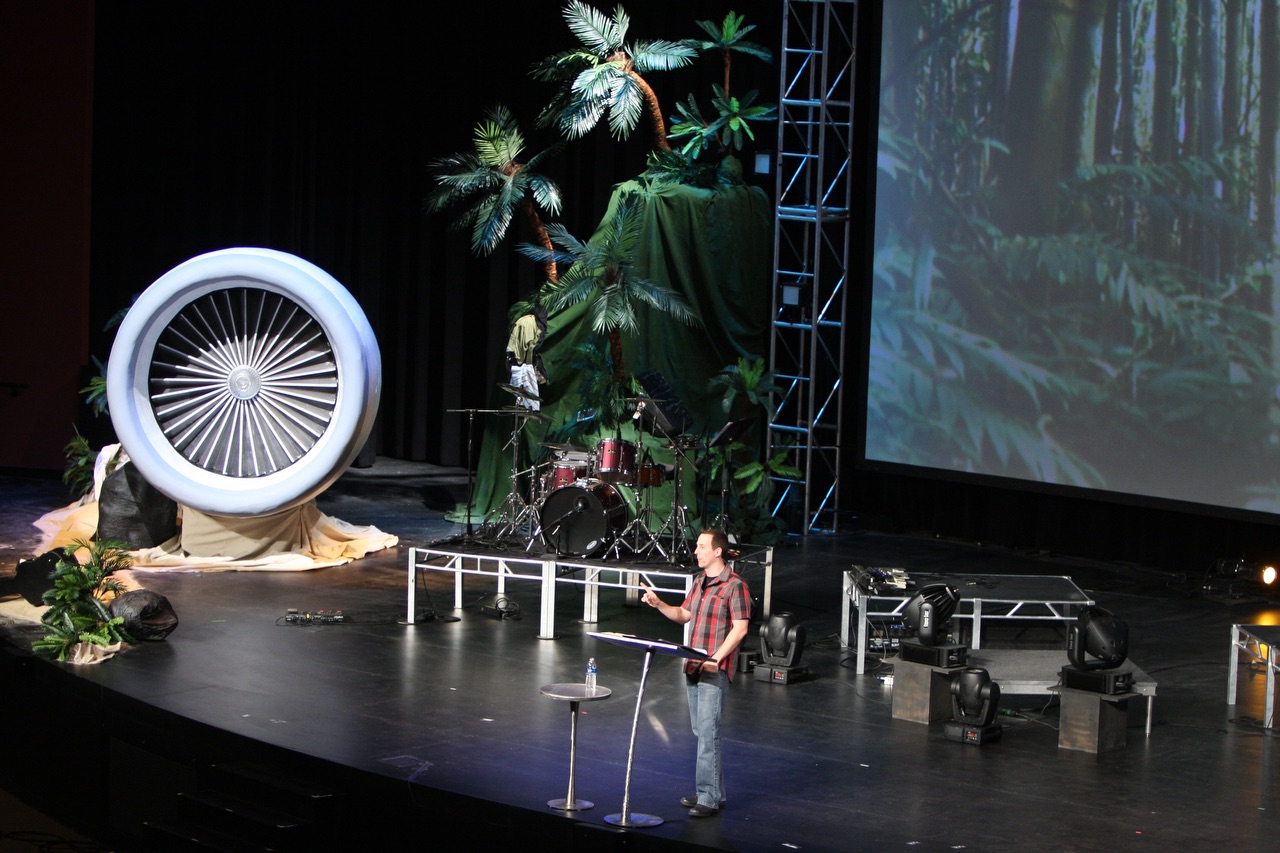
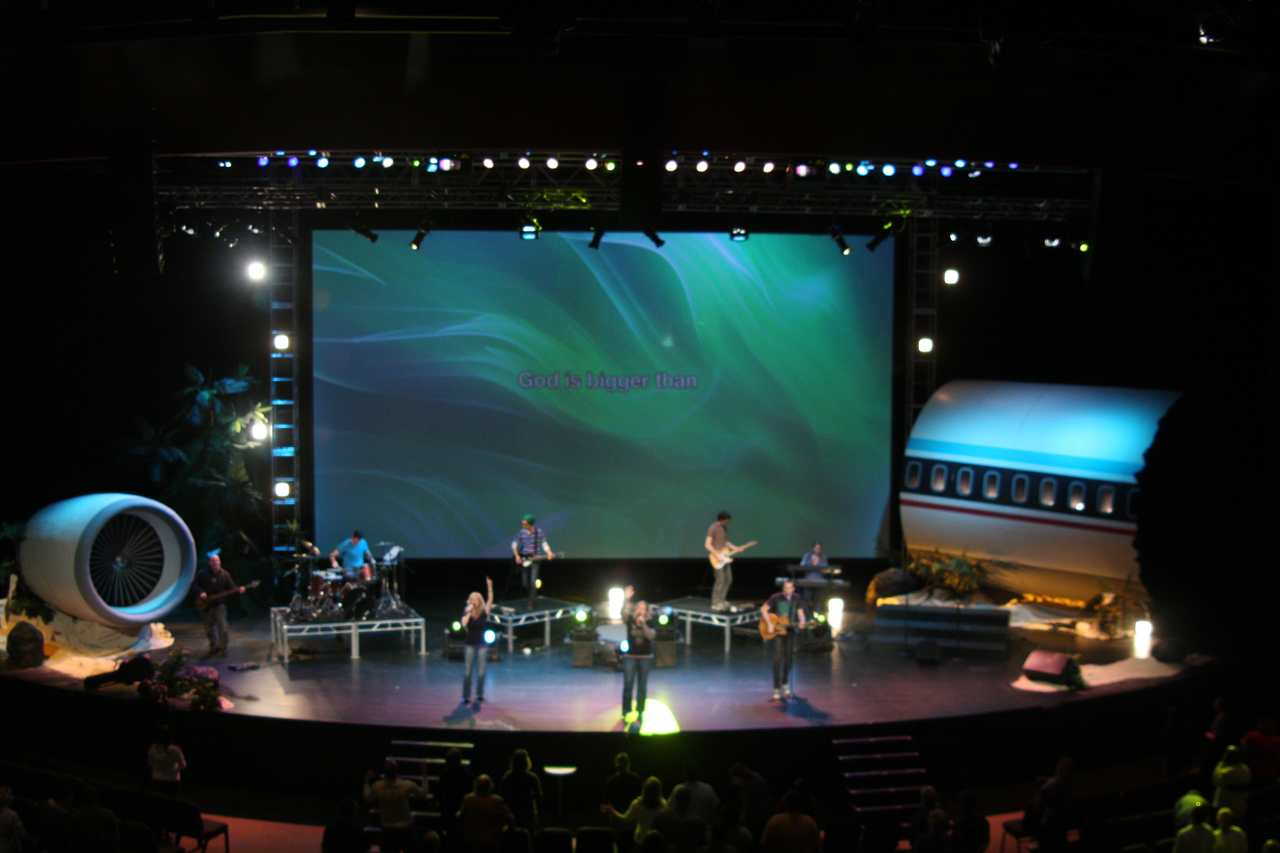
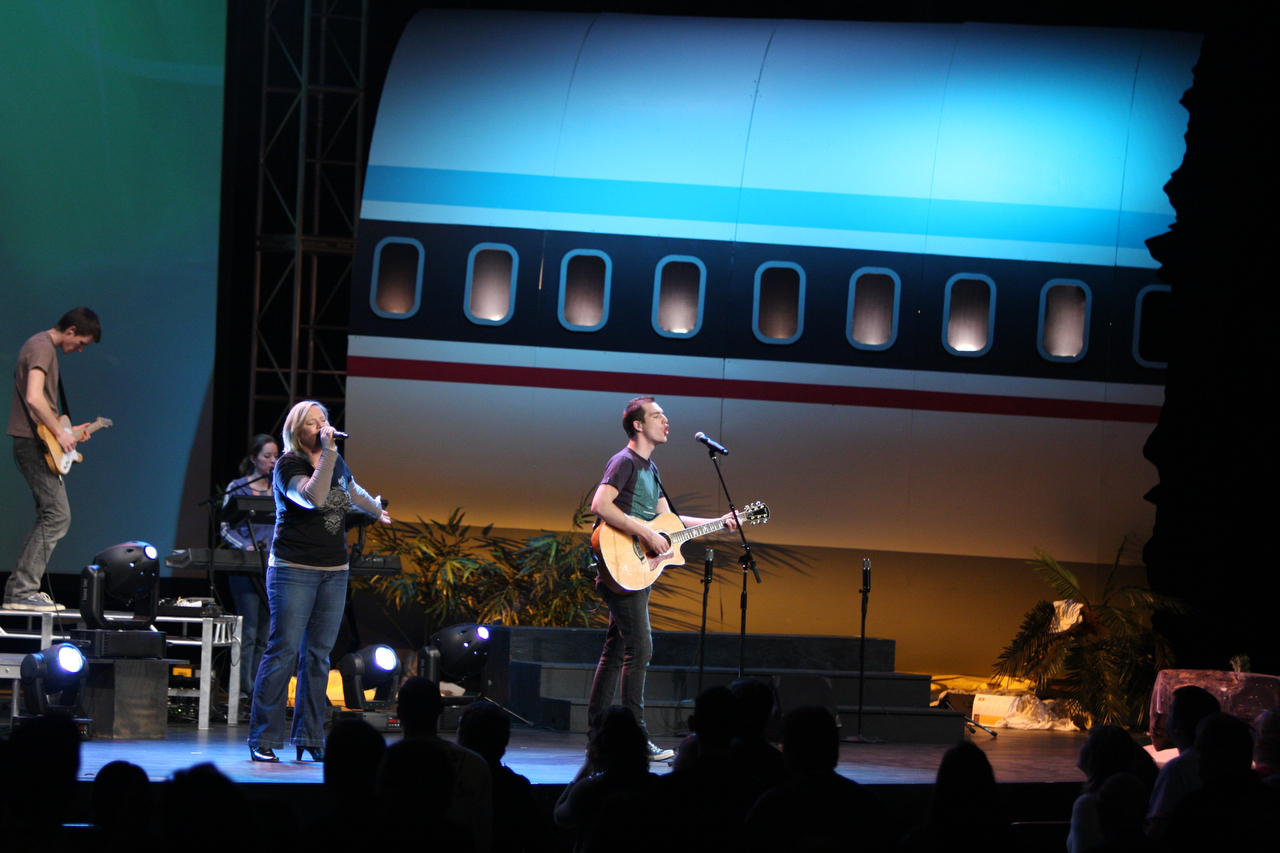
This incredible Lost-themed stage design comes from Amber Wedding at Quest Community Church in Lexington, Kentucky. The design features a stunning airplane fuselage and jet engine that created an immersive environment for their special event series.
Creating Immersive Themed Stage Environments
Themed stage designs offer churches a unique opportunity to transport their congregation into a different world, enhancing the message and creating memorable worship experiences. This Lost-inspired design demonstrates how pop culture references can be thoughtfully integrated into church environments to support teaching series and special events. The key is balancing recognizable thematic elements with the spiritual purpose of the gathering.
The airplane fuselage construction shows impressive creativity in working with unconventional materials. Building large-scale props requires careful planning regarding structural integrity, safety, and assembly logistics. The team likely used lightweight materials like foam board, PVC piping, or wood framing covered with fabric or paper mache to achieve the aircraft shape without creating an unsafe or immovable structure. Understanding weight distribution and center of gravity becomes crucial when building tall or extended stage elements.
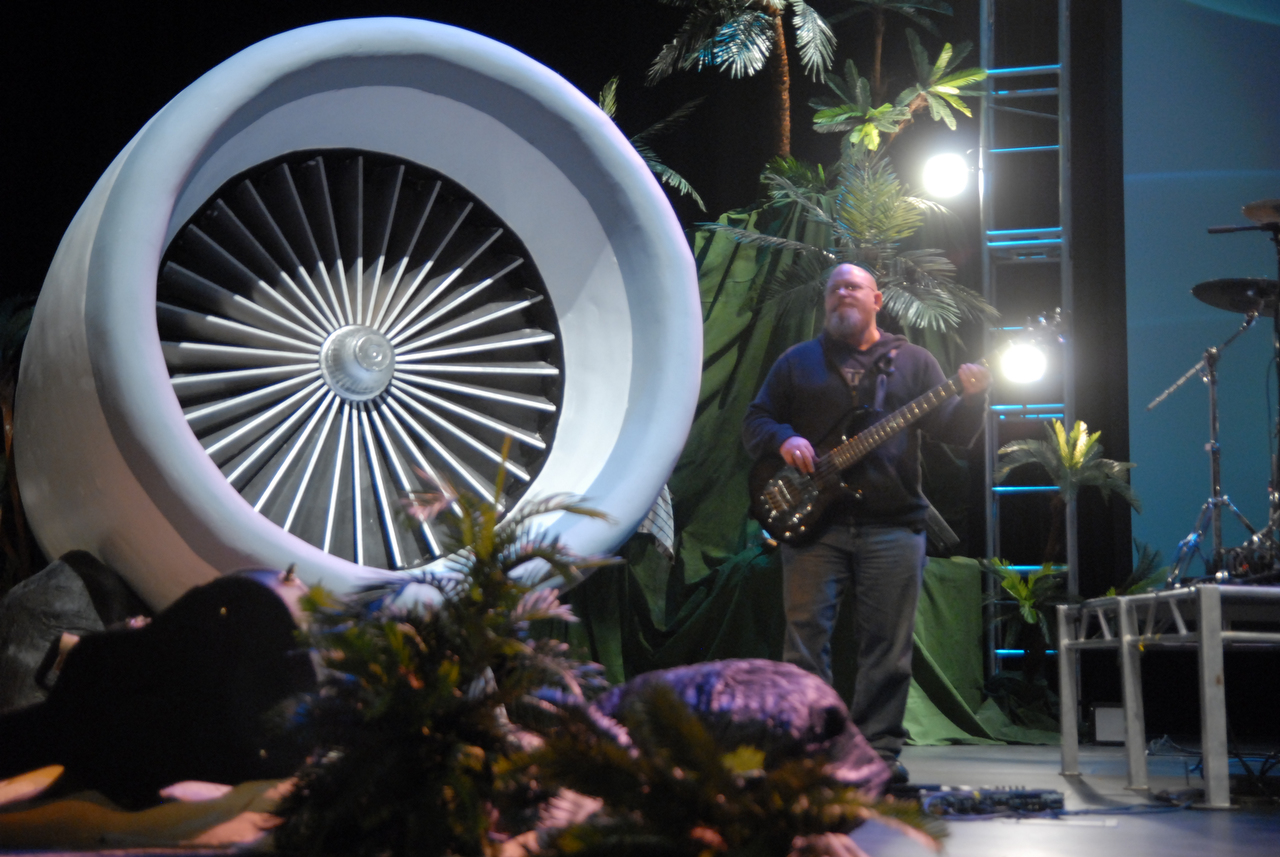
The jet engine prop adds an impressive focal point that draws the eye and reinforces the aviation theme. Creating mechanical-looking elements from simple materials is a skill that serves church stage designers well. Techniques like layering circular cardboard or foam pieces, adding metallic spray paint, and incorporating lighting effects can transform basic supplies into convincing industrial props. The close-up detail work on the engine shows attention to how the piece would appear both from a distance and up close during the service.
Lighting plays a critical role in making themed designs come alive. Strategic uplighting, gobos, and color washes can enhance the mood and make constructed elements appear more realistic. For a Lost-themed design, dramatic shadows and jungle-inspired green and amber tones would complement the aircraft wreckage concept. The interplay of light and shadow on the fuselage and engine creates depth and dimension that flat construction alone cannot achieve.
From a practical perspective, themed designs require advance planning for both installation and removal. Special event series often run for multiple weeks, so durability matters. Materials must withstand regular use, HVAC airflow, and occasional bumps from volunteers. Planning for storage between uses or designing elements that can be disassembled and repurposed helps maximize the investment in materials and volunteer labor.
Related Designs
- Borderlands – Discover how to create a powerful symbolic stage design featuring a porch and alley metaphor with DIY techniques from New Community Christian Church.
- Firmly Rooted – Learn how Liberty Heights Church created a stunning cross with roots stage design for under $35 using butcher paper and natural elements.
- Gym Project – See how New Braunfels Church transformed a gym into a contemporary worship space using Coroplast, projection, and creative lighting.
- A Questionable Stage – Explore how Gracespring Bible Church created a meaningful Easter design using paper and fishing line for under $50.
- Branched – Learn how to build stunning LED light box panels for your church stage under $600 using Coroplast and LED strips.
Pro Tips for Themed Stage Designs
Plan for Your Message: The best themed designs support the teaching rather than distracting from it. Before building, clarify how the visual elements will reinforce the sermon series or event theme. Create a mood board that includes both aesthetic references and key message points to ensure visual and verbal communication work together effectively.
Scale Appropriately: Consider your room size and sight lines when designing large props. What looks impressive in a sketch may overwhelm a small space or disappear in a large auditorium. Build scale models or use cardboard cutouts to test proportions before committing to full construction. Remember that volunteers will need to move and store these elements.
Prioritize Safety: Large stage elements must be stable and secure. Use appropriate hardware to anchor tall pieces to walls or stage decks. Consider fire safety when selecting materials, especially for designs incorporating lighting elements. Test all electrical components and ensure cables are properly managed to prevent tripping hazards.
Budget for Details: The difference between amateur and professional-looking themed designs often comes down to finishing details. Allocate budget for quality paint, realistic textures, and appropriate lighting. Small touches like weathering effects, realistic signage, or thematic props add authenticity that elevates the entire design.
Related: Reaching the “Lost” – Compare another jungle-and-aircraft stage inspired by the television series.


Leave a Reply
You must be logged in to post a comment.