


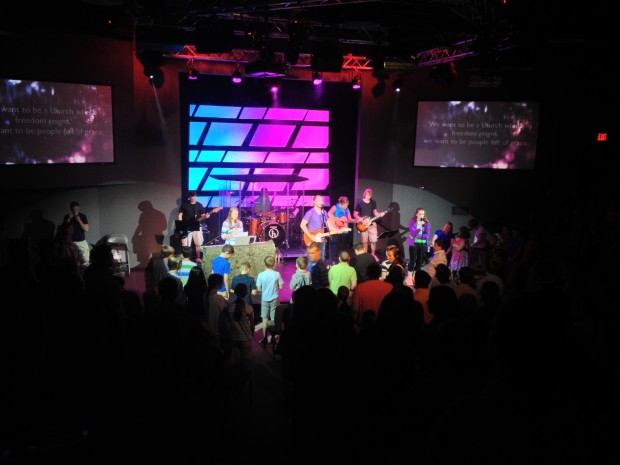
Michael Swearingen from West Side Christian Church brings us this fun use of styrofoam shapes.
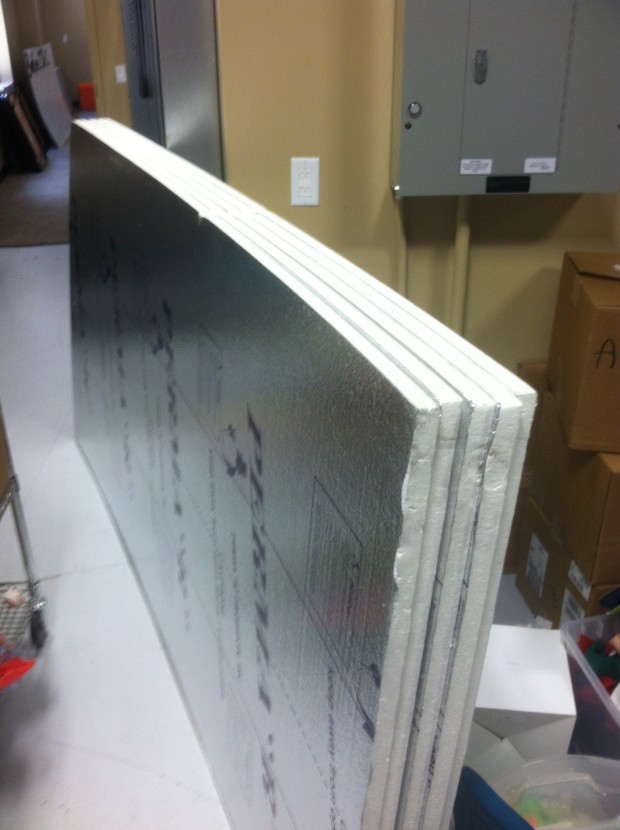
They built this set for their student center “The Hub.” They bought six 4’x8′ sheets of styrofoam from Lowes for about $80 and attached them to 1″x1″ rods. They hung the rods from brackets they already had on their back wall. The whole set cost around $140.
How to Plan a Tilted Foam Rectangle Backdrop
The impact of this set comes from a simple contrast: familiar rectangles become energetic when they are rotated and spaced at different angles. Before cutting material, sketch the full stage width and mark the sightlines from the front row and the main camera. Cut paper rectangles to scale and move them around on the sketch. Leave open areas around faces, screens, and walkways so the shapes frame the people on stage instead of competing with them. If the room is narrow, a few larger pieces can create a clearer silhouette than many small ones.
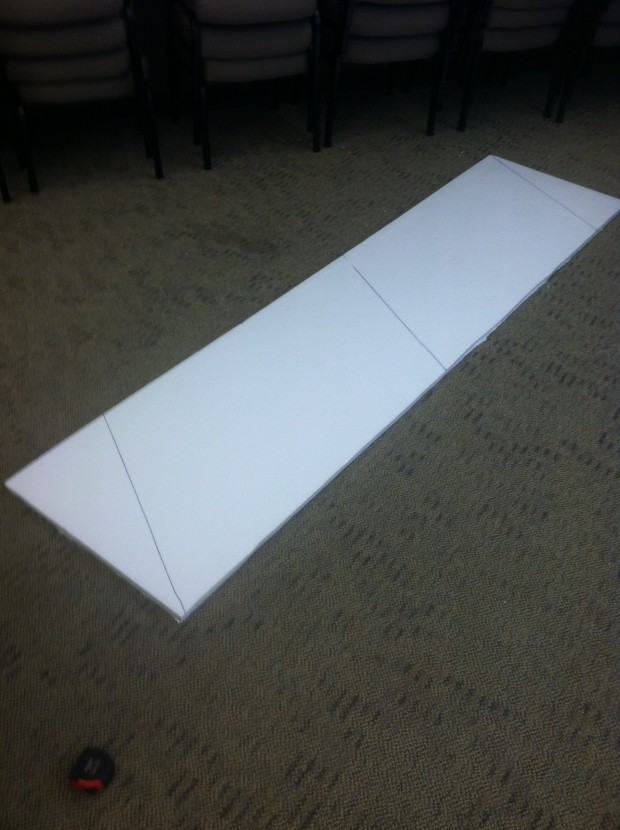
Foam sheets are easy to cut and light, but the edges need care. Measure each piece, mark straight lines with a square, and test the cutting method on a scrap before committing to the visible panels. A sharp blade or foam-safe cutter helps prevent torn edges. Paint a sample first: some solvents can damage foam, so use a foam-compatible primer or water-based finish and allow adequate drying time. Keeping the faces matte can reduce distracting glare on camera. If volunteers will handle the pieces repeatedly, consider lightweight edge reinforcement at the mounting points.
Hanging and Lighting the Shapes
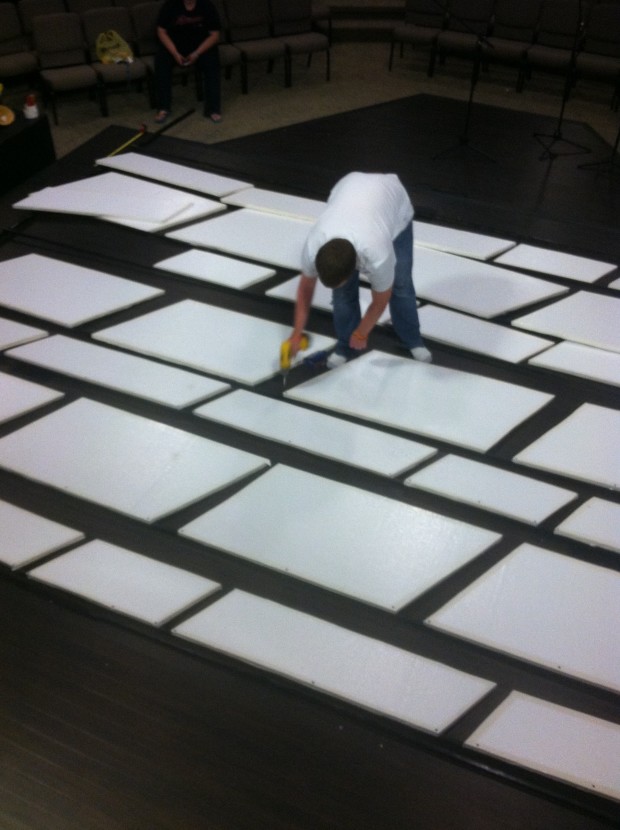
Build the layout on the floor before lifting it into place. Number the panels and photograph the arrangement, then transfer that numbering to the rods or brackets. Use hardware rated for the actual load, and have a qualified person review every overhead connection and secondary safety attachment. Keep the panels away from heat sources, lighting fixtures, exits, sprinklers, and other required clearances. Foam products also have venue-specific fire requirements; confirm the material and any treatment with the facility team before installation. Never assume that a light sheet is safe to suspend with improvised tape or fishing line.
Once the set is secured, light it from several positions rather than relying on one bright wash. A soft front or side wash reveals the edges, while a contrasting color from the opposite side creates depth between overlapping rectangles. Test both a quiet speaking look and a more saturated music look. Check the result from the back of the room and through the camera; steep angles can make one panel disappear or throw a large shadow onto another. If the original arrangement does not fit a new room, retain the tilted rhythm but adjust scale, spacing, and color to suit the sightlines.
Pro Tips for a Foam Rectangle Stage Set
- Make a scale mockup: Test spacing and rotation on paper first, so you do not waste full-size foam sheets on a layout that blocks the stage.
- Protect the edges: Cut cleanly, handle panels with two people, and reinforce attachment points where repeated setup could crush the foam.
- Check every sightline: Walk the front row and review camera shots before finalizing the angles or focus of the lights.
- Confirm venue requirements: Review flame treatment, rigging capacity, and fixture clearances with the facility team before hanging scenic foam.
Related Designs
- Light Squares – See how square frames and LED tape turn repeated geometry into a luminous backdrop.
- Stacked Carefully – Explore another foam-based design with layered shapes and light.
- Bold – Compare lightweight foam construction and suspended scenic letters.
- Sullivan Stage – Study an alternate graphic backdrop built from repeating panels.
- Transforming Pieces – Consider a segmented scenic approach that changes with the viewing angle.


Man that looks sweet on stage. What did you use to light them?
We used COLORado Batten’s on the floor to light it.