


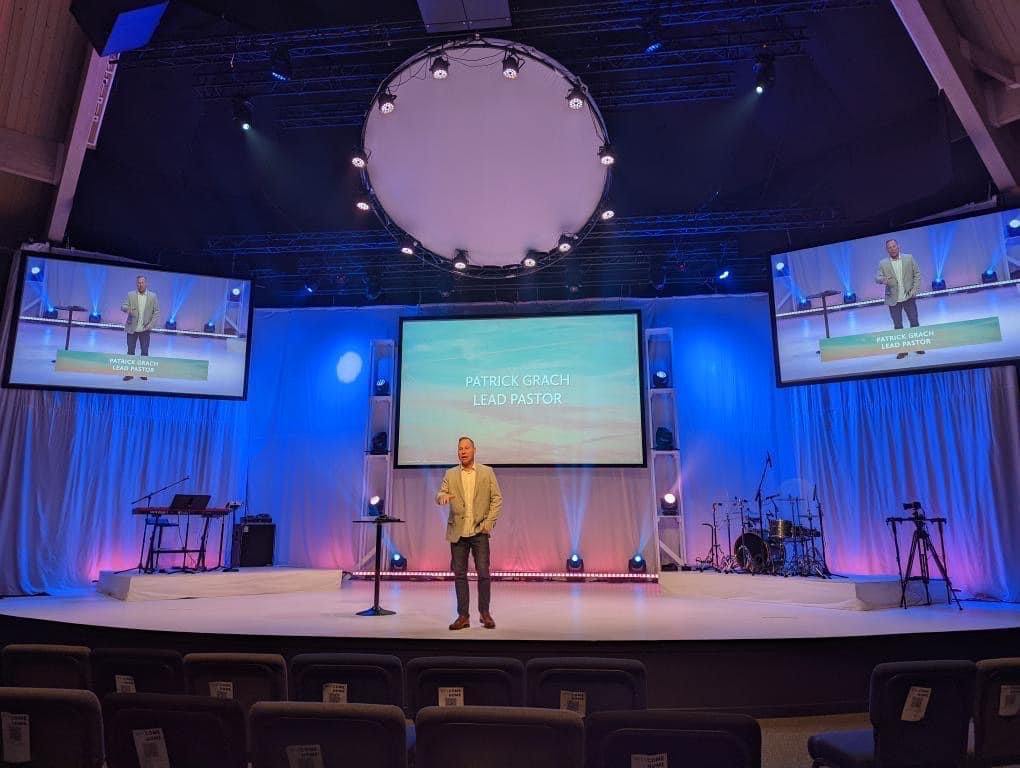
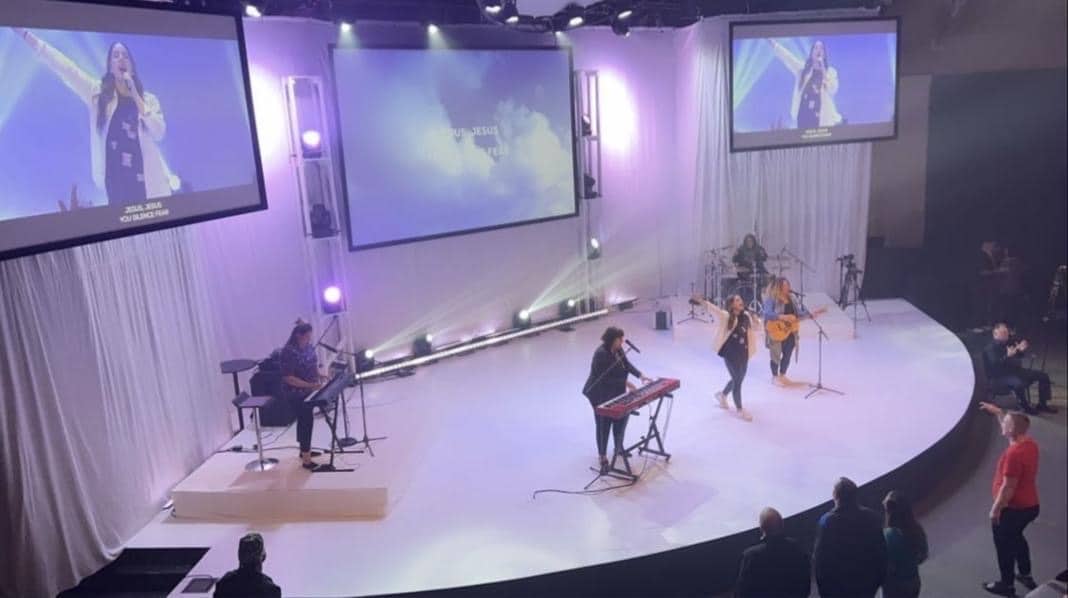
Ridge Bingaman from Lifehouse Church in Hagerstown, MD brings us this all white stage.
They bought the same curtain ideas that they had for a blacked-out stage, just white, for the backdrop. Then they added white deck paint to the floor.
For the platforms, they built them with wood, then painted the tops and put a white fabric skirt around the sides.
At their other campus instead of the curtain in the back, they just painted the back wall white and it accomplished the same thing.
Planning an All-White Church Stage
The appeal of Lifehouse Church’s design is its consistent palette: the backdrop, floor, and platform skirts read as one setting instead of competing scenic pieces. When adapting this idea, begin with a stage plan showing instruments, microphone positions, entrances, and camera angles. Decide which surfaces need to be white and which equipment can remain visually quiet. A simple palette makes small differences in texture and brightness more noticeable, so compare samples together before purchasing enough material for the whole room.
The original installation offers two approaches to the background: white curtains or a painted white wall. Curtains introduce folds and can conceal an existing surface; paint keeps the backdrop flatter and avoids storing fabric between installations. These are design alternatives, not interchangeable construction methods. Check how either option will work around doors, ventilation, wall fixtures, and access points. Hold a fabric sample against a painted sample under the actual stage lights to see whether their whites match closely enough for your intended look.
Testing Paint, Fabric, and Lighting Together
White flooring can help unify the scene, but it also makes scuffs, cable runs, and shadows easier to see. Before repainting a whole deck, test a small area using a coating appropriate for the existing surface and stage use. Follow the manufacturer’s preparation, drying, and cure instructions. Evaluate the finish from the seating area and through the cameras; a glossy patch may produce a reflection that is not obvious when viewed from directly above. Plan how the team will clean the floor and handle touch-ups without interrupting rehearsals.
For the wooden platforms, Lifehouse painted the tops and used white fabric skirts around the sides. In an adaptation, measure each platform after its final position is confirmed, then make a sample skirt before cutting the rest. Choose an attachment method that permits removal for cleaning and inspection. Keep fabric clear of walking routes, equipment vents, and cable connections. The fabric is a visual finish, not a substitute for checking the platform’s structure, loading, and stability.
Build your lighting look in layers. Start with comfortable, consistent light on faces, then add illumination to the white background. White surfaces can become much brighter than people, especially in a wide camera shot. Ask someone to stand in the speaking and singing positions while the operator checks exposure, shadows, and separation from the backdrop. Try a restrained background level before increasing the front light. Colored light can offer additional variations, but test each color across the curtain, paint, and skirt rather than assuming all three materials will respond identically.
Pro Tips for a White Stage
Compare whites in the room: Bring paint and fabric samples together under the installed lighting. A warm fabric beside a cooler painted wall may look mismatched even when both products are labeled white.
Rehearse the widest camera shot: Check the whole stage with people in place. Adjust background brightness so the white scenery retains detail without making faces appear dark.
Make maintenance repeatable: Label removable skirts, record the paint product and finish, and photograph the completed setup. Keep a short reset checklist so volunteers can restore the look consistently.
Protect access and clearances: Keep skirts and curtains away from fixtures and electrical connections, and have the venue team confirm that scenic materials and mounting methods meet its requirements.
Related Designs
- String Trees and White Branches – Explore white yarn and painted branches as light-catching scenic textures.
- Offset – Compare white fabric-covered projection flats with a white-painted wood backdrop.
- Winter Wonderland – See how white scenic layers support a seasonal stage composition.
- Short Ceiling Lighting – Consider lighting layers when adapting a bright stage to a lower room.
- So Fantastic, Wrapped in Plastic – Compare how translucent plastic and white-painted material respond to light.


Leave a Reply
You must be logged in to post a comment.